

Two different groups gave their verdict on the Australian economic outlook this week. Investors marked down shares on Friday. Business owners, surveyed about October, reported that trading and profitability had weakened, even as employment held up.
In this article, Colitco looks at where those accounts agree, why some industries are feeling more pressure than others and what to watch in December.
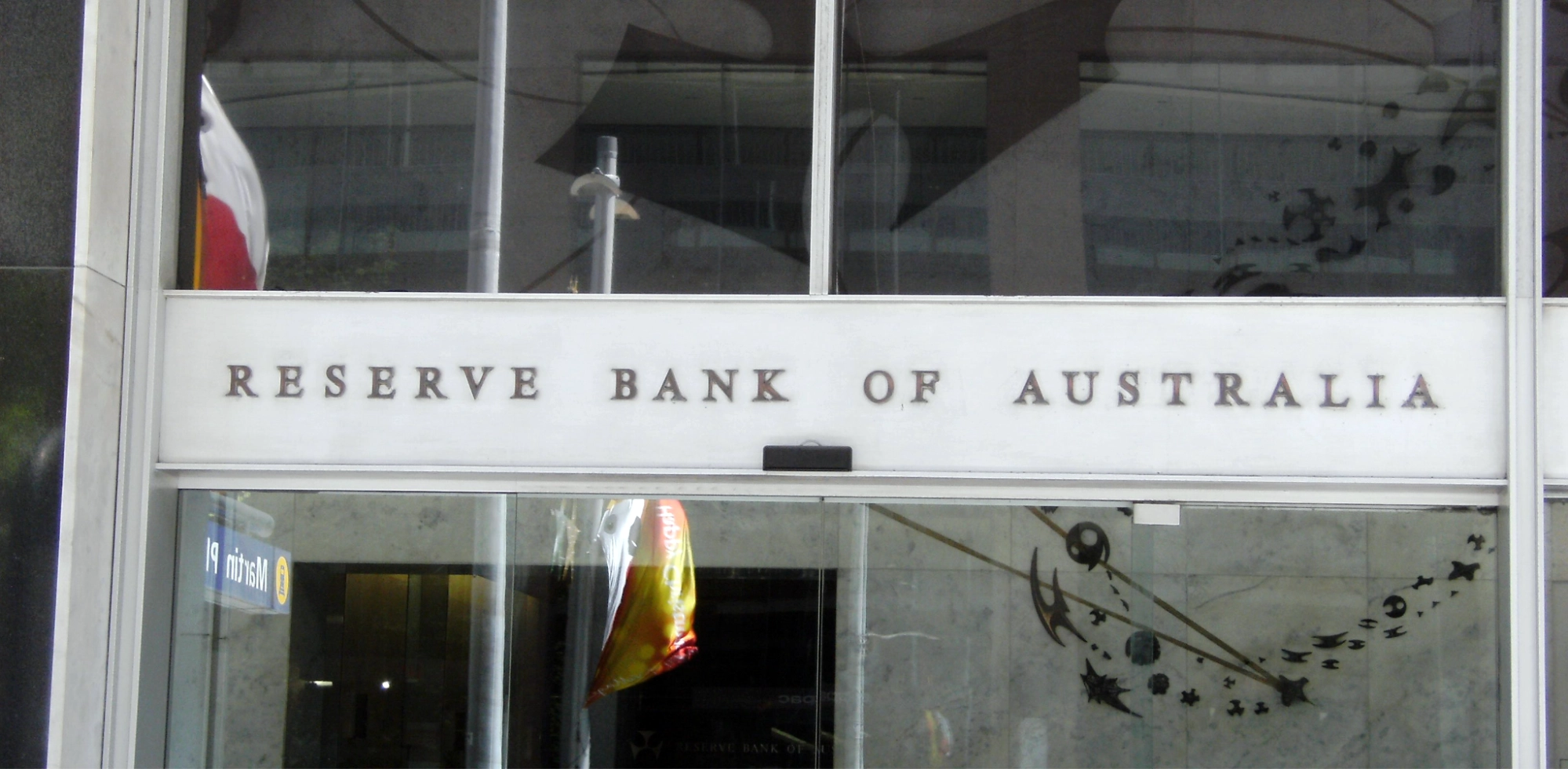
Figure 1: Reserve Bank of Australia signage in Sydney’s Martin Place. Archive photograph taken on 27 November 2008. Credit: Danausi, Wikimedia Commons, public domain.
What Did Friday’s Market Fall Actually Show?
The ASX 200 lost 0.7% on 13 November, following declines of 0.4% in both the S&P 500 and the Dow Jones Industrial Average in the preceding US session. Nvidia shares fell after Huang resigned. For Australian investors, the news raised a question familiar from the previous week’s global technology sell-off: how much are buyers prepared to pay today for profits they expect years from now?
Friday’s prices gave no single answer across markets. Gold rose, iron ore barely moved and the Australian dollar slipped just below 68 US cents. A gold producer, an iron ore exporter and a shop importing US-priced goods were looking at quite different numbers by the afternoon.
| Market measure | Level | Reported move |
| ASX 200 | 9,082 points | Down 0.7% |
| Australian dollar | 67.99 US cents | Down 0.1% |
| Spot gold | USD 3,914 per ounce | Up 1.0% |
| Brent crude | USD 95.62 per barrel | Down 0.2% |
| Iron ore, Singapore | USD 91.60 per tonne | Unchanged |
Market snapshot at approximately 4:34 pm AEDT on 13 November 2026. Commodity and currency figures are observations at that time, rather than final global closing prices.
Why Are Order Books a Better Clue to Christmas Trading?
A retailer can record a sale today from an order placed weeks ago. That sale counts towards current revenue. It says little about how many customers will walk through the door next month. Forward orders help fill in the missing part: they give businesses some idea of the work or sales already booked for the weeks ahead.
NAB’s October survey found that forward orders weakened and that both business confidence and business conditions were below their long-run averages. Retail recorded the weakest activity measures. Finance, business and property services were holding up better, so it would be a mistake to read the retail result as a verdict on every Australian employer.
The distinction matters for the Australia business outlook heading into December. A shop with fewer advance orders may order less stock or wait before adding weekend shifts. A professional services firm with several months of contracted work can take a different view, even if its owners read the same market headlines.
How Can a Business Stay Busy and Still Earn Less?
Consider a retailer that pays suppliers in US dollars and sells in Australian dollars. If the currency weakens before its next unhedged order, replacing the same stock costs more.
Raising the shelf price could protect its margin, but it also gives a hesitant customer another reason to wait. Friday’s small currency move illustrates the calculation; the stronger evidence of pressure came from businesses themselves.
In October, input costs were rising faster than the prices businesses charged. Yet firms were still using an above-average share of their available capacity, and the survey’s employment measure remained relatively steady. Those findings can sit together.
A business may need its full roster to finish work already booked while earning less on each job. The staffing decision comes later, when managers know whether fresh orders will replace the old ones.
What Would Signal a Lasting Shift in Confidence?
One day of trading shows what investors were willing to pay for shares. A lasting change in Australia market confidence would be more persuasive if share prices, customer orders and business decisions began telling the same story. Three checks are useful:
- Do forward orders recover? A pickup would give businesses a firmer reason to restock or schedule extra shifts. Another decline would leave less work booked for the months ahead.
- Can firms recover their higher costs? Sales revenue can rise while profit falls. Look for whether selling prices are catching up with input costs and whether customers are still buying similar volumes.
- Does employment follow trading lower? Hiring has held up better than profitability. A fall in the employment measure alongside another weak orders reading would suggest that caution is reaching staffing decisions.
The next NAB survey is scheduled for 8 December 2026. For businesses planning the Christmas period, its most useful finding may be whether October’s missing orders came back in November. A sharemarket rebound, by itself, cannot answer that.
ALSO READ: ASX 200 Outlook: How Oil Prices and Bond Yields Affect Australian Stocks
FAQs
Does a Lower ASX 200 Mean Australian Businesses Are Selling Less?
No. The ASX 200 tracks share prices. Investors can mark down a company because they are less willing to pay for its expected earnings, even if its sales have not changed. Orders, sales volumes and trading updates provide more direct evidence of demand.
Which Australian Businesses Reported the Weakest Conditions?
Retail had the weakest activity readings in NAB’s October survey. Recreation and personal services had also softened during 2026, while finance, business and property services were more resilient.
Why Does a Weaker Australian Dollar Affect Companies Differently?
An importer paying an invoice in US dollars may need more Australian dollars to settle it. The actual effect depends on contract terms, the timing of payments and any currency hedges.
Can Business Confidence Fall Before Employers Cut Jobs?
Yes. A firm can expect a quieter few months while still needing its current staff to complete existing work. That gap was visible in October: orders weakened, but the employment measure held up.
Disclaimer: This article provides general information, not financial advice. Market prices are dated observations.

Luke Carlino is a seasoned Copywriter, Content Strategist, and Social Media Manager specialising in Mining, Finance, and Business journalism. With more than a decade of industry experience, he brings rigorous editorial standards and commercial acuity to every project.