

The Bellevue Gold supply agreement connects an Australian mining operation with one of London’s best-known buildings. In its 30 September 2026 announcement, Bellevue Gold Limited (ASX: BGL) confirmed that gold from its wholly owned Bellevue Gold Project had been exclusively selected for the cathedral’s regilding.
The work covers the ball and cross above the dome, together with the Golden Gallery. Bellevue expects more than 50 ounces of gold will be needed, although the final requirement remains unsettled.
For the company, the selection offers international recognition for its efforts to produce gold with documented origins and lower operational emissions. Financial terms were not disclosed, making its immediate significance clearer as a sourcing endorsement than a measurable earnings event.
What Will Bellevue’s Gold Be Used For?
Bellevue’s gold will be used to restore gilded features at St Paul’s Cathedral, including the ball and cross atop its 111-metre dome.
The Golden Gallery forms another part of the conservation project. According to the announcement, it was last gilded in 1863, giving the new work an unusually long historical connection.
The cathedral sought advice from The Goldsmiths’ Company on sourcing the gold. The Goldsmiths’ Foundation is assisting with the regilding to commemorate the company’s 700th anniversary in 2027.
The main details disclosed are:
- Gold source: Bellevue’s wholly owned and operated mine in Western Australia’s Eastern Goldfields.
- Restoration areas: The ball, cross and Golden Gallery at St Paul’s Cathedral.
- Expected requirement: More than 50 ounces, subject to confirmation of the final amount.
The announcement identifies Bellevue as the gold supplier. It does not say the mining company will carry out the conservation work or manufacture the finished gold leaf itself.
Readers can explore the setting through the cathedral’s official information about its dome galleries, which includes the Golden Gallery.

Figure 1: A view from St Paul’s Cathedral’s Golden Gallery, one of the areas included in the regilding project. This photograph predates the announced supply selection. Image credit: Graham Lacdao / St Paul’s Cathedral.
Why Was Bellevue Chosen After the Global Search?
Sustainability and traceability were the main reasons for Bellevue’s selection, according to the company.
The process included a visit to the mine in March 2026 by Charlie Betts, founder of Single Mine Origin, and Joanna Hardy, Second Warden of The Goldsmiths’ Company.
Hardy’s role included conducting due diligence on the gold being sourced for St Paul’s. Her recommendation followed that visit and consideration of Bellevue’s production and supply arrangements.
She brings more than 40 years of jewellery experience, having worked as a goldsmith and held roles at De Beers, Phillips and Sotheby’s. Bellevue’s announcement also identifies her as an independent jewellery specialist and a regular contributor to the BBC’s Antiques Roadshow.
The St Paul’s Cathedral renovation gold selection therefore followed direct engagement with the mine and scrutiny of its sourcing credentials.
Managing Director and Chief Executive Officer Darren Stralow described the appointment as a significant honour. He also highlighted the lasting association between Bellevue’s gold and a gallery whose previous gilding dates back more than 160 years.
That recognition is valuable, although it does not establish the commercial value of future orders.
How Can the Gold Be Traced From Mine to Cathedral?
Bellevue’s refining arrangement with ABC Refinery allows it to preserve the provenance of its gold through the supply chain.
The announcement explains that Single Mine Origin is a certification and traceability initiative. It follows gold from a specific mine through a segregated supply chain to the finished product.
This matters because a buyer seeking gold from a named operation needs more than information about that mine. The material must remain identifiable as it moves through subsequent stages.
Three parts of the arrangement support that process:
- Identified origin: The gold is sourced from the Bellevue Gold Project.
- Refining arrangements: Bellevue says its ABC Refinery agreement maintains the gold’s provenance.
- Supply-chain tracking: Single Mine Origin connects the mine source with the finished product.
Together, these arrangements help buyers assess where their gold came from and the practices associated with its production.
Bellevue says this approach allows it to sell gold at a premium to customers who value those practices. However, it has not disclosed a premium specifically attached to the cathedral transaction.
The historic gold supply contract Australia story is consequently about both the destination and the documented journey of the metal.
What Does Bellevue Mean by ‘Green Gold’?
Bellevue uses the term ‘green gold’ to describe its sustainability positioning, supported by renewable electricity, emissions management and traceable sourcing.
The announcement reports that renewable energy supplied 83.5% of the project’s electricity in FY26. It also gives an emissions intensity of 0.18 tonnes of carbon dioxide equivalent per ounce.
| Sustainability measure | Detail reported by Bellevue |
| FY26 renewable electricity share | 83.5% |
| Emissions intensity | 0.18 tonnes CO₂e per ounce |
| Net-zero claim | Scope 1 and Scope 2 |
| Residual emissions | Offset using carbon credits |
Bellevue describes its operation as Australia’s least emissions-intensive gold mine and the world’s first gold mine to achieve net-zero Scope 1 and Scope 2 emissions. These are company-reported claims.
The boundaries matter. Net zero does not mean the operation produces no emissions. Bellevue states that residual emissions were offset, and its claim does not establish zero emissions across every stage of the finished product’s lifecycle.
The company’s explanation of its net-zero approach sets out the role of renewable energy, emissions reduction measures and credits.
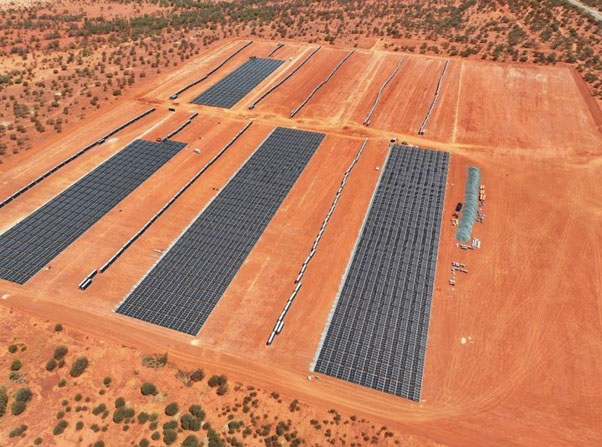
Figure 2: Solar infrastructure at Bellevue Gold, illustrating the renewable power investment behind its sourcing credentials. Image credit: Zenith Energy, via pv magazine.
What Could This Mean for Bellevue’s Wider Business?
The cathedral selection gives Bellevue a prominent example of a customer choosing its gold partly because of how it is produced and traced.
It also builds on activity in luxury jewellery. The announcement says Parisian brand Messika recently became the first fine-jewellery house to incorporate Bellevue gold into its creations, supported by the partnership with Single Mine Origin.
For investors, three developments would make the commercial picture clearer:
- Final supply details: Confirmation of the quantity delivered and any disclosed financial terms.
- Further customer demand: Evidence that similar sourcing requirements lead to additional sales.
- Continued performance: Updated reporting on renewable energy, emissions and traceability.
The Bellevue Gold supply agreement provides a reference for those conversations. A recognised heritage project can introduce the company’s sourcing credentials to audiences beyond mining and bullion markets.
Still, the announcement gives no delivery timetable, contract value or quantified earnings contribution. There is no basis to calculate a financial uplift from the disclosed information.
What it does establish is a connection between investment at an Australian mine and a buyer’s selection process overseas. Bellevue’s gold has been chosen for a highly visible conservation project because its origin and production practices could be examined.
Also Read: Bellevue Gold Governance Reset: What the FY26 Board Renewal Means for ASX: BGL Investors
FAQs
- How much gold will Bellevue supply?
The project is expected to require more than 50 ounces, but the final quantity remains undetermined. - Which cathedral features will be regilded?
The ball and cross above the dome, along with the Golden Gallery. - Why was Bellevue selected?
The company says sustainability and traceability were the main factors. - Has the contract value been disclosed?
No. The announcement does not provide a contract value or specific pricing premium.
Disclaimer
This article is prepared for Colitco for general information and is based on Bellevue Gold’s 30 September 2026 announcement. It does not constitute investment advice. Sustainability claims are attributed to the company, and commercial details remain subject to further disclosure. Readers should review company announcements before making investment decisions.

Luke Carlino is a seasoned Copywriter, Content Strategist, and Social Media Manager specialising in Mining, Finance, and Business journalism. With more than a decade of industry experience, he brings rigorous editorial standards and commercial acuity to every project.