

Copper prices climbed to fresh highs again this week. Market players worked through two forces at once: tighter supply and tariff fears. The more serious issue is the chance that the U.S. could add tariffs to refined copper shipped in from other countries.
In London and New York, the copper reference prices are up close to 20% since January 2026. Mine output is not as easy to find as it was earlier. At the same time, buyers have been spending more as electrification keeps expanding.
Why Copper Price Record Highs Matter to Investors
The metal is key to electrification, power grid upgrades and data centre construction, three areas that are not going anywhere anytime soon. Supply simply has not kept pace and that’s what is pushing prices higher and higher.
On the London Metal Exchange, the three-month copper contract gained close to 2 per cent, settling at US$14,858.50 per tonne. That beat the previous record of US$14,779.00, a number that had only stood for a single trading session.
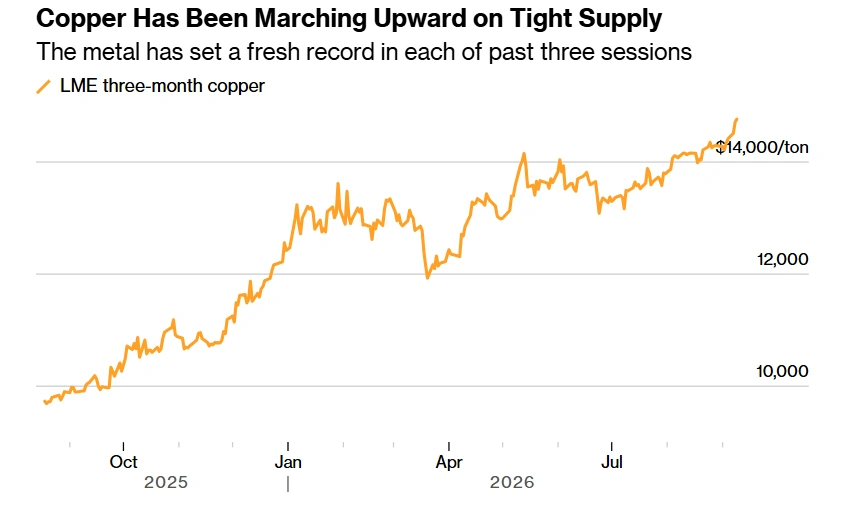
Figure 1: Copper price on the London Metal Exchange has climbed steadily since late 2025 [Courtesy: Bloomberg]
Copper Price Snapshot (LME and Comex)
| Contract | Exchange | Latest Price | Year-to-Date Gain |
|---|---|---|---|
| Three-month copper | London Metal Exchange | US$14,858.50 per tonne (A$20,585) | Around 19 to 20% |
| Copper futures | Comex, New York | US$6.894 per pound | Around 19 to 21% |
Mine Supply Struggles Add to the Copper Supply Deficit Tariffs Story
Mine supply struggles are intensifying the copper supply deficit tariffs narrative gripping global markets. Operational issues at major copper projects are limiting how much new metal reaches buyers.
Global mined copper production is at risk of its first annual decline since 2017. Output must recover sharply during the second half of 2026 to avoid this outcome.
Global Mine Production Data, First Half 2026
| Metric | First Half 2026 | Change |
|---|---|---|
| Global Mined Copper Production | Fell across several major producers | -1.1% year-on-year |
| Shanghai Futures Exchange Inventories | Lowest level since 2024 | Declining |
The International Copper Study Group released preliminary figures last month confirming the decline. Output fell sharply across several major producing countries during the period.
US Tariff Fears Tighten the Physical Copper Market
US tariff fears are a central driver behind the copper supply deficit tariffs dynamic now shaping trade flows. Traders continue shifting large volumes of refined metal toward American shores.
President Donald Trump is considering tariffs on refined copper imports into the United States. This has prompted hundreds of thousands of tonnes to be redirected away from other markets.
Canada Responds With Its Own Tariffs
Canada increased levies on certain US imports to 50 per cent on 08 Sep 2026. This included certain US-made copper products, in direct response to American tariff measures.
The Commerce Department was due to submit its tariff recommendation to the White House by the end of June. That deadline was missed, leaving the market in continued uncertainty.
Geopolitical Tensions Add Further Pressure
Escalating tensions in the Middle East are making copper demand feel less predictable. Reports say the United States went after Iranian oil tankers during the night, and that has revived worries about higher prices.
Brent crude then moved above US$100 per barrel after the latest escalation. This raised fresh questions ahead of US consumer price data due for release on Friday.
About Copper as a Commodity
Copper is a refined industrial metal traded globally through exchanges including the London Metal Exchange and Comex. It plays a critical role across the mining and metals sector.
Copper cathodes are the primary refined form of the metal used in construction, renewable energy, and electric vehicle manufacturing. Demand continues to expand across the sector.
Industry Outlook for the Copper Market
S&P Global says copper demand could jump to 50 per cent higher than now by 2040. It points to upgrades of power grids and more growth in data centres as the key drivers.
Because of that long-run forecast, traders are watching copper much more closely today. Electrification and artificial intelligence infrastructure are expected to sustain elevated demand for years ahead.
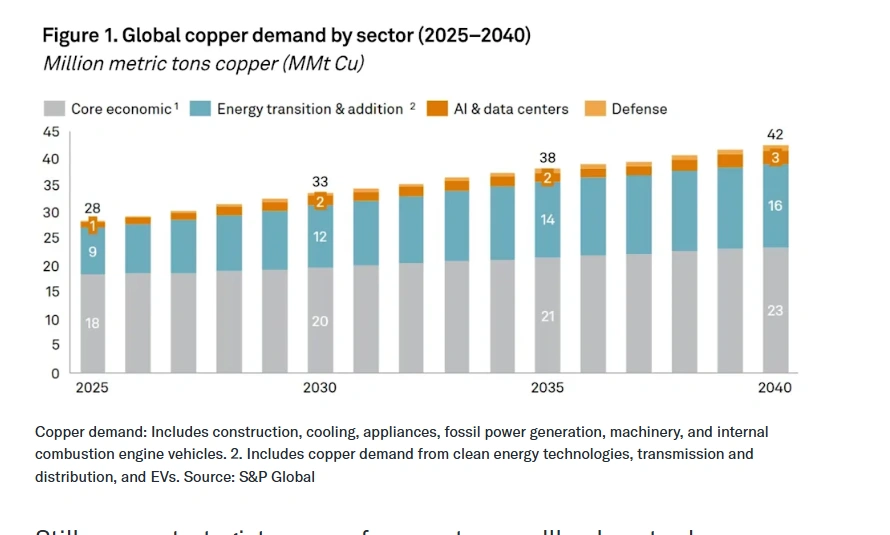
Figure 2: Global copper demand by sector is projected to nearly double by 2040 [Courtesy: S&P Global]
Analyst Outlook on Copper Pricing
| Source | View | Price Level Noted |
|---|---|---|
| JPMorgan | Bullish into Q4 2026 | US$14,800 per tonne, with overshoot potential |
| Bloomberg Intelligence (Mike McGlone) | Cautious on near-term pullback | Possible reversion toward a baseline near US$5, as stated in commentary |
JPMorgan analysts noted China enters peak seasonal demand as the fourth quarter approaches. Meanwhile, Bloomberg Intelligence flagged heavily long hedge fund positioning as a risk factor.
For readers tracking the broader commodities sector on Colitco, copper remains one of the most closely watched metals globally. It sits alongside other critical minerals coverage shaping the mining and metals sector.
Investors following ASX-listed mining companies may find copper price movement directly relevant to project economics. Colitco’s markets news section tracks these developments as they unfold.
Future Direction and Impact on Global Supply Chains
Impact on global supply chains remains the key question as the Commerce Department’s overdue tariff report looms. A formal decision could further redirect copper flows toward the United States.
If mine supply fails to recover in the second half of 2026, the deficit could widen further. This would likely extend the current run of copper price record highs.
Impact on inflation expectations is also building, as rising commodity costs intersect with Middle East tensions. US consumer price data due Friday will be closely watched by traders.
ALSO READ: Askari Metals Accelerates Uis Exploration as Soil Sampling, Trenching and RC Drilling Advance
FAQ
Q1. Why have copper price record highs occurred in both London and New York?
Ans. Tariff fears, tightening physical supply, and mine production declines have all pushed prices to fresh records simultaneously.
Q2. What is driving the copper supply deficit tariffs narrative?
Ans. Traders are shifting metal toward the US ahead of possible tariffs, leaving other markets, including the LME, underserved.
Q3. How much has copper gained in 2026?
Ans. Copper is up close to 20 per cent so far this year, based on LME and Comex figures.
Q4. What could slow the current copper rally?
Ans. Analysts warn that heavy long positioning and shifting Federal Reserve expectations could trigger a near-term pullback.
Disclaimer
This article is meant only for informational purposes. If you are an investor who is watching the copper market closely, all the data published in the content is sourced from external sources. Kindly verify all the information related to the share price and market data. Any investment should be made at the investor’s own risk. Colitco does not hold any position in the above-mentioned commodity.

Luke Carlino is a seasoned Copywriter, Content Strategist, and Social Media Manager specialising in Mining, Finance, and Business journalism. With more than a decade of industry experience, he brings rigorous editorial standards and commercial acuity to every project.