Omineca Mining and Metals has officially reported that it has found hard-rock gold at its Wingdam exploration project. The project is located in the Cariboo mining area of British Columbia.
The newly discovered lode source is located 500m west of the underground paleoplacer gold deposit. It is also located below the project elevation. It was discovered 165 years after placer gold was first found in the Lightning Creek valley.
In Omineca’s latest results, the bottom line is that the results may expand the geological narrative for the historic gold camp. They also offer another goal to pursue in their continued exploration.
Now the company is rightfully evaluating the mineralisation associated with the Eureka thrust fault. This is further evidence to support its Wingdam exploration plan.
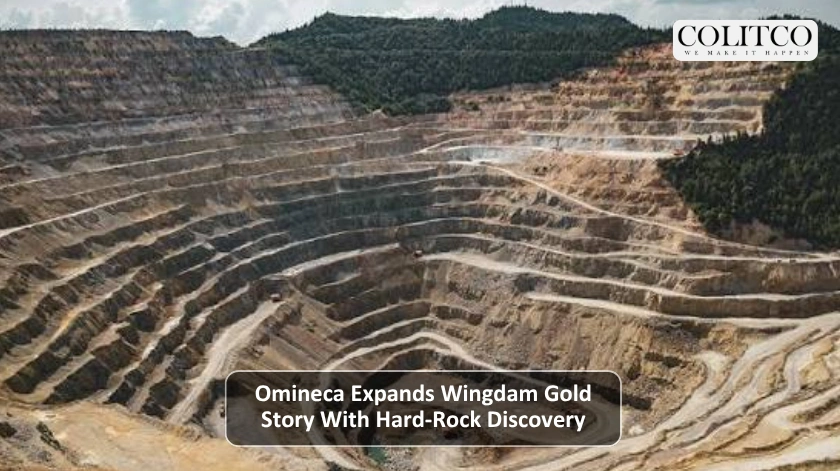
Omineca’s Wingdam Project has revealed a new hard-rock gold target in British Columbia. [Courtesy: NewMediaWire]
Wingdam Gold Discovery Adds A New Geological Dimension
A six-hole diamond drilling programme led to the gold discovery at The Wingdam. Omineca achieved a total of 3,091.9m of drilling in the area of interest. This campaign also produced a wealth of geologic data to be interpreted. In all, the company took 1,978 drill core samples for lab analysis. It also sent 179 samples to AGAT Laboratories as quality assurance samples. The drilling programme was designed for the possible source of historic placer gold. The results now indicate mineralisation under hard rock, which may be part of the known paleoplacer system. This discovery may assist Omineca to link historic gold occurrences to deeper geology. The company intends to expand exploration in the area, which is now an emerging discovery area.
Key programme details demonstrate the size and process of the discovery:
- Eight diamond holes were drilled for a total of 3,091.9m.
- 1,978 drill core samples were taken for analysis.
- The 179 quality assurance samples were sent to AGAT Laboratories.
- The lode source is located 500m to the west of the paleoplacer project.
Key Assays Strengthen The Wingdam Gold Discovery
Intersections of high-grade gold were found in various rock types during the drilling. One returned a gold (Au) reading of 1.07m @ 4.84 grams per tonne. The intersection is from 158.98m in amygdaloidal basalt.
Trace pyrite and calcite-quartz veins are found in the zone. One other returned 2m @ 1.25g/t Au from 345m. During that interval, there were quartz veinlets in lithic wacke. In addition, pyrite and pyrrhotite were also found in the mineralised zone.
The assays provide proof of gold-bearing hard rock structures. They also provide geological information on possible controls of mineralisation. Omineca will use these results to inform their next phase of exploration.

Drill results identified gold-bearing intervals within basalt and lithic wacke formations. [Courtesy: Omineca Mining]
Why The Hard-Rock Gold Discovery British Columbia Matters
The British Columbia gold discovery in hard rock could add some interesting wrinkles to Wingdam. Omineca thinks the results confirm its exploration hypothesis.
Previous studies have indicated that the watercourse that was Lightning Creek ran from west to east. This reversed drainage may have been the cause of gold being eroded into the valley.
This is borne out by underground placer workings. Imbrication patterns of gravel layers show historic flow direction. This is a geological model that can help to understand the distribution of placer gold along the valley.
It also offers a route to the discovery of the source of the original hard rock. The new find is thus a connection between historical data and current drilling data and geological interpretation.
The company’s exploration thesis is based on a number of geological factors:
- Placer gold is found in the Lightning Creek valley and is considered historic.
- The drainage direction in underground works is reversed (west to east).
- The potential lode source is below the paleoplacer project.
- The Eureka thrust fault is indicated by structural evidence.
Eureka Fault Becomes A Major Exploration Focus
Omineca’s exploration will move on to the Eureka thrust fault. The firm thinks it may be able to regulate hydrothermal gold mineralisation with this structure.
Upward thrust along the Eureka fault caused the ophiolites to be raised. This structural zone is similar to multiple known orogenic gold camps found in British Columbia. Similar districts are Barkerville, Bralorne and Greenwood.
The geological comparisons are useful to give Wingdam context to its regional geological history. But the latest find is still in the early development stages. Further drilling will be required to gain an understanding of continuity and scale.
Omineca is now in a position to test the surrounding areas systematically. The company also seeks to improve its geological model based on information from its existing drill holes and assay results.
But what comes next for Omineca at Wingdam?
Omineca is planning to extend its exploration efforts around the newly identified discovery zone. The current investigation is on hydrothermal gold mineralisation associated with the Eureka thrust fault. Additional studies can be done to determine the morphology of mineralised structures. It might also prove whether gold continues beyond the initial intersections. There are several geological indicators that can help the company in this process:
- Extensions could be tested around the discovery using expansion drilling.
- The structural mapping could aid in understanding the Eureka fault.
- Further assays might explain mineralisation continuity.
- Geological modelling may help to target future drilling.
All these steps may help to figure out the wider implications of the discovery. They also provide a systematic way of promoting Wingdam.
Wingdam’s Strategic Location Supports Future Exploration
The Wingdam Project is a 61,392-ha project in British Columbia, Canada. The project is situated 45km east of Quesnel in the Cariboo mining district.
Wingdam’s site was located in an area that has a history of gold mining. The company is working on both the geology and evidence of past exploration.
The overall exploration offer for the project might be bolstered by the new finding. It also provides a new hard-rock target for Omineca, in addition to its paleoplacer activities.
The association of placer gold deposits with possible lode sources is of primary importance. Future drilling efforts will help to assess whether this may become a larger mineralised system.
What The Wingdam Discovery Could Mean
The Omineca gold story continues to explore a new storyline in Wingdam. The firm has found gold in the hard rock below its paleoplacer project. The gold-bearing intervals have been confirmed by drill results in different geological settings.
Further support for the proposed exploration model is provided by historical drainage evidence. The fault system of the Eureka thrust fault now becomes an important structural target.
Omineca will concentrate on enhanced exploration within this area. The project has an extensive land position with 61,392 ha of land area to work with.
It is 45km east of Quesnel, and thus of regional significance. The next drilling rounds will be able to confirm or refute the possibility that the discovery is part of a greater gold system.
Also Read: Netwealth June 2026 Update Signals Strong Future Growth in Australia
About Us: https://colitco.com/about-us/
About Our Home Page: https://colitco.com/
FAQs
1: What is the Wingdam gold discovery?
Ans: Omineca has found hard rock gold at its Wingdam Project in BC. The lode source is 500m to the west of the paleoplacer project.
2: What were the most important findings of the gold assay?
Ans: The best performance was 1.07m @ 4.84 grams per tonne gold (Au). The other intersection produced 2m @ 1.25g/t Au from 345m.
3: What country is the Wingdam Project in?
Ans: Wingdam owns 61,392 hectares in the Cariboo mining district in British Columbia. The project is 45km east of Quesnel.
4: What will Omineca investigate?
Ans: Omineca is to continue to develop exploration at the discovery site. It will be based on hydrothermal gold mineralisation around the Eureka thrust fault.
Disclaimer
The information in this article is not intended to be financial advice. There are many geologic, financial and market risks associated with gold exploration. Assay results are not intended to imply any mineral resources or economic deposits for the future. Investors are advised to make their own assessment of Omineca Mining and Metals and its Wingdam Project and exploration risk before investing. Results from past explorations cannot be used to predict future results.
Source Links:
- https://mining.com.au/omineca-discovers-hard-rock-gold-at-wingdam/
- https://investingnews.com/omineca-announces-hard-rock-gold-discovery-at-wingdam-exploration-project-including-4-84-g-t-gold-over-1-07-meters-and-1-25-g-t-gold-over-2-0-meters/
- https://finance.yahoo.com/markets/commodities/articles/omineca-announces-hard-rock-gold-130000680.html

Luke Carlino is a seasoned Copywriter, Content Strategist, and Social Media Manager specialising in Mining, Finance, and Business journalism. With more than a decade of industry experience, he brings rigorous editorial standards and commercial acuity to every project.