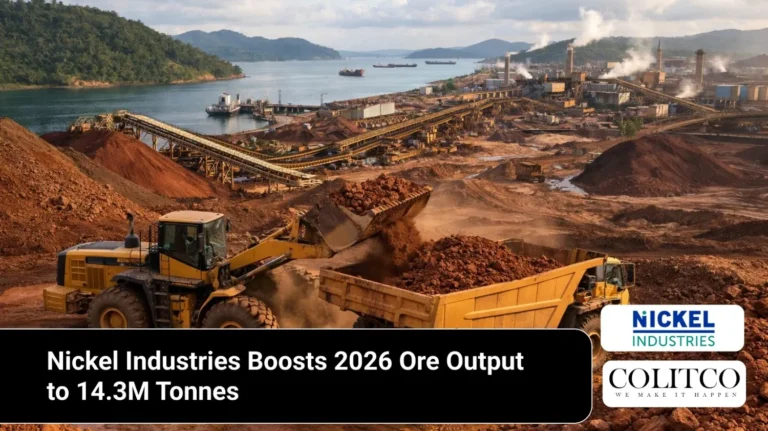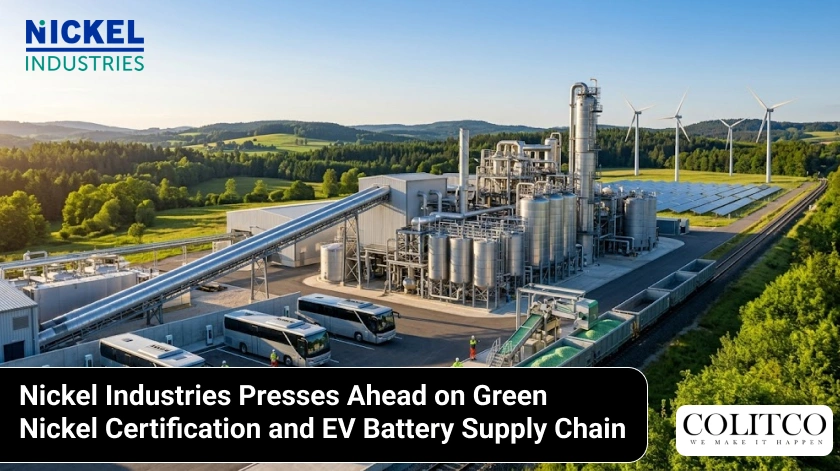
Nickel Industries Limited (ASX: NIC) has built one of the most significant nickel operations in the world. It mines in Central Sulawesi, processes ore across four rotary kiln electric furnace plants, and holds interests in two high-pressure acid leaching projects serving the EV battery market.
Figure 1: Nickel Industries corporate logo [Courtesy: Nickel Industries]
Now the Company is in the middle of a harder task. It is trying to make all of that production cleaner, fast enough to stay relevant in a market where green nickel Indonesia certification is quickly becoming a commercial requirement.
Operations Across Indonesia’s Nickel Belt
The Company’s asset portfolio spans two distinct production technologies and multiple industrial parks across Sulawesi and North Maluku.
Mining and RKEF Processing
| Operation | Type | Capacity / Details | Ownership |
|---|---|---|---|
| Hengjaya Mine | Mining | 5,983 Ha concession; JORC Resource of 300 Mt at 1.22% Ni and 0.09% Co (~3.7 Mt Ni); supplies RKEF plants | 80% |
| Hengjaya Nickel | RKEF | Two-line facility within IMIP; ~15 ktpa nickel as nickel pig iron (NPI); income tax holiday | 80% |
| Ranger Nickel | RKEF | Two-line facility within IMIP; ~15 ktpa nickel as nickel pig iron (NPI); income tax holiday | 80% |
| Angel Nickel | RKEF | Four-line complex within IWIP; ~36 ktpa nickel as NPI; supported by a 380 MW dedicated power plant | 80% |
| Oracle Nickel | RKEF | Four-line operation within IMIP; ~36 ktpa nickel as NPI; 380 MW power plant; 10-year tax holiday | 80% |
HPAL Projects Targeting the EV Battery Supply Chain
| Operation | Type | Capacity / Details | Ownership |
|---|---|---|---|
| Huayue Nickel Cobalt (HNC) | HPAL (Operating) | Four-autoclave plant; ~60 ktpa nickel as MHP for the battery materials market; income tax holiday | 10% |
| Excelsior Nickel Cobalt (ENC) | HPAL (Under Construction) | Next-generation project; ~72 ktpa nickel equivalent across MHP, nickel sulphate, and nickel cathode; 15-year tax holiday; 44% interest acquired for US$1.01 billion | 44% (increasing to 46%) |
The HPAL transition is central to the Indonesia nickel to EV battery supply chain story. HPAL produces mixed hydroxide precipitate, a battery-ready material that feeds directly into lithium-ion battery manufacturing. ENC’s commissioning is scheduled for 2026.
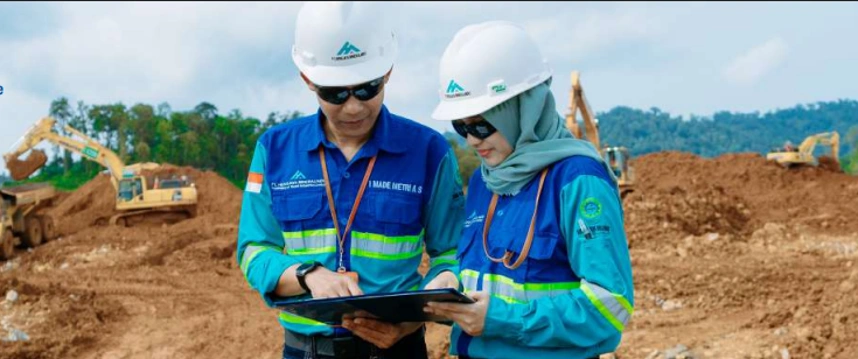
Figure 2: Nickel Industries employees [Courtesy: Nickel Industries]
Resource Projects in Development
| Project | Details | Ownership |
|---|---|---|
| Sampala Project | 187 Mt mineral resource at 1.2% Ni and 0.09% Co (JORC 2012); 36.9 km from IMIP; 20% of mapped laterite area drilled | 60% |
| Siduarsi Project | 6th-generation Contract of Work; 16,470 Ha in Papua; adjacent strike from Ramu project in PNG | Majority acquisition rights (up to ~80%) |
The Carbon Challenge: What the Numbers Actually Say
The Company’s greenhouse gas (GHG) emissions profile reflects the reality of nickel smelting in Indonesia. RKEF smelting is energy-intensive. Nearly all of that energy currently comes from coal.
GHG Emissions: 2025 Results
| Emissions Category | 2025 (tCO2-e) |
|---|---|
| Scope 1: Consolidated Entities | 4,055,322 |
| Scope 2: Consolidated Entities | 3,743,827 |
| Scope 1: Invested Entities | 43,618 |
| Scope 2: Invested Entities | 19,356 |
| Combined Scope 1 and 2 (Total) | 7,849,014 |
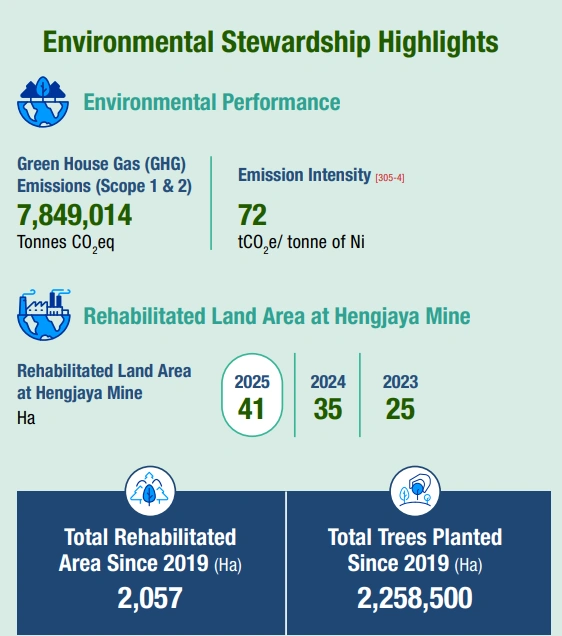
Figure 3: Nickel Industries’ 2025 environmental performance and emissions intensity summary [Courtesy: Nickel Industries]
The Company’s reported GHG emission intensity for 2025 was 72 tCO2-e per tonne of nickel produced. This figure covers Scope 1 and Scope 2 emissions combined. Scope 3 emissions have not been disclosed in this reporting period, with the Company applying a transition relief available under AASB S2 paragraph C4(b).
Energy Consumption Breakdown
| Energy Source | Volume (Native Unit) | Energy (GJ) |
|---|---|---|
| Coal (Bituminous-Smelting) | 1,057,043,557 kg | 19,766,715 |
| Coal (Sub-Bituminous) | 237,745,318 kg | 4,350,739 |
| Coal (Anthracite) | 199,703,685 kg | 5,852,716 |
| Coal (Semi-Coke Reductant) | 90,591,787 kg | 2,581,866 |
| Coke Oven Gas (COG) | 284,558,414 m³ | 5,112,051 |
| Electricity (Purchased) | 4,354,119,109 kWh | 15,674,829 |
| Biodiesel | 13,069,906 litres | 453,311 |
| Electrode Paste | 10,464,987 kg | 281,456 |
| LPG | 13,565 kg | 642 |
| Petrol | 1,893 litres | 62 |
| Total Energy | — | 54,044,036 GJ |
| Energy Intensity | — | 498.59 GJ/tonne of Ni |
Coal in its various forms accounts for the overwhelming majority of the Company’s energy input. That is the problem the decarbonisation roadmap is designed to solve.
Nickel Industries’ Net Zero Roadmap and Decarbonisation Targets
The Company’s Board has approved two headline climate targets, both measured against a 2022 baseline.
| Target | Details |
|---|---|
| Carbon Intensity Reduction | 50% reduction in carbon intensity (tCO2-e per tonne of Ni) by 2035 |
| Net-Zero Emissions | Achieve net-zero Scope 1 and Scope 2 emissions by 2050 |
These targets are reviewed by the Risk Management and Sustainability Committee. No interim milestones have been set for either target in the current period.
Transition Risks and Their Anticipated Financial Impact
The Company has conducted a quantified assessment of climate-related financial risks out to 2050. The figures below cover anticipated annual cost impacts under different scenarios.
Physical Climate Risks: Anticipated Annual Cost Impact
| Risk | 2030 | 2040 | 2050 |
|---|---|---|---|
| Higher Temperatures and Extreme Heat | US$11.7 million | US$20.0 million | US$26.2 million |
| Extreme Rainfall and Flooding | US$8.3 million | US$9.4 million | US$10.5 million |
| Sea Level Rise (Including Tsunami Risk) | US$5.1 million | US$5.8 million | US$6.5 million |
| Extreme Weather and Tropical Cyclones | US$1.3 million | US$1.4 million | US$1.6 million |
| Landslides | Not currently quantifiable | Not currently quantifiable | Not currently quantifiable |
Transition Climate Risks: Anticipated Annual Cost Impact
| Risk | 2030 | 2040 | 2050 |
|---|---|---|---|
| Carbon Pricing (NDC-Aligned Scenario) | US$283 million | US$341 million | US$411 million |
| Energy Cost Transition Risk | +US$32 million (near-term increase) | -US$43 million (structural savings) | -US$61 million (structural savings) |
The carbon pricing risk is the single largest financial exposure identified. At US$411 million annually by 2050 under an NDC-aligned scenario, it dwarfs every physical risk on the table. The Company identifies captive renewable solar, waste heat recovery through Organic Rankine Cycle systems, and phytomining exploration as mitigation pathways for this exposure.
A real-world climate event occurred during the reporting period. Extreme rainfall of 870 mm in March 2025, including approximately 96.5 mm falling within nine hours, caused a tailings storage overflow at IMIP (not owned or operated by the Group).
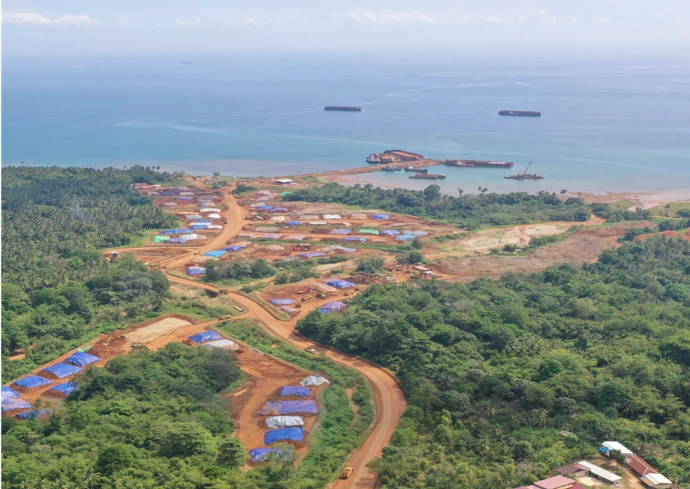
Figure 4: Nickel Industries operations [Courtesy: Nickel Industries]
Oracle Nickel’s RKEF refinery stopped production for two days due to contaminated water inundation and equipment damage. The Company recorded US$5.8 million in lost production and repair costs from this event.
Green Nickel Indonesia Certification and the EV Battery Supply Chain
The commercial rationale for the Company’s decarbonisation push is straightforward. European battery regulations, including the EU Battery Passport framework, are introducing requirements tied to emissions intensity in the production process. Nickel smelted with coal power will face disadvantages in those markets.
The Company is directly exposed to this risk. As noted in its own 2025 Sustainability Report, regulations such as battery passports or cross-border adjustment mechanisms in the EU factor in emissions intensities in the production process. If implemented, these could reduce demand for Nickel Industries products.
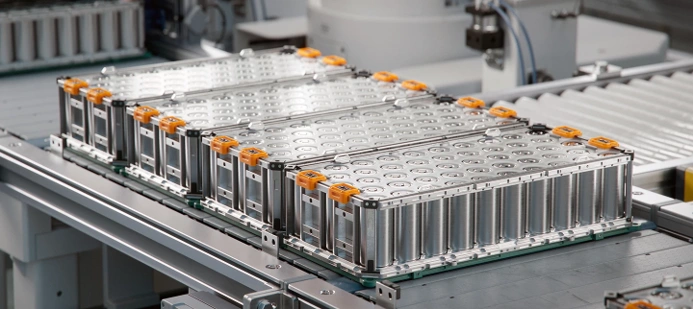
Figure 5: Battery cells used in electric vehicle manufacturing [Courtesy: Nornickel]
The green nickel Indonesia certification challenge runs through the entire Indonesia nickel to EV battery supply chain. MHP produced by HPAL technology carries a lower carbon footprint than NPI from RKEF smelting. The Company’s expansion into HPAL through HNC and ENC is therefore both a commercial and a sustainability decision.
Nickel Industries holds a 10% interest in HNC, which is already producing approximately 60 ktpa of nickel in MHP for the battery materials market. ENC, in which the Company holds a 44% interest, is under construction and is designed to produce approximately 72 ktpa of nickel equivalent across MHP, nickel sulphate, and nickel cathode.
Share Price and Market Data
Nickel Industries (ASX: NIC) last traded at A$0.987 per share. The Company carries a market capitalisation of A$4.14 billion. Its 52-week trading range sits between A$0.660 and A$1.125 per share.
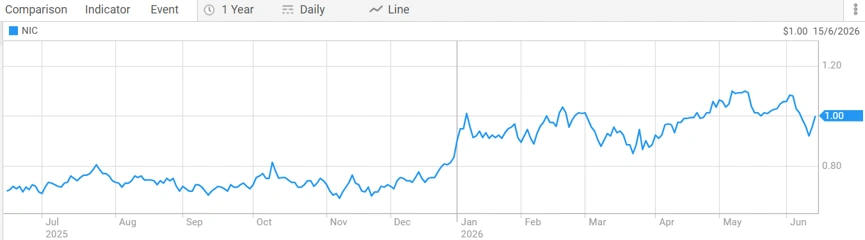
Figure 6: Nickel Industries (ASX: NIC) share price and market performance data [Courtesy: ASX]
Future Direction and Impact on the Nickel Smelter Indonesia Investment Outlook
Nickel Industries is making decisions now that will define its competitive position in the Indonesia nickel to EV battery supply chain for the next decade.
The ENC HPAL project, commissioning in 2026, is the most consequential single step. A 44% interest in a facility designed to produce 72 ktpa of nickel equivalent across battery-grade products positions the Company directly inside the supply chain that global automakers and battery producers are trying to secure. The US$1.01 billion acquisition underlines how seriously the Company is treating this transition.
On the decarbonisation side, the 255 MWp solar and 80 MWh BESS project at IMIP reaching financial close in Jan 2026 on a 25-year fixed tariff is a significant structural shift. Combined with the ongoing transition from coal to coking oven gas across three RKEF assets, and a fleet electrification programme that has grown from 8 to 37 electric trucks at Hengjaya Mine, the Company is reducing its coal dependence across multiple fronts simultaneously.
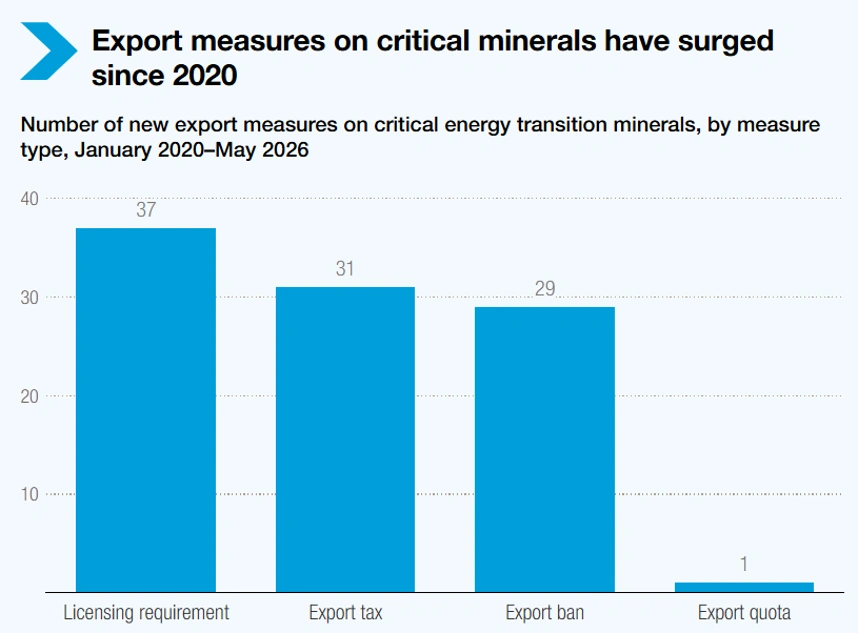
Figure 7: Growth in export measures on critical energy transition minerals since 2020 [Courtesy: UNCTAD]
The nickel smelter Indonesia investment story has changed. A few years ago, the investment case was primarily about low-cost production. Today it also includes regulatory exposure from carbon pricing, market access risk from battery passport requirements, and competitive pressure from HPAL producers with structurally lower emission intensities. Nickel Industries is trying to manage all three.
Green nickel Indonesia certification is not yet a universal standard in the ASX mining sector. But the direction is set. The Company’s 50% carbon intensity reduction target by 2035 and net-zero target by 2050 frame a ten-year window in which the asset base will need to look materially different from what it does today.
Disclaimer
This article is intended for informational purposes only. All data published in this content is sourced from ASX announcements and external sources. Readers should independently verify all share price, and market data before making any financial decisions. Any investment should be made at the investor’s own risk. Colitco does not hold any position in the above-mentioned Company.
Source
- https://unctad.org/news/critical-minerals-are-reshaping-global-trade-demand-surges
- https://www.asx.com.au/markets/company/NIC
- https://nickelindustries.com/
- https://data-api.marketindex.com.au/api/v1/announcements/XASX:NIC:2A1677369/pdf/inline/2025-sustainability-report

Luke Carlino is a seasoned Copywriter, Content Strategist, and Social Media Manager specialising in Mining, Finance, and Business journalism. With more than a decade of industry experience, he brings rigorous editorial standards and commercial acuity to every project.