
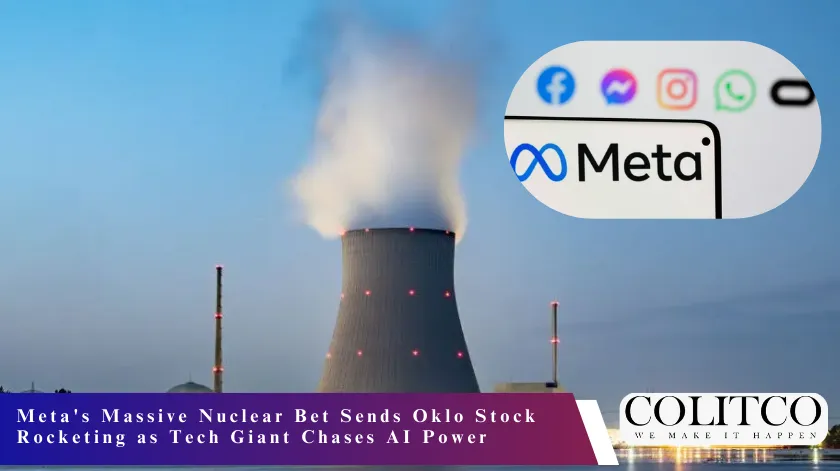
Meta Platforms has thrown down the gauntlet in the race to secure clean energy for artificial intelligence, announcing a trio of nuclear power agreements that sent Oklo stock surging 20% in pre-market trading on 9 January 2026. The social media giant’s bold move signals a dramatic shift in how tech companies plan to fuel their AI ambitions.
The deals centre on a 1.2 gigawatt nuclear energy development in Southern Ohio, positioning Meta to power its ambitious Prometheus AI supercluster with zero-emission baseload electricity. This represents one of the largest corporate commitments to nuclear energy in tech industry history.
Three-Way Nuclear Partnership Takes Shape
Meta’s strategy involves agreements with three distinct nuclear energy providers, each bringing unique capabilities to the table.
Oklo, a next-generation nuclear technology company, will lead the charge with advanced small modular reactors designed specifically for data centre applications. The company’s compact Aurora powerhouses can deliver reliable electricity without the massive footprint of traditional nuclear plants.

Oklo Aurora powerhouse [Oklo]
Energy giant Vistra Corporation joins the partnership, contributing established grid infrastructure and operational expertise. Vistra stock also responded positively to the announcement, reflecting investor confidence in the nuclear renaissance sweeping corporate America.
A third partner, yet to be fully detailed in public statements, rounds out Meta’s diversified approach to securing nuclear capacity.
Why Ohio? Strategic Location for AI Infrastructure
Southern Ohio emerged as the preferred location for several compelling reasons.
The region offers robust electrical grid connections, proximity to Meta’s existing data centre operations, and a regulatory environment increasingly supportive of advanced nuclear deployment. Ohio’s industrial heritage and skilled workforce provide additional advantages for constructing and operating sophisticated energy infrastructure.
The 1.2 GW capacity represents enough power to run approximately 800,000 homes, though Meta will dedicate this output entirely to data centre operations. This massive energy commitment underscores the voracious appetite of modern AI systems, which can consume electricity at rates that dwarf traditional computing workloads.
Prometheus AI Supercluster: Meta’s Computing Crown Jewel
The nuclear deals directly support Meta’s Prometheus AI supercluster, an ambitious computing project designed to push the boundaries of artificial intelligence capabilities.
Prometheus will handle everything from training massive language models to processing real-time AI features across Meta’s family of applications: Facebook, Instagram, WhatsApp, and emerging AI products. The supercluster requires uninterrupted, reliable power that renewable sources alone struggle to provide.
Nuclear energy solves the “always-on” challenge that plagues solar and wind installations. Data centres cannot tolerate power fluctuations or downtime, making nuclear’s steady baseload output exceptionally valuable for AI infrastructure.

Meta’s New AI Supercluster, Prometheus [Inc.]
Wall Street Reacts: Nuclear Stocks Catch Fire
The market response proved swift and enthusiastic.
Oklo stock jumped approximately 20% in pre-market trading as investors bet on the company’s first-mover advantage in advanced reactor technology. The share price movement reflects growing recognition that tech giants will pay premium prices for reliable, clean power solutions.

Oklo Price Chart [Nasdaq]
Vistra stock similarly gained ground, with vst stock climbing as analysts upgraded their outlook on the company’s nuclear asset portfolio. The utility’s conventional and nuclear generation capacity suddenly looks far more valuable in a world where hyperscalers desperately need electricity.
Other nuclear-exposed stocks, from uranium miners to reactor component manufacturers, experienced sympathetic gains as the sector caught Wall Street’s attention.
Tech’s Nuclear Turn: A Broader Industry Trend
Meta’s announcement continues a remarkable industry shift towards nuclear energy.
Microsoft recently signed a deal to restart the Three Mile Island nuclear facility in Pennsylvania, while Amazon invested in small modular reactor development through agreements with X-energy. Google has explored similar partnerships, though details remain less public.
This nuclear embrace stems from a brutal realisation: AI’s electricity demands are growing faster than renewable capacity can scale. A single ChatGPT query consumes roughly 10 times more energy than a Google search, and that’s before accounting for the massive training runs required to create these models.
Traditional data centres operate at roughly 1-5 megawatts. Modern AI-focused facilities can demand 50-100 megawatts or more. Future exascale computing installations might require dedicated power stations, making nuclear partnerships not merely attractive but essential.
Environmental Calculus: Nuclear vs Renewables Debate
The tech industry’s nuclear pivot has sparked debate within environmental circles.
Supporters argue that nuclear provides the only realistic path to zero-carbon, reliable baseload power at the scale AI requires. Small modular reactors offer safety improvements over previous generations, with passive cooling systems and reduced waste profiles.
Critics counter that renewable energy combined with battery storage could meet these needs without nuclear’s legacy concerns around waste disposal and decommissioning costs. They point to rapid improvements in solar efficiency and battery technology as evidence that patience might yield cleaner solutions.
Meta’s position appears pragmatic rather than ideological: the company needs massive amounts of reliable electricity immediately, and nuclear offers the fastest path to that goal while maintaining carbon reduction commitments.
Regulatory Hurdles and Timeline Uncertainties
Despite the market excitement, significant obstacles remain before electrons flow.
The Nuclear Regulatory Commission must approve Oklo’s reactor designs and issue operating licenses – a process that can stretch years even under expedited review. Local and state permitting adds additional layers of complexity and potential delay.
Construction timelines for nuclear facilities historically exceed initial projections, often by substantial margins. Even advanced small modular reactors require careful assembly of complex systems with exacting safety standards.
Financial analysts estimate the earliest possible operation date falls in the 2029-2030 timeframe, with 2031-2032 representing a more conservative projection. This timing poses challenges for Meta’s AI roadmap, potentially requiring interim power solutions to bridge the gap.
What This Means for Investors
The Meta-Oklo-Vistra partnership creates several investment implications worth monitoring.
Nuclear technology stocks, particularly those focused on small modular reactors, likely have further room to run as additional tech companies announce similar deals. Companies with existing nuclear assets or expertise in reactor construction should benefit from renewed industry attention.
Traditional utilities with nuclear fleets may see valuation improvements as their baseload capacity becomes strategically valuable rather than merely legacy assets. Uranium mining companies represent another potential beneficiary, though the advanced reactor designs may use different fuel cycles than conventional plants.
For Meta shareholders, the nuclear commitments represent both opportunity and risk. Success would secure competitive advantages in AI development through reliable, cost-effective power. Delays or cost overruns could hamper Meta’s ability to execute its AI vision while competitors potentially leap ahead.
Also Read: Intel Shares Soar 8% Following Major AI Processor Reveal at CES 2026
The Bottom Line
Meta’s nuclear energy deals with Oklo and Vistra mark a watershed moment in corporate energy strategy.
The agreements demonstrate that tech’s AI ambitions have outgrown traditional power solutions, forcing companies to think like utilities and make decade-long energy investments. The 20% surge in oklo stock reflects Wall Street’s belief that this represents the beginning of a much larger trend.
Whether these nuclear bets pay off remains uncertain. But Meta’s willingness to commit to complex, capital-intensive energy projects underscores just how seriously the company takes its AI future – and how far it will go to secure the power needed to compete.


