
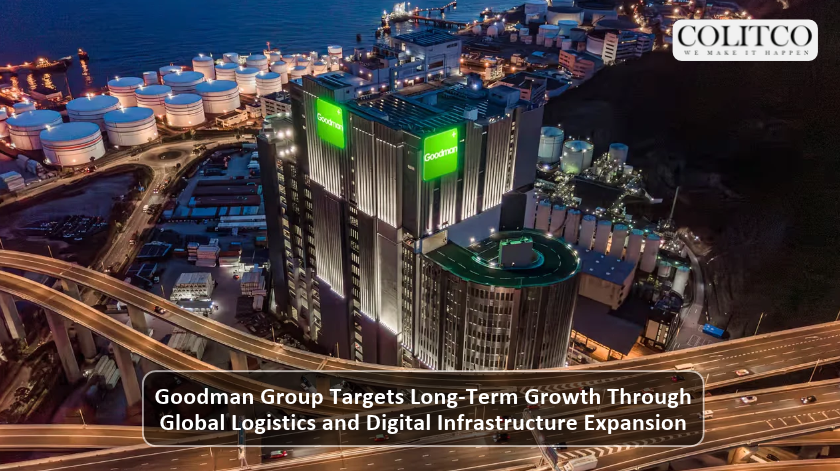
Goodman’s annual meeting on 19 November 2026 showed how far its development business has shifted. Data centres now dominate the work underway, but logistics properties still have a part to play. In this article, Colitco looks at how those two businesses fit together, who is funding the next developments and what securityholders should watch as projects move towards completion.
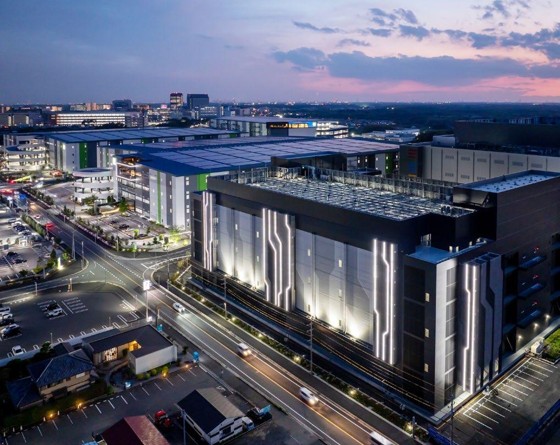
Figure 1: Goodman Business Park in Greater Tokyo, Japan, pictured in the company’s November 2026 AGM presentation. Credit: Goodman Group.
Existing Logistics Sites Give Goodman Time to Prepare for Development
Goodman’s global power bank spans 17 cities. Many of the sites are already operating logistics properties, earning income while the group prepares for possible redevelopment.
That makes the starting point different from buying vacant land and waiting for approval. Rent can continue during part of the preparation period. Goodman still needs to resolve power access, permissions and customer requirements before a future project becomes a working facility.
The Goodman Group logistics property business also has customers with changing needs. Warehouses accommodating automation, robotics and electrification require more sophisticated equipment and greater power capacity. The development opportunity therefore extends beyond replacing warehouses with data centres.
Data Centres Now Account for Most of the Construction Workbook
At the AGM, Goodman described approximately AUD 20 billion of development work across 51 projects. Data centres represented 79% of that value, with ten under construction. Its stabilised data centre portfolio was fully leased.
Those figures describe different stages. Fully leased operating assets provide evidence of customer demand. Buildings under construction still have work ahead before they can offer the same evidence.
For the Goodman Group data centre expansion, the practical questions concern delivery. When will power be available? When can the customer move in? How much remains to be spent before that happens? A large development book gives the company opportunities, but the timing of each completion matters to earnings.
The Financial Starting Point Leaves Room to Fund Growth
| Measure | FY2026 |
| Operating profit | AUD 2.7 billion; up 15.7% |
| Total property portfolio | AUD 89 billion |
| Occupancy | 96% |
| Like-for-like property income growth | 4% |
| Gearing at year end | 6.5% |
| Development work in progress | AUD 19.7 billion; up 53% |
The FY2026 figures above describe the completed financial year. The approximately AUD 20 billion workbook and 79% data centre share came from the November AGM address. They should not be treated as measurements taken on the same day.
The Goodman Group growth strategy begins with an established income base. FY2026 occupancy of 96% and like-for-like property income growth of 4% show that existing properties continued to contribute while construction expanded.
Low gearing provides flexibility, although it does not remove the cost of the work ahead. Larger facilities tie up capital for longer and require coordination between contractors, utilities and customers.
Investment Partners Share the Cost of Bigger Projects
Approximately 90% of Goodman’s data centre projects underway, including their future expansion capacity, are held through partnerships or joint ventures. The group invests alongside its partners rather than carrying every project on its own balance sheet.
That structure can spread funding requirements across several investors. Goodman also shares the economics of those investments. The headline development value is therefore not the same as the amount Goodman alone must contribute, or the income it will eventually retain.
The group can use leases, joint ventures and operating models to meet customer requirements. Readers following its wider digital infrastructure interests can also see Colitco’s coverage of the Goodman and Digital Realty approach to NextDC.
Retaining Cash Supports Construction Before Higher Distributions
Goodman remains on track for 9% operating earnings per security growth in FY2027. Its estimated full-year distribution is 30 cents per security, held at that level to retain capital for development and future growth.
For an investor seeking an immediate increase in income, that distinction matters. Earnings growth does not automatically mean a higher cash distribution. Management is keeping more capacity inside the business while it completes the current programme.
The decision will be judged over several years. Retained money needs to earn an acceptable return, and construction delays can postpone the point at which a project starts contributing.
Completed Projects Will Provide the Next Useful Test
Goodman generated 66% of FY2026 operating earnings outside Australia. That spread gives it several markets in which to deploy capital, but also exposes projects to different planning systems, power constraints and customer timetables.
Three checks will help securityholders assess progress:
- Delivery: Are projects moving from construction into leased, operating facilities on the expected timetable?
- Funding: How much capital must Goodman contribute alongside its partners as construction advances?
- Returns: Does operating earnings growth follow the investment, while gearing remains controlled?
Goodman has sites, customers and capital partners already in place. Its next task is to bring those elements together across a much larger digital infrastructure programme. The strongest evidence will be completed facilities earning income, followed by the returns that reach securityholders.
ALSO READ: Five ASX Businesses, Five Growth Stories: Analysing Their Financial Outlook to 2030
FAQs
Has Goodman Stopped Investing in Logistics?
No. Logistics remains part of its portfolio and development business. Some income-producing sites also offer future redevelopment opportunities.
Does Goodman Fund the Entire AUD 20 Billion Workbook?
No. The figure describes development work, including projects held with partners. It is not a statement of Goodman’s standalone funding obligation.
Is the 9% Earnings Growth Target Guaranteed?
No. It is FY2027 operating earnings per security guidance, reaffirmed at the AGM, and remains subject to business performance.
Why Is the Distribution Staying at 30 Cents?
Goodman says retaining capital supports its development programme and future growth. The 30-cent figure is its estimated full-year distribution.
Disclaimer: This article provides general information, not personal financial advice. Figures reflect Goodman’s 19 November 2026 AGM materials. Forecasts, project timing and distributions may change. Consider the company’s latest disclosures and your circumstances before making an investment decision.

Elizabeth Jones is a finance and mining content specialist with over 10 years of experience creating clear, SEO-driven content across fintech, investing, banking, insurance, cryptocurrency, and resource markets. She transforms complex financial data and industry trends into engaging, reader-focused articles that improve understanding and audience engagement.