
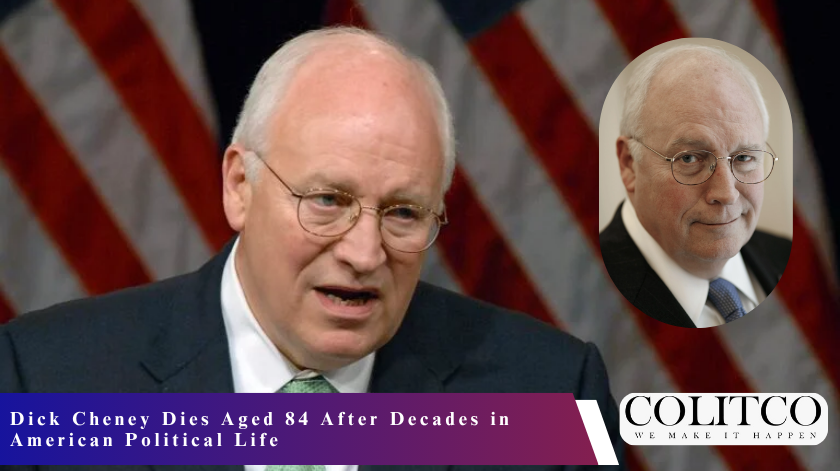
Dick Cheney, the former Vice President of the United States under President George W. Bush, is dead, and he was aged 84. His family confirmed that he died on 3 November 2025, as a result of complications caused by pneumonia and poor cardiac and vascular problems. The statement was announced by the family, and it stated that Cheney had died in peace at his home in Virginia in the presence of his wife Lynne and his daughters Liz and Mary.
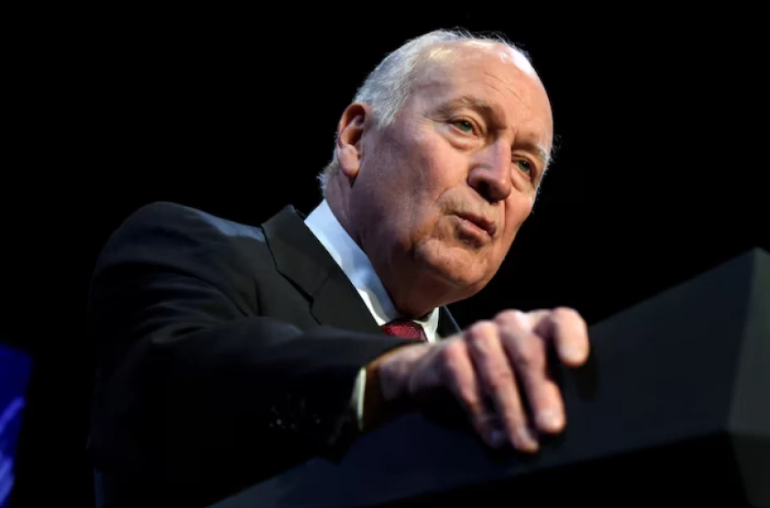
The death of Cheney brings to a close over forty years of political career that influenced the American foreign and security policy in ways that remained far-reaching. He was a powerful vice president in the history of the United States, as he was known to have been influential during the Bush administration.
Early Life and Education
Richard Bruce Cheney was born on 30 January 1941 in Lincoln, Nebraska. He grew up in Casper, Wyoming, and he had an interest in the affairs of the people at an early age. He grew up in a small town in the West, which influenced his practical attitude towards politics, a trait that would characterize his future career in Washington.

He started his tertiary studies at Yale University but changed to the University of Wyoming, where he pursued his degree in the field of political science, completing both the undergraduate and graduate degrees. Cheney studied at the University of Wisconsin, where he undertook doctoral studies in political theory prior to entering the public service in the late 60s. His studies gave him a ground to base his analytical view of governance and such making of policies.
Rise Through Washington’s Political Ranks
Cheney started his youth in Washington under the leadership of President Richard Nixon, where he served as a congressional aide and later came into the White House as a staff member. He was the youngest individual to hold the White House Chief of Staff under President Gerald Ford at the age of 34 by the year 1975.
Cheney left the Ford administration to have a successful run after that in the U.S. House of Representatives. He served Wyoming from 1979-1989 and had a reputation for being a disciplined legislator who was concerned with national defence and fiscal policy. His career in Congress was characterized by a gradual rise to the position of republican leadership that ranked him as a practical policymaker.
Tenure as Secretary of Defence
Cheney was appointed by President George H. W. Bush as Secretary of Defense in the year 1989. At this time, he was a commander of the U.S. military presence in the Persian Gulf War, also referred to as Operation Desert Storm. Cheney handled military affairs that saw the rapid liberation of Kuwait after Iraq invaded the country in 1990.
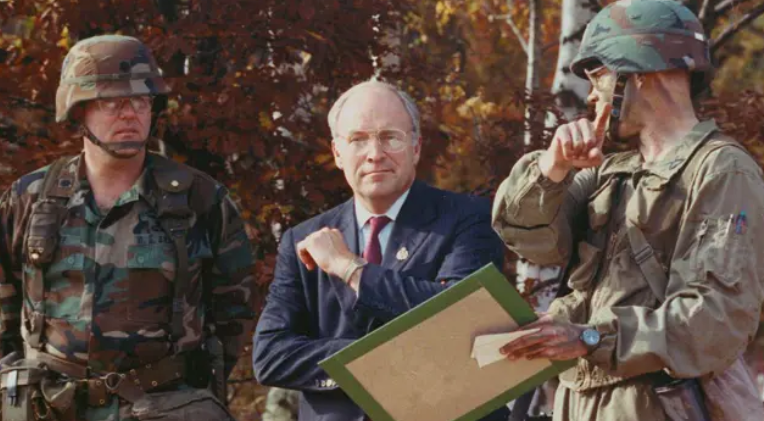
The Gulf War in his leadership made his name nationally known, and bipartisan respect was accorded to him. Cheney was preoccupied with the modernisation of the U.S. military and the adjustments of the post-Cold War strategies. His service was subsequently rewarded with the Presidential Medal of Freedom. In 1993, having moved out of the office, he joined the private sector, working as the Chief Executive Officer of Halliburton, an energy and engineering company headquartered in Texas.
Role as Vice President Under George W. Bush
Dick Cheney came back to be elected in 2001 as Vice President to President George W. Bush. The influence during the period of administration became very popular, especially following the terrorist attacks of 11 September 2001. Cheney has become a key actor in the policy of the U.S. national security and international relations in a complicated world order.
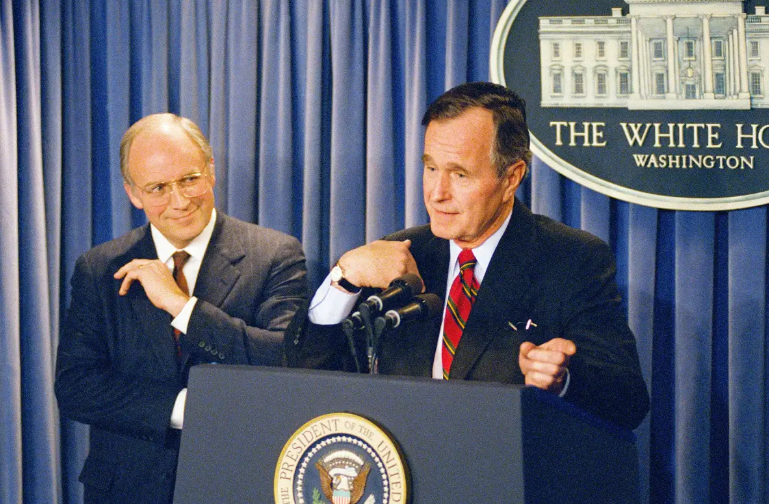
He was also actively involved in influencing the invasion of Iraq in 2003, using the intelligence analysis that Iraq had weapons of mass destruction. The ruling sparked protracted debates on the war and its justification. Cheney also favored improved interrogation programmes and increased executive authority in national security systems. His tenure reinvented the conventional vice-presidential position, making it an active governance and decision-making position as opposed to a ceremonial one.
Health Challenges and Resilience
Dick Cheney has had repeated problems with his health throughout his career. His first heart attack was in 1978, and in the next decades, he had a number of heart attacks. In 1988, he underwent a quadruple bypass surgery and subsequently had to have a defibrillator implanted. Nevertheless, he did not give up working in the top governmental and corporate positions.
Cheney was put on mechanical heart assistance years ago but received a heart transplant in 2012. The process prolonged his life and enabled him to remain involved in the community through writing his memoir in My Time and addressing political gatherings. His strength came to form his social persona as he did not give up on doing anything despite his medical issues.
Later Years and Family Legacy
Cheney continued to play a high-profile role in the post-office life by commenting on matters related to security and defence. Although he was committed to most of the policies of his former administration, he later went off track and did not follow the path of his party. His daughter Liz Cheney, who served as a former U.S. Representative in Wyoming, became one of the Republican critics of former President Donald Trump.
Cheney has been a vocal advocate of her daughter, with the creation of constitutional governance, and it was only when he was in a high position in his party that he disagreed publicly. His family was still active in the political discourse, and it was a tradition that was closely linked to American conservative politics.
By the time of his retirement, Cheney remained influential via the think tanks, interviews and written works which examined his opinion about governance and foreign policy. His 30-year experience in Washington made him one of the most experienced personalities in the modern history of the United States politics.
Tributes and Reflections on a Long Career
There were numerous praises after his demise, which were made by both Republicans and Democratic leaders. President George W. Bush has shown his condolence saying that Cheney was a close adviser and a good friend. His former colleagues remembered his service commitment and policy detail.
Another contribution that was recognized by the international leaders to world security discourse was his input. Opinions concerning his policy choices are still mixed, but most of them were attributed to his discipline and his service to his country. Cheney succeeded in maneuvering through complicated political and security landscapes, which made a great impression on the executive governance of the United States.
His death prompted a new debate over the development of the vice presidency with Cheney making it an office that is more operation-oriented and strategic in decision making. It was pointed out by analysts that his tenure would forever change the expectations towards upcoming vice presidents.
Final Thoughts
The way of life of Dick Cheney was in one of the most important periods in the U.S. and world politics. Since he started as a Wyomans at the start of his career till at the centre of American government, he influenced the defence and security policy at critical times. The balance between bureaucratic skills and political expediency in his leadership approach was evident.
His death at 84 marks the end of a generation in the history of the political leadership of the United States. The legacy of Cheney remains a subject of discussion and research among scholars and policy-makers. His legacy is that his role as vice president was redefined and the extent of influence he had in the contemporary American government.
Also Read: Toyota GR Supra Supercar Racing Marks a V8 Comeback
FAQs
- Who was Dick Cheney?
Dick Cheney served as the 46th Vice President of the United States from 2001 to 2009 under President George W. Bush. He previously held roles including U.S. Secretary of Defence from 1989 to 1993 and U.S. House Representative for Wyoming from 1979 to 1989.
- Where was Dick Cheney born and where did he grow up?
He was born on 30 January 1941 in Lincoln, Nebraska, and grew up in Casper, Wyoming.
- What major public offices did Dick Cheney hold?
Key offices include White House Chief of Staff under President Gerald Ford from 1975 to 1977, U.S. Secretary of Defence under President George H. W. Bush from 1989 to 1993, and Vice President of the United States from 2001 to 2009.
- What was Dick Cheney’s educational background?
He attended Yale University but did not complete his studies there. He later earned a Bachelor of Arts and a Master of Arts in Political Science from the University of Wyoming and pursued doctoral studies at the University of Wisconsin.
- What health issues did Dick Cheney face?
Cheney had a long history of heart problems, including several heart attacks, bypass surgery, and the implantation of a defibrillator. He underwent a heart transplant in 2012 after years of treatment for cardiac disease.
- When did Dick Cheney pass away and what was the cause?
He died on 3 November 2025 at the age of 84 due to complications related to pneumonia and existing cardiac and vascular disease.
- What role did Dick Cheney play in U.S. foreign policy as Vice President?
During his time as Vice President, Cheney played a central role in shaping U.S. national security and foreign policy, particularly after the terrorist attacks of 11 September 2001. He supported the 2003 invasion of Iraq, citing concerns over weapons of mass destruction.
- What was Dick Cheney’s role during the Gulf War?
As Secretary of Defence, Cheney oversaw U.S. military operations during the Persian Gulf War, managing the campaign to liberate Kuwait following Iraq’s invasion in 1990.
- What was Dick Cheney’s position in the private sector?
After leaving the Defence Department, Cheney became the Chief Executive Officer of Halliburton, an energy and engineering corporation based in Texas. He held the position throughout much of the 1990s before returning to public service.
- How is Dick Cheney’s legacy viewed?
Cheney is remembered as one of the most influential vice presidents in U.S. history. His tenure reshaped the role of the office, expanded executive authority, and left a lasting mark on national security and foreign policy debates.


