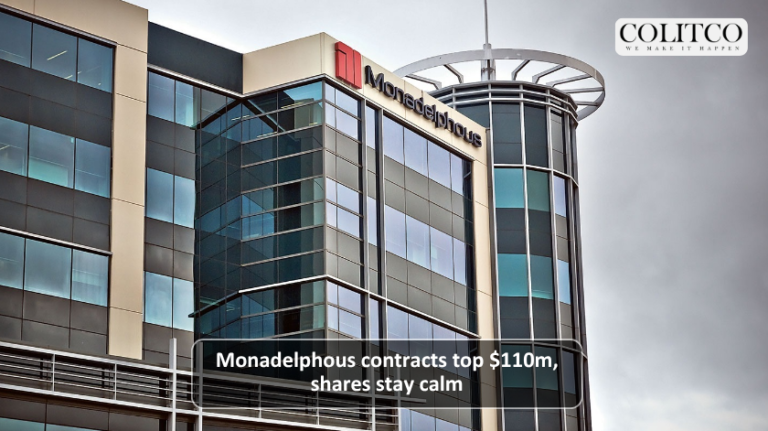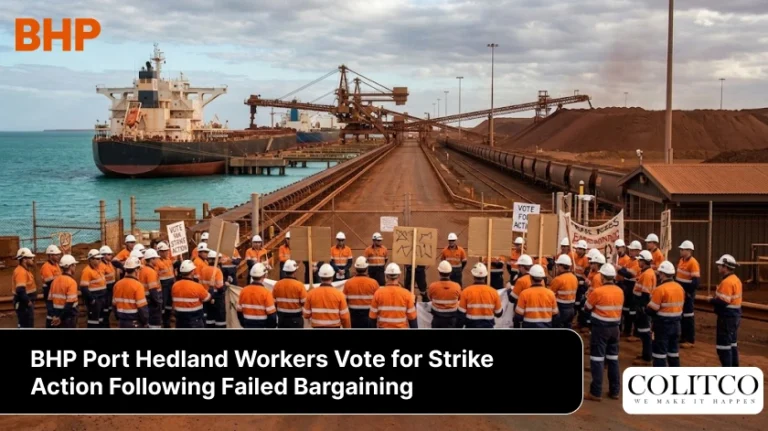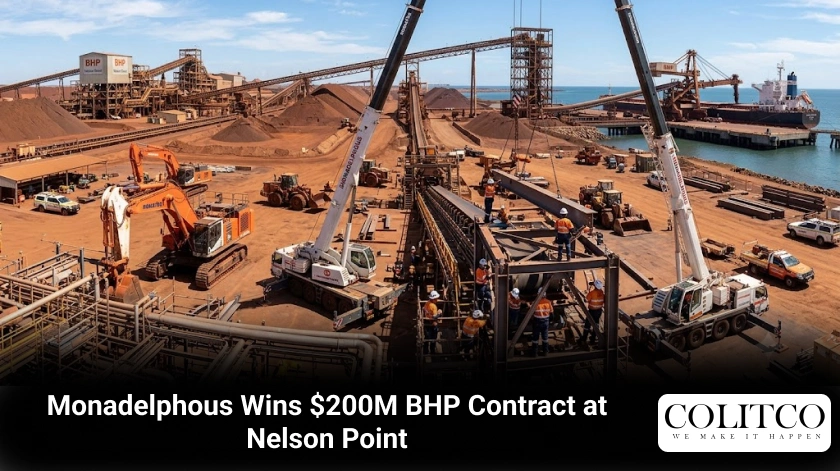
Perth engineering group Monadelphous told the market on 5 August 2026 that it had won the job. The client is BHP. Nelson Point, the iron ore export terminal in Port Hedland, Western Australia.
The scope of works involves the installation of mechanical, structural, piping, electrical and instrumentation systems for the new Car Dumper No. 6 as well as material handling systems required to feed the dumper. Work starts immediately and runs to 2028.
Two hundred million dollars is real money. But the headline figure is not the most interesting part of this one.
What the Monadelphous BHP contract actually covers
CD6 is a single piece of a much larger spend. BHP sanctioned the $1.4 billion Port Debottlenecking Project 2, or PDP2, and broke ground at Nelson Point in December 2025. Monadelphous has now picked up the construction package for the dumper itself.
That distinction is worth sitting with. A car dumper is not a shed. It grips two loaded 135-tonne rail cars, tilts them through roughly 160 degrees, and pours up to 16,000 tonnes of Pilbara ore an hour into the hoppers below.
The steel and mechanical fit-out is the hard, labour-heavy heart of the whole project. That is the bit Monadelphous just won.
Managing Director Zoran Bebic said the win is a testament to the company’s history of delivery in terms of its long-term customer relationships. His line on the job was plain:
“We look forward to working closely with BHP to successfully deliver PDP2 and increase Port capacity.”
No fireworks. That reads about right for a contractor who has been on this wharf for years.
Car Dumper 6 sits at the choke point of BHP’s iron ore machine
Port Hedland is the busiest bulk export port on the planet by tonnage. Five car dumpers currently share the load across Nelson Point and Finucane Island. Add a sixth and BHP buys itself room to move.
The maths behind it is blunt. Today BHP can keep five dumpers available only around 60 per cent of the time. With CD6 in place, that jumps past 90 per cent. More available dumpers, fewer bottlenecks when one unit drops offline.
That last point is the real driver. BHP has a wave of car dumper renewals starting in the 2028-29 financial year. CD6 is the spare capacity that lets it pull tired units out of service without choking exports.
First ore through the new dumper is pencilled in for late 2028. Monadelphous has to hand over on schedule for that plan to hold. Anyone who has watched a Pilbara build slip knows that timeline is the pressure point, not the price.
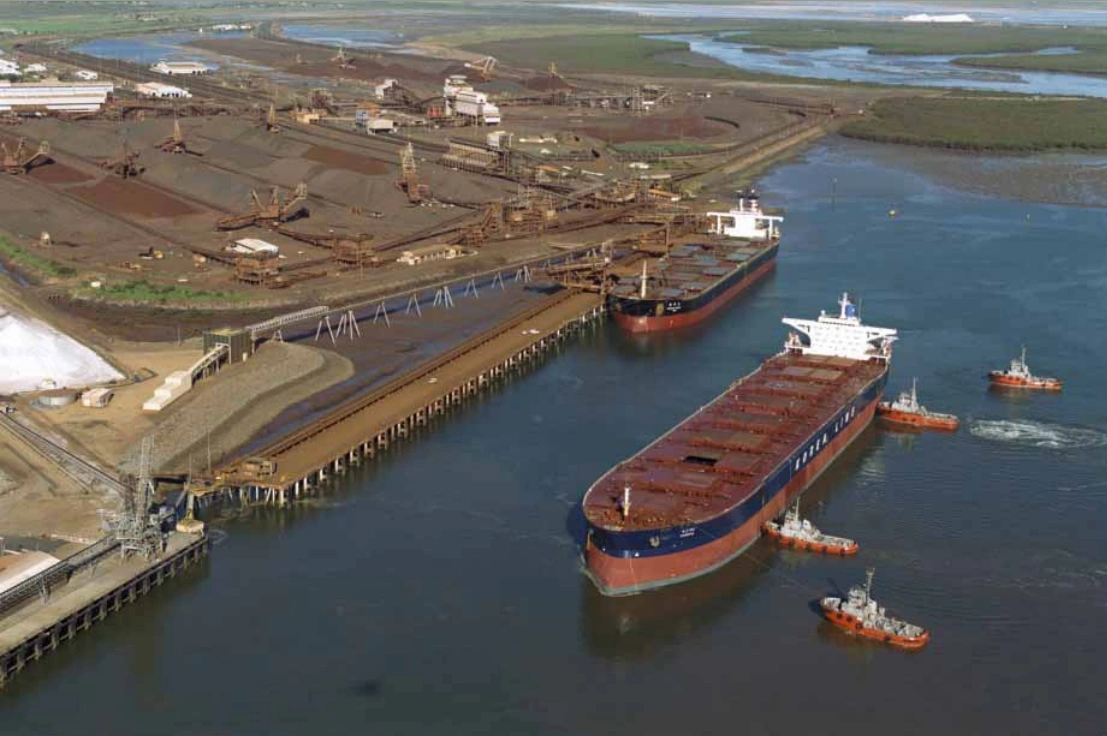
BHP’s Nelson Point terminal at Port Hedland, where Monadelphous will build the sixth car dumper.
Here is the counterintuitive bit. BHP spent much of late 2025 tangled in a pricing standoff with China, its single biggest iron ore buyer. The port capex never slowed. Read that how you like. BHP is building for volume it fully expects to keep shipping, and how that spend compares with Rio Tinto’s tells you both giants are still racing to squeeze more tonnes through the same harbour.
The BHP win extends a strong run for Monadelphous Group
This is not a one-off. Monadelphous Group has been stacking large contracts through 2026:
- $380 million with CS Energy for the Brigalow peaking power plant near Chinchilla in Queensland, running to early 2029
- A multi-disciplinary construction package at Rio Tinto’s Brockman Syncline 1 in the Pilbara
- The BHP Nelson Point job announced today
Line them up and a pattern shows. Monadelphous is winning the build scopes on the country’s biggest resource and energy jobs, not only the maintenance work it has long been known for.
At Port Hedland it already runs heavy maintenance, including the CD3 rebuild that leaned on the 1,600-tonne “Rubino” crane. Winning the CD6 construction turns a maintenance relationship into a builder’s one. That is an advancement of the value chain in the context of the managing director, Bebic, who is relatively new on the job.
Revenue for FY2025 was estimated at around $2.16 billion. (Secondary figure via S&P Global; worth confirming against the annual report before publishing.) A book of contracts stretching to 2028 and beyond gives it revenue visibility most contractors would envy.
The catch is labour. WA’s resources workforce is tight, and wages eat into margins on fixed-price construction. That is the number to watch when Monadelphous next reports, not the contract count.
Market snapshot
Monadelphous shares have run hard over the past year, riding contract momentum and record iron ore output across the Pilbara.
| Metric | Value |
|---|---|
| Share Price (5 Aug 2026) | $30.625 |
| 52-Week Range | $19.410 – $36.880 |
| Market Capitalisation | $19.410 – $36.880 |
| Shares on Issue | 100,522,616 |
Also Read our home page – https://colitco.com/
About Page – https://colitco.com/about-us/
FAQs
Q: How much is the Monadelphous BHP contract worth?
A: Around $200 million.
Q: What is Car Dumper 6?
A: BHP’s sixth ore-tipping unit at Nelson Point, Port Hedland.
Q: When does the work finish?
A: Expected in 2028.
Q: What is PDP2?
A: BHP’s $1.4 billion Port Debottlenecking Project 2 at Port Hedland.
Q: Who is Monadelphous’s Managing Director?
A: Zoran Bebic.
Disclaimer:
This article is for general information only and does not constitute financial or investment advice. Figures should be independently verified. Consider your own circumstances or consult a licensed adviser before making any investment decision.
Source:
https://www.monadelphous.com.au/media/5884008/260805-asx-announcement_pdp2.pdf

Elizabeth Jones is a finance and mining content specialist with over 10 years of experience creating clear, SEO-driven content across fintech, investing, banking, insurance, cryptocurrency, and resource markets. She transforms complex financial data and industry trends into engaging, reader-focused articles that improve understanding and audience engagement.