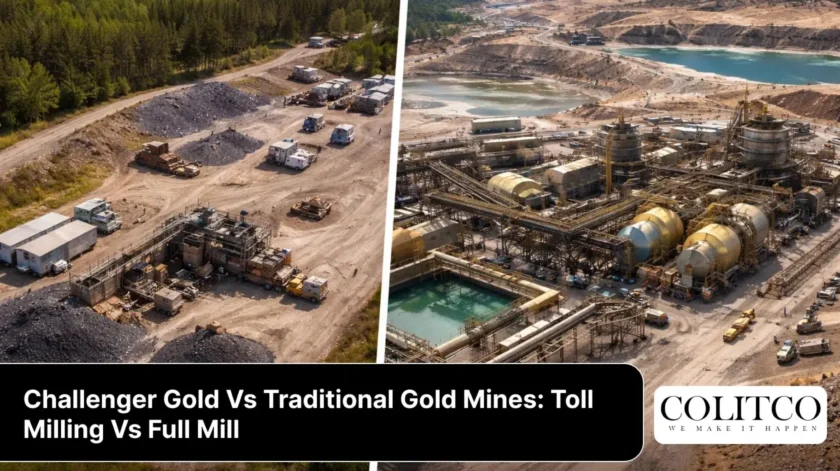
The Australian gold industry is moving towards lean development patterns and accelerated cash flow. Toll milling is also a preferred method of junior producers as opposed to expensive standalone mills.
This method reduces the capital intensity and lowers the risk in the projects at inception. Challenger Gold is using that model in offshore and drawing the attention of investors in gold mining in Australia.
It has embarked on ore haulage in Argentina in one of its projects, the Hualilan project, with a direct move towards production and revenues in the near future.
Instead of having to wait until a complete plant was built, the ore is currently shipped to a third-party processor. This option shortens the timelines, and capital is saved as production increases gradually.
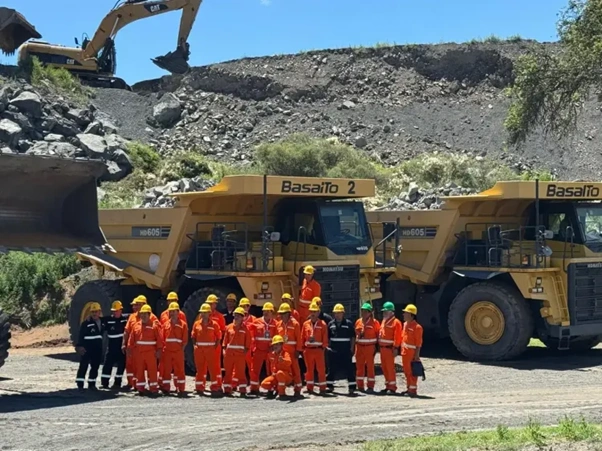
Ore haulage trucks depart Hualilán as staged toll milling begins. [Panorama MInero]
Challenger Gold Australia Advances Toward First Cash Flow
Mining operations started in December, and feed-grade ore is currently transported under controlled haulage conditions. This is transported to Austral Gold, where it is processed at the Casposo processing plant.
Casposo is approximately 165km by road from Hualilan. The toll milling contract will ensure that a minimum of 450,000 tonnes of near-surface material is processed within three years.
The first truck has a capacity of approximately 500 tonnes per day. About two weeks later, throughput will be doubled with the shifts being spread to 24-hour day and night shifts.
Transport is handled by three local contractors, which improves regional employment and supply chains. The ramped start-up is expected by the management to ease initial production and mitigate commissioning risk.
What Makes Toll Milling Different From A Full Mill Strategy?
Toll milling will be based on the infrastructure that is already present rather than the construction of new facilities. A full mill requires large initial capital, which allows for extended construction schedules.
Prior to the first gold being poured, juniors are often under pressure in terms of funds. Toll milling transforms fixed costs into operating costs and accelerates revenue.
It is also scalable flexibly when grades are better, or resources are increased. In the case of Challenger, ore gains entry to the province through a paved provincial road to Calingasta, which crosses the Rio de los Patos bridge, and onwards 32km to Casposo.
The Company constructed a bypass around Calingasta on time and on a restricted budget. A modular bridge is currently being put in place to enhance safety and logistics efficiency.
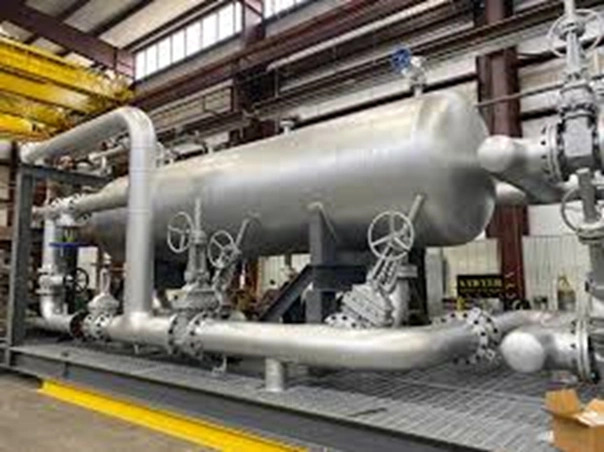
Modular milling and stockpile systems support lower-cost processing. [Sawyer Fabrication]
Safety And Logistics Measures Support Steady Operations
The plan is still based on haulage safety. To minimise the risk during its operation, Challenger contracted with veteran trucking companies. The entire ore loads are blanketed to reduce dust emission along the public roads.
The radio systems are used to maintain constant communication between each truck. Journeys are captured by internal and external cameras. Full visibility and accountability with the satellite GPS tracking.
Signalmen work in Calingasta, and town bridges are employed. These measures are designed to save the communities and ensure the regular delivery of ore. Good logistics can be used to keep plants fed and cash flow expectations on track.
Resource Scale Strengthens The Investment Case
Hualilan has a 60.6Mt resource of 1.1g/t gold, 6g/t silver, 0.4% zinc and 0.06% lead. This is equivalent to 2.8Moz of contained gold equivalent. The deposit comprises of high grade core with 1.6Moz of 5g/t gold.
There was a scoping study with a seven-year initial mine life. It was projected that production would amount to 116, 000 ounces of gold, 440, 000 ounces of silver and 9175 tonnes of zinc.
Challenger also has a standalone development that is progressing in the form of a pre-feasibility study. Such a study will come in the recent weeks. The scale provides optionality on the long term basis outside the toll milling stage.
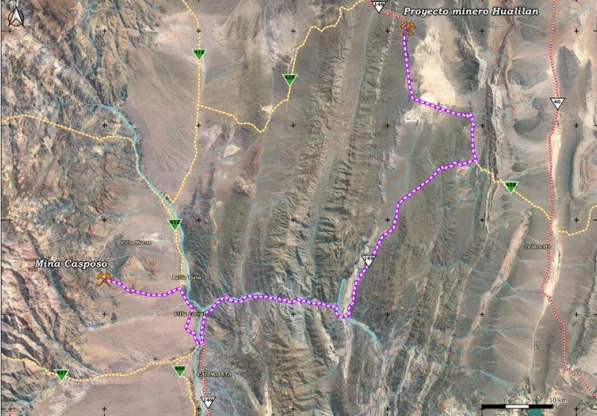
Map of Hualian to Casposo (165km) Haul Route. [ASX]
Why Could This Model Influence Gold Mine Investment Australia?
The trend in the gold mine investment in Australia is towards the light-capital entry and quick payoffs. The Toll milling suits this requirement by minimising the dilution and construction risk.
The strategy of Challenger shows how juniors can use resources to monetise without having to wait years to get a complete plant. Shareholders receive more timely revenue indicators and better valuation guidelines.
In case of success, such joint ventures might extend to emerging deposits. The strategy can transform development manuals in gold mining in Australia, in particular, where the idle processing capacity is available.
Challenger Gold Australia is now a step nearer to a stable production process and does not have to create an infrastructure on its own. This pragmatic paradigm is a combination of speed, safety and scale, which provides a template to future explorers who will be seeking disciplined development.
Also Read: Gold vs Silver: Crash Recovery Patterns for Australia and US Investors
FAQs
Q1. What is toll milling in gold mining?
A1: Toll milling uses an existing plant to process ore for a fee.
Q2. How much ore will be processed under the agreement?
A2: At least 450,000 tonnes over three years.
Q3. How far is Casposo from Hualilán?
A3: Casposo lies about 165km by road.
Q4. What is the project resource size?
A4: 60.6Mt containing 2.8Moz gold equivalent.