
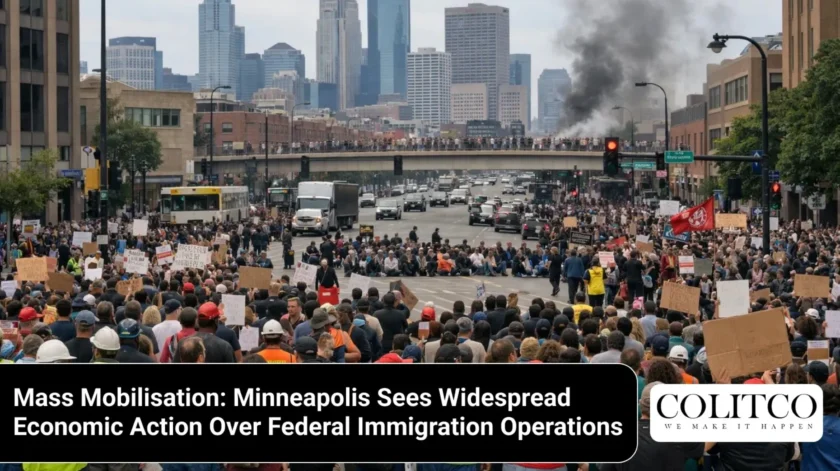
Minneapolis transformed into a centre of resistance as Minneapolis protests 2026 drew tens of thousands into freezing streets, marking an escalation in Minneapolis labour unrest. Hundreds of businesses shuttered their doors on 23 January 2026 in an economic protest against federal immigration enforcement operations. The Minneapolis strike action represented one of the largest displays of opposition to the current immigration policy in the state.
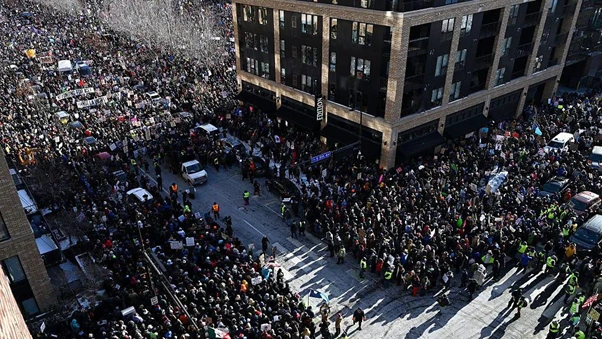
Figure 1: Aerial view of thousands of protesters filling downtown Minneapolis streets during the Minneapolis protests 2026, as demonstrators braved sub-zero temperatures to oppose federal immigration operations. [BBC]
The widespread Minneapolis protests 2026 followed more than six weeks of Immigration and Customs Enforcement operations across Minnesota. Temperatures plunged to negative 10 degrees Fahrenheit, yet protesters filled downtown streets as Minneapolis labour unrest spread across neighbourhoods. Organisers encouraged residents to skip work or school and refrain from shopping in a coordinated show of resistance.
What Triggered the Minneapolis Protests 2026 Movement?
The Minneapolis strike action emerged after a sustained Immigration and Customs Enforcement presence throughout Minnesota as part of Operation Metro Surge. Thousands of federal officers deployed to the state created widespread fear across immigrant and working communities. The Minneapolis protests 2026 intensified following the death of 37-year-old Renee Good earlier in January 2026.
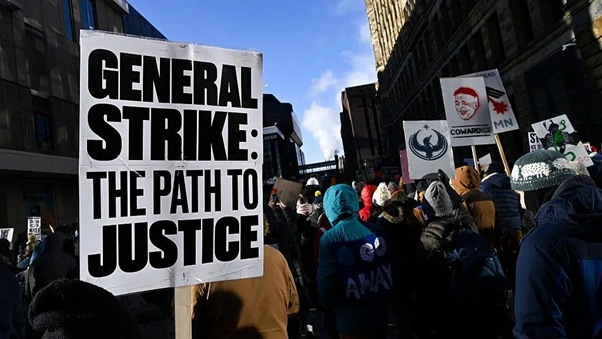
Figure 2: Protesters hold placards calling for a general strike during the Minneapolis strike action on 23 January 2026, highlighting demands for justice and economic resistance. [BBC]
Good’s killing by an Immigration and Customs Enforcement agent flared tensions across Minnesota, accelerating Minneapolis labour unrest. Local officials condemned the incident. School administrators in Columbia Heights announced four students aged five to 17 had been detained by federal agents. A two-year-old child was detained on 22 January 2026 while driving home with her father.
The Minneapolis strike action saw approximately 100 clergy members arrested at Minneapolis airport during protests. Faith leaders called on airlines to refuse to transport detainees arrested by Immigration and Customs Enforcement. Bishop Dwayne Royster, whose organisation Faith in Action supported local partners, demanded that federal agents leave Minnesota entirely.
Thousands of protesters marched through negative 23 degree Celsius temperatures to the city’s National Basketball Association arena. The Minneapolis protests 2026 featured chants and music as demonstrators made their way to the Target Centre. The rally occurred on the home court of the Minnesota Timberwolves basketball team.
Economic Impact of Coordinated Closure
Hundreds of Minneapolis businesses participated in the economic protest by closing operations on 23 January 2026. Restaurants, tattoo parlours and toy stores joined the Minneapolis strike action in solidarity. Corey Lamb shut his business, Harriet Grove Botanicals, and headed to protests. He objected to federal agent presence and expressed outrage over Good’s death.
Lamb described the immigration raids as an economic threat to his business and community. His Company relies on networks of friends and businesses to operate successfully. When individuals fear detention, it affects operations morally and economically across the greater Midwest region.
Kim Bartmann owns six restaurants in Minneapolis, including four that remain open during the winter months. She shut all participating locations for the Minneapolis protests 2026. The decision proved economically difficult despite supporting the cause. Staff initially wanted to stay open before recognising backlash risks.
Sales at Bartmann’s restaurants, including Barbette and Gigi’s Cafe, dropped more than 30 per cent over three weeks. The Immigration and Customs Enforcement operation prompted her to limit opening hours as customers and staff remained home. Workers with legal documentation still felt terrified to leave their homes.
Youth Organising Drives Protest Movement
University of Minnesota students backed the Minneapolis protests 2026 day of action enthusiastically. A Somali student explained that her community faced targeting and scapegoating. She emphasised America belongs to everyone regardless of origin. Somalis were brought to America fleeing war and instability during the 1990s.
An emergency medical technician student described treating people after Immigration and Customs Enforcement interactions. Patients arrive beaten, bruised and with broken bones. Federal officers sometimes demand to accompany patients to hospitals. The student praised coworkers who refuse to share patient information with agents.
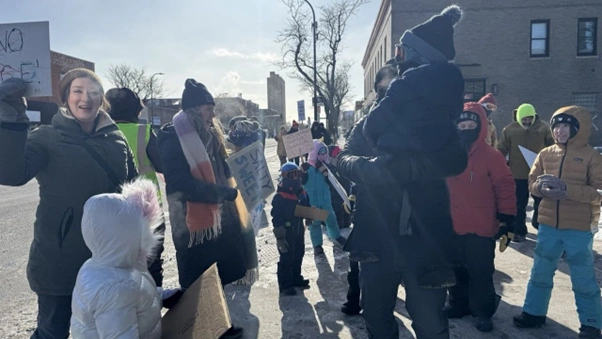
Figure 3: Families and children participate in the Minneapolis protests 2026, demonstrating broad community involvement despite extreme cold conditions. [WSWS]
Elementary school teachers reported children protesting at recess times and making signs in art class. Students asked why the government would kidnap and kill children. Older students organised their own walkouts. Educators supported students using their voices despite union opposition to striking.
Federal and Local Government Reactions
Vice President JD Vance visited Minneapolis on 22 January 2026, defending federal immigration operations. His provocative visit occurred one day before the Minneapolis strike action. Vance called for local law enforcement to coordinate with federal officers for immigration enforcement. He blamed left-wing agitators for causing chaos.
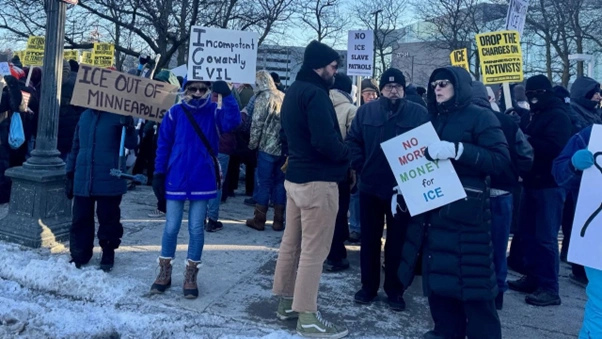
Figure 4: Demonstrators display anti-Immigration and Customs Enforcement signs during Minneapolis labour unrest. [WSWS]
Minnesota Governor Tim Walz invited President Trump to visit and help restore calm and order. His appeal followed weeks of sustained Minneapolis protests 2026 and neighbourhood confrontations. Walz changed tone from earlier criticism, describing operations as a war waged against Minnesota. The governor urged residents to rely on courts and elections.
FAQ
Q1. What caused the Minneapolis protests 2026 to occur?
Ans. The Minneapolis protests 2026 erupted after more than six weeks of Immigration and Customs Enforcement operations across Minnesota.
Q2. How many businesses participated in the Minneapolis strike action?
Ans. Hundreds of businesses across Minneapolis shut their doors on 23 January 2026 during the Minneapolis protests 2026. Restaurants, tattoo parlours and toy stores joined the economic protest.
Q3. What temperatures did the Minneapolis protests 2026 participants endure?
Ans. Protesters braved temperatures of- 10 degrees Fahrenheit during the Minneapolis strike action on 23 January 2026.
Q4. How did unions respond to the Minneapolis strike action call?
Ans. Union leadership opposed worker participation in the Minneapolis protests 2026 work stoppage. Teamsters Local 638 warned members that striking would violate collective bargaining agreements.


