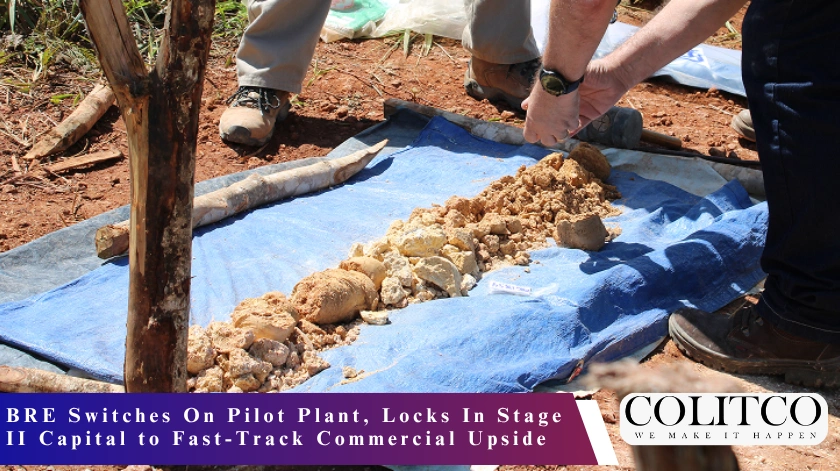
Brazilian Rare Earths Limited (ASX: BRE) has produced its first rare earth mineral concentrate from the BRE pilot plant in Camaçari, Bahia, Brazil. The milestone moves the company into bulk-scale metallurgical testing to support its pre-feasibility study.
In its 8 September 2026 announcement, BRE also confirmed R$6.4 million, approximately A$1.7 million, in partner contributions for the Stage II hydrometallurgical plant. That covers approximately 59% of expected Stage II capital and operating costs.
The update advances technical work on an integrated processing route. It does not announce commercial production, full project financing or revised financial forecasts.
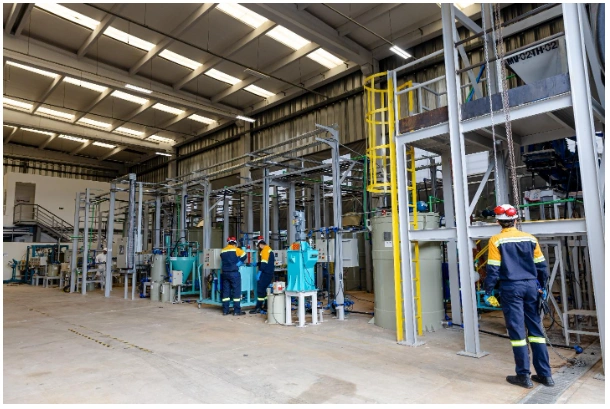 Figure 1: Stage I beneficiation facility at Camaçari, identified as having 100 kg/h capacity [Courtesy: Brazilian Rare Earths].
First Concentrate Production Supports Feasibility Work
Stage I uses physical processing, known as beneficiation, to upgrade ore into rare earth mineral concentrate. Its configurable circuits allow testing of different feedstocks from across the Rocha da Rocha Province.
First concentrate production demonstrates operation of the complete Stage I circuit. BRE will now run systematic campaigns to assess concentrate grades, recoveries and processing performance.
The BRE pilot plant will generate operating data for flowsheet design, equipment selection and cost estimates. It will also prepare material for downstream testing.
These campaigns matter because the company needs evidence of how different feedstocks behave under processing conditions. Commissioning establishes a working platform; repeated testing will provide the information required for engineering decisions.
Stage II Funding and Schedule Take Shape
The BRE stage II capital update centres on renewed support from SENAI CIMATEC and its partner organisations. SENAI CIMATEC has partnered with EMBRAPII, a Brazilian public-private industrial innovation initiative, to provide the funding.
The latest award brings total co-funding support for the Camaçari pilot facilities to R$14.6 million, approximately A$3.9 million.
Development item | Confirmed position |
Stage I status | Commissioned; first mineral concentrate produced |
Stage II partner contribution | R$6.4 million, approximately A$1.7 million |
Share of Stage II costs covered | Approximately 59% of expected capital and operating costs |
Total pilot facility co-funding | R$14.6 million, approximately A$3.9 million |
| Stage II equipment delivery | Expected in Q4 2026 |
| Stage II commissioning | Planned for Q2 2027 |
Source: Brazilian Rare Earths’ 8 September 2026 ASX announcement.
Detailed design is underway. The BRE stage II capital contribution supports the next testing phase, while the delivery and commissioning dates remain planned milestones.
Why Integrated Processing Tests Matter
- Longer processing chain: Stage II will add hydrometallurgical extraction and separation to the existing beneficiation circuit.
- Planned products: The program aims to produce neodymium-praseodymium oxide, heavy rare earth HRE+ concentrate and uranium yellowcake.
- Engineering evidence: Integrated testing will help refine process design for the planned Camaçari refinery.
- Customer evaluation: Product samples will support qualification work and offtake discussions.
- Quality control: Dedicated laboratory equipment is planned for rapid multi-element analysis.
- Development assessment: Results will inform studies of a potential accelerated Monte Alto mineral concentrate export pathway.
The export option remains subject to further engineering and technical studies. BRE has not assigned it a new production target or economic valuation.
ALSO READ: St George Mining Starts Pilot Plant Test Work at Araxá
Technical Partners Support Separation Work
SENAI CIMATEC will contribute applied research, industrial technology and technical education capabilities. The collaboration is also intended to support specialist skills and technical jobs in Bahia.
French separation specialist Carester will lead the separation workstream across the pilot program and pre-feasibility study. Its role includes support for engineering, design and commissioning of the planned refinery.
Carester is already BRE’s HRE+ concentrate offtake partner under a binding agreement with an initial ten-year term. The agreement covers product containing up to 150 tonnes annually of dysprosium and terbium.
Processing is planned at Carester’s Caremag facility in France. This commercial relationship provides context for customer requirements, although pilot testing must still establish relevant process and product-quality data.
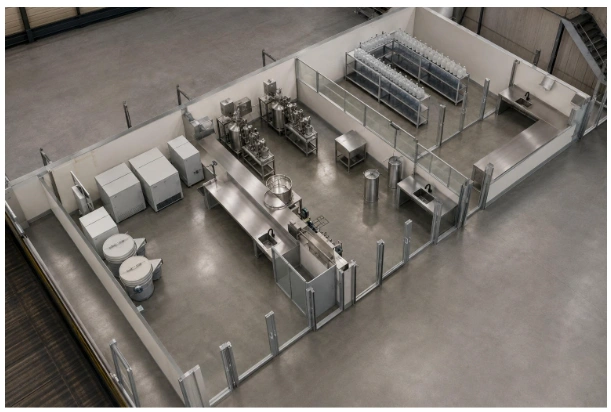 Figure 2: Rendering of the planned Stage II hydrometallurgical and separation pilot facility [Courtesy: Brazilian Rare Earths].
Co-Products Offer Potential Additional Value
The BRE commercial upside case includes recovering payable materials alongside rare earths. Testing will examine uranium, scandium, niobium, titanium and tantalum using solutions and residues generated during piloting.
The August Scoping Study forecast a C1 cash cost of approximately US$21 per kilogram of NdPr equivalent for the integrated Monte Alto and Camaçari case. Potential co-product credits were excluded.
BRE’s argument is that additional receipts could offset operating costs after allowing for extra recovery and selling expenses. Whether that works depends on recoveries, product quality, customer terms and incremental expenditure.
The announcement presents no revised cost estimate or global cost ranking.
Uranium and Scandium Need Different Assessments
The Scoping Study includes forecast uranium recovery and yellowcake capital and operating costs but assigns no uranium revenue. It cites average uranium production of 540 tonnes annually over the first five run-rate years and 466 tonnes annually over the mine life, expressed as U₃O₈.
Realising uranium value remains subject to applicable Brazilian requirements and agreed commercial arrangements with INB.
For scandium, approximately 43 tonnes of scandium oxide represents estimated annual feed content before metallurgical recovery. It is not a saleable production forecast.
Niobium, tantalum and titanium require further residue-upgrading and recovery work. No annual production estimates are presented for them.
The underlying Scoping Study is preliminary, with intended accuracy of approximately ±40%. Its conclusions are not assured.
What Happens Next at Camaçari
- Optimise Stage I: The BRE pilot plant will test feedstock variability, concentrate grades and recoveries.
- Deliver Stage II: Equipment is expected in Q4 2026, ahead of planned commissioning in Q2 2027.
- Improve analysis: New laboratory equipment will support process optimisation and product testing.
- Assess co-products: Further work will examine recovery routes, product specifications and commercial terms.
- Apply findings: Pilot data will feed into feasibility engineering and customer evaluation.
The next measure of progress is the quality of operating evidence generated, alongside delivery of the planned facilities.
FAQ
Q1. Where are the pilot facilities located?
They are at Camaçari in Bahia, Brazil, supporting processing studies for BRE’s rare earth development plans.
Q2. Has commercial production started?
No. Stage I has produced concentrate for metallurgical testing. The announcement concerns pilot operations and feasibility work.
Q3. How much Stage II funding is secured?
Partners will contribute approximately A$1.7 million, covering around 59% of expected capital and operating costs.
Q4. When is Stage II commissioning planned?
Commissioning is planned for Q2 2027, with equipment expected on-site in Q4 2026.
Q5. Has BRE lowered its forecast processing costs?
No. Co-product testing will assess potential cost credits, but the announcement provides no revised cost forecast.
Disclaimer
This article has been prepared for Colitco for informational purposes only and does not constitute investment advice. Information is based on Brazilian Rare Earths’ ASX announcement dated 8 September 2026. Readers should independently verify company disclosures before making investment decisions. Development schedules, study forecasts and potential co-product benefits remain subject to technical and commercial uncertainties.

Luke Carlino is a seasoned Copywriter, Content Strategist, and Social Media Manager specialising in Mining, Finance, and Business journalism. With more than a decade of industry experience, he brings rigorous editorial standards and commercial acuity to every project.