
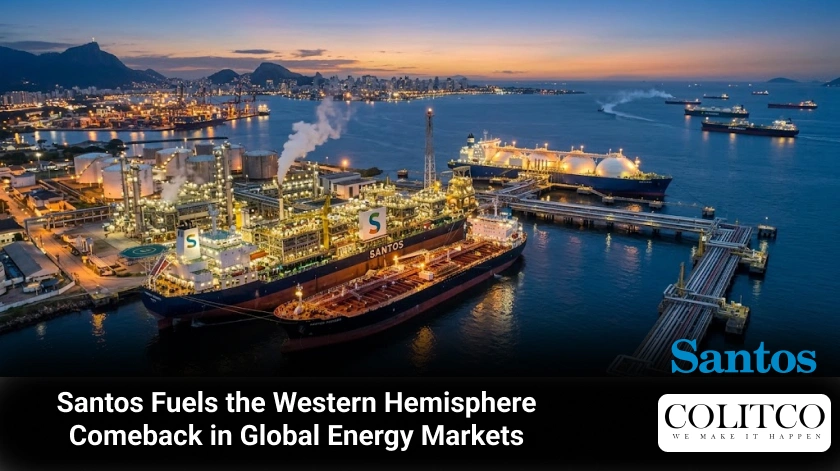
It has been a big week for Santos (ASX: STO) shareholders. The Company just loaded its first crude oil cargo out of the Pikka Phase 1 development in Alaska, right as oil markets need it most.
Figure 1: Santos corporate headquarters signage [Courtesy: Petroleum Australia]
Oil markets are shifting, and Santos just added weight to the Santos Global Energy Markets Expansion story. This is the Santos Oil and Gas Growth Strategy 2026 showing up as real barrels, not another investor day promise.
What Happened: Santos Loads First Pikka Crude Cargo
450,000 barrels of Alaska North Slope crude, loaded onto the Polar Resolution at Valdez Marine Terminal. Four years of construction and drilling, all riding on this one cargo.
It is the first commercial export from Pikka Phase 1, and it moves the Santos Energy Western Hemisphere Comeback from plan to reality.
Why This Matters for Santos Shareholders
Santos now has a live, cash-generating asset sitting in a strategically useful basin. Whether that translates into real returns depends heavily on oil prices holding up.
Oil Price and Free Cash Flow Impact
| Metric | Figure |
|---|---|
| Brent crude price | US$87 per barrel |
| Pikka operating cost | US$8 per barrel |
| All-in breakeven price | US$45–50 per barrel |
| Free cash flow per US$10 above breakeven | US$550–600 million annually |
| Current Pikka production | ~23,000 bopd (gross) |
| Target plateau production | ~80,000 bopd (Q3 2026) |
| Santos interest in Pikka Unit | 51% |
| Repsol interest in Pikka Unit | 49% |
Who Is Involved: Santos and Repsol Partnership
Santos runs Pikka Phase 1 and owns just over half of it, 51 per cent. Repsol, the Spanish energy major, holds the rest.
Kevin Gallagher, Santos’ Managing Director and CEO, was not shy about calling this a milestone. He said the Nanushuk formation was recognised as a new generation play in an established global super basin.

Figure 2: Drilling rig at the Pikka oil field on Alaska’s North Slope [Courtesy: Offshore Technology]
Mr Gallagher added that Pikka Phase 1 shows Santos can develop world-class resources safely and efficiently. The focus now moves to running it as a disciplined, low-cost operation.
Where and When: Alaska’s North Slope Timeline
The cargo is headed from Alaska’s North Slope to refineries on the US West Coast. Santos put its name to the announcement on 11 Aug 2026.
Pikka is currently producing around 23,000 barrels a day at gross. Santos has a target of raising that to around 80,000 by Q3 2026, more than triple where it is today.
How the Western Hemisphere Comeback Is Playing Out
Santos is not swimming alone here. Production across the Americas is climbing fast, and it is quietly rewriting the global oil supply picture.
Rising Production Across the Americas
US oil output sits at a record high. Brazil has also set a record for 4.5 million barrels a day, or almost 20 per cent on last year.
- Guyana now supplies close to 900,000 barrels a day
- Guyana is one of the fastest-growing economies in the world
- Western Hemisphere supply is offsetting disruption elsewhere
- The Strait of Hormuz remains under Iranian control
Demand Destruction and the China Factor
Chinese electric vehicle sales just hit a record in Europe. Closer to home, ASX-listed CAR Group says Australians are moving away from diesel toward EVs.
China is still the biggest swing factor for oil demand. Its industrial policy is pushing electric trucks and cars specifically to cut oil imports and prop up its own auto industry.
Santos Share Price (ASX: STO)
- Last traded price: A$8.035
- Market capitalisation: A$26.17 billion
- 52-week range: A$5.900 to A$8.240
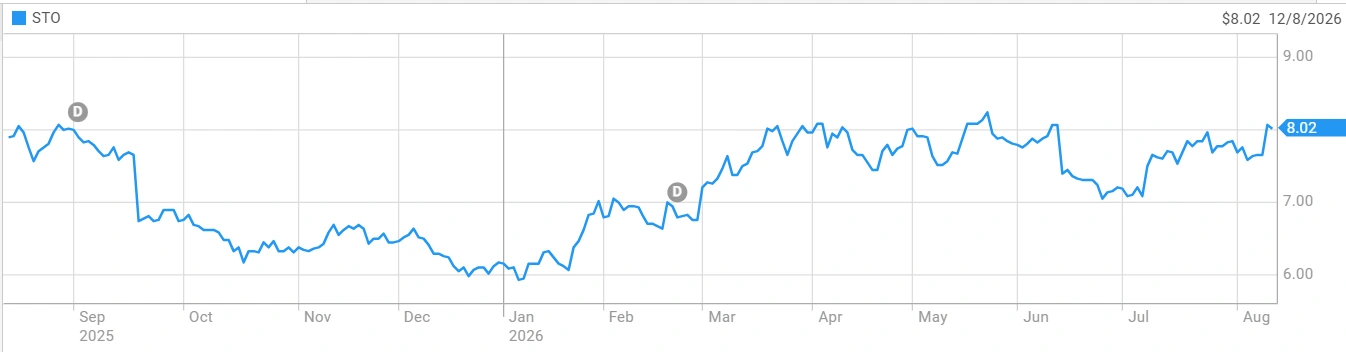
Figure 3: Santos (ASX: STO) share price movement over the past 12 months [Courtesy: ASX]
Industry Outlook
Global oil supply is rebalancing as Western Hemisphere output climbs. According to the ASX announcement, low-cost operators with assets like Pikka stand to benefit most from this shift.
That fits the broader thrust of the Santos Oil and Gas Growth Strategy 2026, betting on stable, lower-risk supply over geopolitical hotspots.
Future Direction and Impact on Santos’ Growth Strategy
The math for shareholders is simple: the nearer Pikka approaches 80,000 barrels per day, the more free cash flow starts accruing through 2026.
Impact on portfolio balance: Pikka now sits alongside Barossa as a second growth engine, giving Santos two legs to stand on rather than one.
Whether high oil prices last comes down to the Strait of Hormuz, and nobody has a clean answer on that yet. For now, the Western Hemisphere is providing more balance than most expected back in March.
FAQs
Q1. What did Santos announce this week?
Ans. Its first crude cargo out of Pikka Phase 1 in Alaska, right on schedule.
Q2. Why does Pikka matter beyond Santos?
Ans. It is one more sign the Western Hemisphere is quietly taking over as the world’s swing producer.
Q3. Is Pikka the only project driving Santos’ growth story right now?
Ans. No, Barossa is running alongside it, and together they are meant to carry Santos through to plateau production.
Q4. What could actually derail this Western Hemisphere comeback?
Ans. Mostly geopolitics. If the Strait of Hormuz reopens, a lot of this supply math changes fast.
Disclaimer
This article is meant only for informational purposes. If you are an investor who is watching Santos closely, all the data published in the content is sourced from ASX announcements and external sources. Kindly verify all the information related to the share price and market data. Any investment should be made at the investor’s own risk. Colitco does not hold any position in the above-mentioned company.
Source
- https://www.santos.com
- https://www.asx.com.au/markets/company/STO
- https://cdn-api.markitdigital.com/apiman-gateway/ASX/asx-research/1.0/file/2924-03119832-2A1688889&v=undefined
- https://mining.com.au/santos-and-the-resurgent-western-hemisphere/

Elizabeth Jones is a finance and mining content specialist with over 10 years of experience creating clear, SEO-driven content across fintech, investing, banking, insurance, cryptocurrency, and resource markets. She transforms complex financial data and industry trends into engaging, reader-focused articles that improve understanding and audience engagement.