
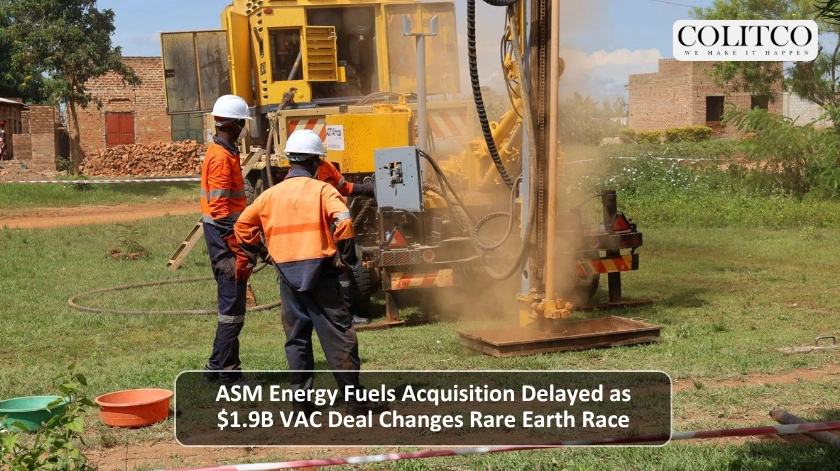
Energy Fuels is buying Australian Strategic Materials in a US$299 million deal. However, a surprise US$1.9 billion purchase of German magnet maker VAC has pushed the shareholder vote to a new date that is yet to be set.
What the ASM Energy Fuels Acquisition Is About
News on the acquisition of ASM Energy Fuels hit the market for the first time on Jan 20, 2026. Energy Fuels, also listed on the NYSE as UUUU and the TSX as EFR, agreed to purchase 100 percent of Australian Strategic Materials (ASX: ASM), valued at a price of approximately US$299 million.ASM shareholders will receive each A$0.053 share and a special dividend of as much as $A0.13 per share from the Australian firm with one share of UUUU.
Australian Strategic Materials
This brings the total value per ASM share to A$1.60. Once the deal goes through, ASM shareholders will own around 5.8% of Energy Fuels.
What Energy Fuels Gets From ASM
The most important asset in this deal is ASM’s Korean Metals Plant, also called the KMP. This plant is one of the very few places outside China that makes rare earth metals and alloys at a commercial scale. It currently runs at 1,300 tonnes per year, with plans to grow to 5,600 tonnes. A new US-based plant could add another 4,000 tonnes per year on top of that.
The deal also brings in ASM’s Dubbo Project in New South Wales. This project has all the permits needed but has not yet started construction. It is set to supply raw material to Energy Fuels’ White Mesa Mill in Utah, which processes rare earth oxides. Together, these two assets give Energy Fuels a rare earth chain that runs from the ground all the way to finished metal.
ASM Deal Terms — Key Numbers
| Detail | Value |
| Deal Type | Scheme of Arrangement |
| Total Equity Value | US$299M (approx. A$447M) |
| Price Per ASM Share | A$1.60 |
| Exchange Ratio | 0.053 EF shares per ASM share |
| ASM Stake in EF Post-Deal | ~5.8% |
| ASM Board Stance | Unanimous — in favour |
| Original Vote Date | 22 June 2026 (postponed) |
Why the ASM Scheme Vote Has Been Pushed Back
The ASM Energy Fuels acquisition ran into a major new development this week. On 23 June 2026, Energy Fuels announced it had signed a deal to buy Vacuumschmelze GmbH and related companies, known together as VAC. The total value of this new deal is around US$1.9 billion. That is more than six times the size of the ASM deal itself.
Energy Fuels will pay US$718 million in cash and issue 65.853 million new shares to fund the VAC purchase. It will also take on VAC’s US$140 million in net debt. After the VAC news came out, Energy Fuels shares fell 2.2% before the market opened. The scale of this move forced ASM to delay its shareholder vote so that new disclosure papers could be prepared.
Who Is VAC and Why Does It Matter
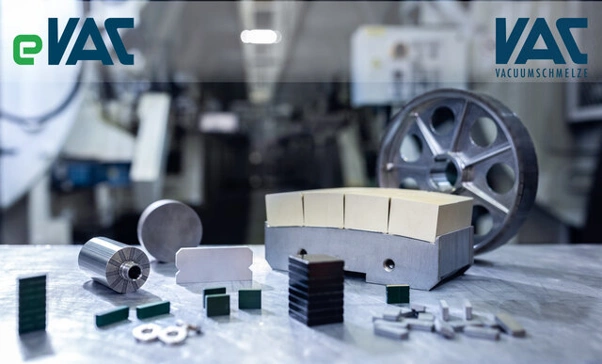
VAC is a German company that has been making magnets for over 100 years. It holds more than 400 patents and sells to over 1,000 customers around the world. Its plant in Sumter, South Carolina is the biggest permanent magnet factory in the United States. That plant can produce 2,000 tonnes of NdFeB magnet block per year and can be scaled up to 12,000 tonnes.
Vacuumschmelze GmbH & Co. KG
VAC is also the only company in both Europe and the US that makes the full range of high-performance NdFeB and SmCo magnets. These include the heavy-duty grades used in defense and aerospace work. In 2025, VAC’s core business made US$29 million in adjusted EBITDA. Once the Sumter plant runs at full current capacity, it is expected to bring in between US$65 million and US$75 million in annual EBITDA.
How the VAC Deal Ties Into the ASM Story
Cash from VAC’s operations is expected to help pay for Energy Fuels’ growth plans. This includes the Phase II expansion of the White Mesa Mill, which carries an estimated cost of US$410 million. The VAC deal also fits into a broader push by Western governments and companies to build rare earth supply chains that do not rely on China.
It’s a move that’s well underway and one which Australia is right in the heart of, with mining companies scrambling around the country to make sure that the crucial minerals they have found make their way to market. Companies such as Askari Metals, for instance, are exploring pegmatite deposits for the world’s insatiable appetites in battery metals and magnets – the very thing that underpinned the ASM Energy Fuels buy-up.
ASM Board Keeps Its Support for the Deal
Even after two delays, the ASM board has not changed its position. All ASM Directors still recommend that shareholders vote yes on both schemes. This stands as long as no better offer comes in. It also depends on the Independent Expert keeping its positive view of the deal.
Every ASM Director plans to vote their own shares and options in favour. This group includes major shareholder Ian Gandel, who holds 13.6% of ASM. The board’s clear and continued support points to confidence that the deal still makes sense, even as Energy Fuels grows bigger and takes on more debt.
US Government Backing Adds a New Layer to This Deal
Before the VAC news, the first delay came on 19 June 2026. That was when Energy Fuels disclosed a conditional US$725 million financing commitment from the US Office of Strategic Capital. This is a US government body that backs investments in critical minerals and defence supply chains.
That kind of government support is not common in private mining deals. It tells the market that the ASM Energy Fuels acquisition is not just a commercial move. It is part of a wider effort by the US to build a rare earth supply chain that sits outside Chinese control. ASM shareholders will need to weigh this as they review the updated scheme booklet before casting their votes.
Key Risks Still Hanging Over the Deal
The ASM Energy Fuels acquisition still needs four things to go through before it can close. These are approval from ASM shareholders, approval from the Federal Court of Australia, clearance from the Australian Foreign Investment Review Board, and regulatory sign-off on the new Energy Fuels shares to be issued. FIRB review may be simpler here because the Dubbo Project has not yet started mining operations.
That said, ASM shareholders are now being asked to vote on a deal involving a much larger and more leveraged company than the one that made the original offer in January. Energy Fuels has taken on billions in new commitments in the space of a few months. The new scheme booklet will need to explain clearly what this means for the long-term value of the shares ASM holders would receive.
Also Read: Core Lithium Advances BP33 Development as Underground Works Begin and First Shipment Departs
FAQs
Q1: What is the ASM Energy Fuels acquisition?
It is a deal where Energy Fuels is buying 100% of Australian Strategic Materials for around US$299 million through a court-approved scheme of arrangement under Australian law.
Q2: Why has the shareholder vote been delayed?
Energy Fuels announced a US$1.9 billion deal to buy VAC on 23 June 2026. This requires ASM to prepare and send out a new supplementary disclosure booklet before shareholders can vote.
Q3: Does the ASM board still support the deal?
Yes. All ASM Directors still recommend that shareholders vote in favour of the deal, as long as no better offer comes in and the Independent Expert holds its positive view.
Q4: What does VAC add to the combined company?
VAC brings over 100 years of magnet-making expertise, 400-plus patents, and the largest permanent magnet plant in the US. Together with ASM, it helps Energy Fuels build a full rare earth chain from mining to finished magnets, outside of China.
Disclaimer
All material contained in this article is for information only and does not represent investment advice for purchasing or selling any shares. All data is obtained from sources available on public companies such as announcements, press releases and other market data relevant at the time the article was published. Many things have the ability to change rapidly, such as share price levels, company buyouts and government decisions, etc. It would be beneficial to seek advice from a regulated financial advisor before undertaking any transaction.
Sources

Luke Carlino is a seasoned Copywriter, Content Strategist, and Social Media Manager specialising in Mining, Finance, and Business journalism. With more than a decade of industry experience, he brings rigorous editorial standards and commercial acuity to every project.