U.S. President Donald Trump has again questioned the value of the Canada–U.S.–Mexico Agreement, saying American factories should build vehicles at home, as formal review talks approach and industry leaders warn that regional supply chains remain tightly linked.
Trump’s remarks at the Ford plant in Michigan
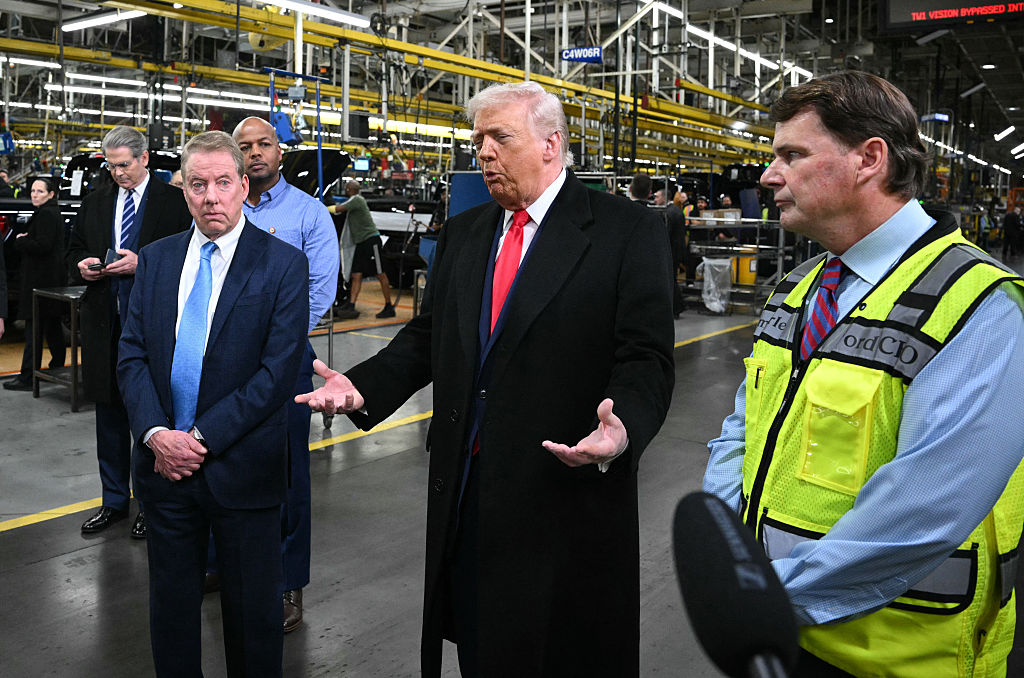
President Trump made the comments during a visit to Ford Motor Company’s River Rouge complex in Dearborn, Michigan. The site produces the F-150 pickup, one of the company’s highest-selling vehicles. He spoke to reporters while touring the plant alongside Ford executives and senior U.S. officials.
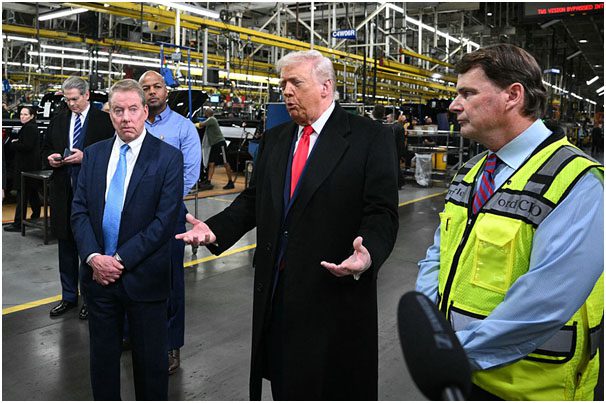
U.S. President Donald Trump speaks with Ford executives during a visit to the Ford River Rouge Plant in Dearborn, Michigan, on January 13, 2026. (Source: GettyImages)
Trump said the United States did not need cars made in Canada or Mexico and preferred domestic production. He added that the trade deal offered no real advantage to the United States. He also said Canada wanted the pact more than Washington did.
The remarks came as part of a broader effort by the White House to promote domestic manufacturing. Trump has framed factory visits as proof that U.S. automakers are performing well. He described the quality of vehicles built in America as very strong during his stop.
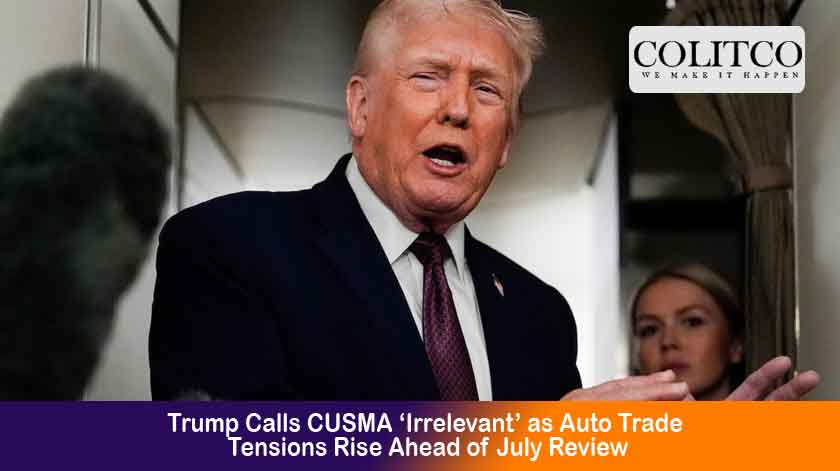
Later, the president used social media to reinforce his position. In a short post shared on X, he repeated that the agreement was “irrelevant” and said companies should move production back to American soil. The post circulated widely across political and business circles within hours.
The CUSMA review and the July deadline
CUSMA, known as the USMCA in the United States, faces a mandatory review this year. Formal discussions among Canada, the United States, and Mexico are set for mid-January. A final decision is due by July under the terms of the agreement.
The three partners have limited options under the review rules. They may renew the pact for another 16 years, withdraw from it, or allow it to lapse without renewal. That structure places pressure on negotiators to reach a clear outcome within months.
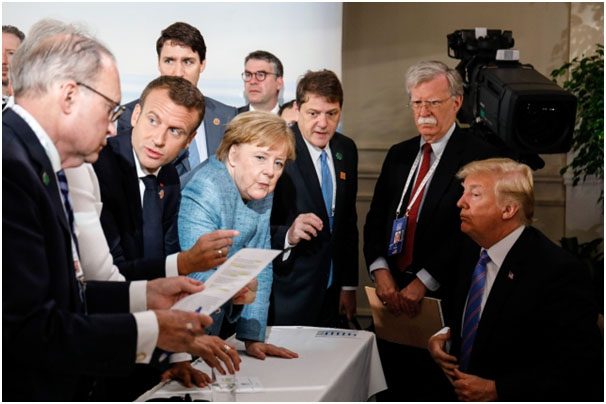
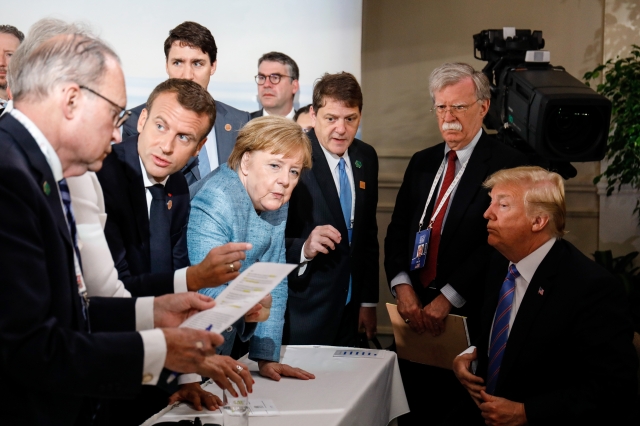
Leaders of the United States, Canada, and Mexico during a previous North American trade meeting as CUSMA faces a formal review in 2026 (Source: diplomatmagazine)
Trump has previously described the agreement as transitional. During a meeting with Canadian Prime Minister Mark Carney at the White House last October, he suggested that it may have already served its purpose. Those comments now carry more weight as talks begin.
While Canada has avoided many broad U.S. tariffs under CUSMA, some sectors still face duties. Steel, aluminum, lumber, and parts of the auto industry remain under strain from earlier trade actions. Those sectors feature heavily in the upcoming review agenda.
U.S. trade demands expected in the talks
U.S. Trade Representative Jamieson Greer has already outlined issues likely to dominate the negotiations. He has cited Canada’s dairy supply management system as a key concern. U.S. officials also point to long-running disputes over softwood lumber subsidies.
Greer has also raised non-tariff barriers in recent statements. These include Canada’s Online Streaming Act and Online News Act. Washington argues that both measures place limits on U.S. companies operating in the Canadian market.
Another issue involves provincial bans on U.S. alcohol. Several provinces imposed restrictions in response to U.S. tariffs on Canadian goods. Greer has said those measures will form part of the review process.
There is also discussion inside the administration about changing the structure of North American trade. Greer has said Washington is weighing the option of replacing the trilateral pact with separate bilateral deals with Canada and Mexico. That approach would alter how supply chains are governed.
Automakers defend the integrated supply system
Major U.S. automakers have taken a different view from the White House. The Detroit Three rely on parts and assembly operations across all three CUSMA countries. Hundreds of thousands of vehicles are built each year in Canada and Mexico for the North American market.
Industry groups have urged the Trump administration to extend the agreement. The American Automotive Policy Council has said CUSMA allows companies to compete globally through regional integration. It has also been said that the pact delivers tens of billions of dollars in annual savings.
General Motors president Mark Reuss spoke at an event in Detroit on Tuesday. He said North American supply chains are complex and closely linked. He added that the three-country system remains a core strength for the industry.
Ford CEO Jim Farley made similar remarks at the Detroit Auto Show. He said Canada, Mexico, and the United States function as an integrated manufacturing system. His comments came as Trump continued to argue for more domestic production.
Tariffs, court challenges, and auto sector carve-outs
Trump has used tariffs as a central tool of his economic strategy. His administration has imposed broad duties on several trading partners. However, it has also provided key exemptions for the auto industry.
Reduced import duties on foreign-made auto parts have been extended through 2030. Those carve-outs aim to avoid disruptions to vehicle production while other trade disputes continue. They reflect the tight links between U.S. factories and overseas suppliers.
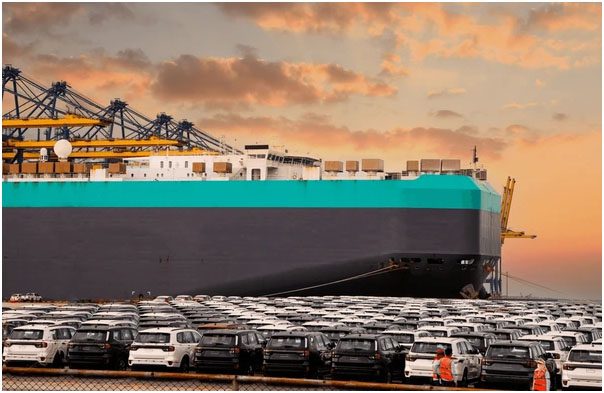
Imported vehicles and auto parts move through U.S. ports as trade rules and tariffs continue to shape the auto industry. (Source: shutterstock)
During his Michigan visit, Trump also spoke about tariffs on Chinese vehicles. He said those measures protect American workers from unfair competition. He also said he expects to prevail in a Supreme Court case now reviewing the legality of his tariff programs.
On social media, Trump posted that the United States should not rely on foreign-built cars. The post drew responses from analysts and industry figures who noted the depth of North American production ties.
Also Read: Life360 Schedules Q4 FY25 Results Call As Growth Momentum Continues
Political context and reactions in Canada
Trump’s visit to Michigan marked his third trip to a battleground state in just over a month. It followed Republican losses in recent off-year elections in states such as Virginia and New Jersey. Cost-of-living concerns have become a major theme in those races.
The president has dismissed affordability worries as a political tactic by Democrats. Still, his focus on manufacturing reflects a push to reassure voters in industrial regions. Michigan remains a central state in that strategy.
In Canada, officials have responded with caution. Prime Minister Mark Carney has said Ottawa will engage in the review process in good faith. His government has also noted that CUSMA provides stability for exporters and investors.
A spokesperson for Trade Minister Dominic LeBlanc said he will soon begin discussions with his U.S. and Mexican counterparts. Those talks will form part of the joint review required under the agreement. Canadian officials have avoided direct public criticism of Trump’s remarks.
At the same time, Canadian representatives in Washington have said the country should remain confident going into the negotiations. They point to the deep integration of the auto sector and the long history of cross-border production. Those factors remain central as the July deadline approaches.