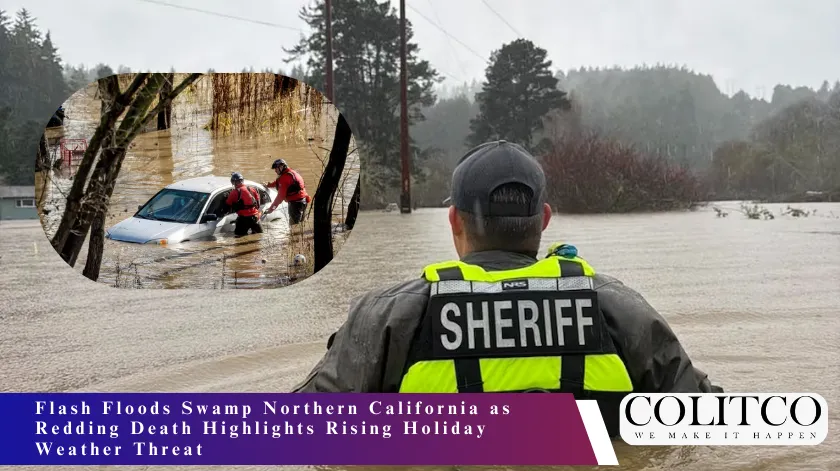
Torrential rain pummelled Northern California late Sunday. The storm claimed at least one life in the city of Redding. Police confirmed the fatality after floodwaters submerged a vehicle. Mayor Mike Littau announced the tragic news on social media. Authorities withheld the victim’s identity pending family notification. Rescue teams faced difficult conditions throughout the night. Rising waters trapped dozens of residents in their homes. Emergency services received numerous distress calls from stranded drivers.
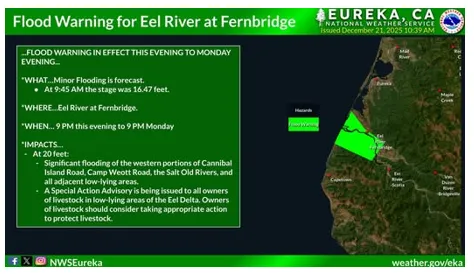
A flood warning was issued late Sunday
Emergency Crews Launch Water Rescues
First responders mobilised quickly across the affected region. Police in Redding executed multiple rescues from flooded intersections. Firefighters utilised boats to reach isolated properties. Crews in Truckee extended ladders to save residents near the South Yuba River. High water levels complicated these dangerous operations. The swift current posed significant risks to rescue personnel. Teams worked tirelessly to move people to safety. Local councils established emergency shelters for displaced families.
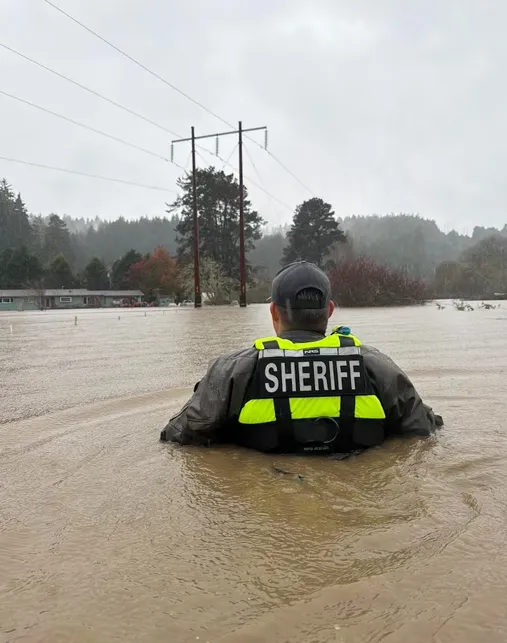
Sheriff’s swift water rescue team assisting residents in the Freshwater area
Transport Network Paralysed
The deluge wreaked havoc on major transport arteries. Floodwaters forced the closure of U.S. Highway 101 in Humboldt County. Caltrans shut down the route in both directions north of Loleta. Mudslides blocked lanes and created hazardous driving conditions. Commuters faced significant delays across the state. The storm also disrupted air travel significantly. San Francisco International Airport halted flights due to the severe weather. Airlines cancelled or delayed hundreds of departures.
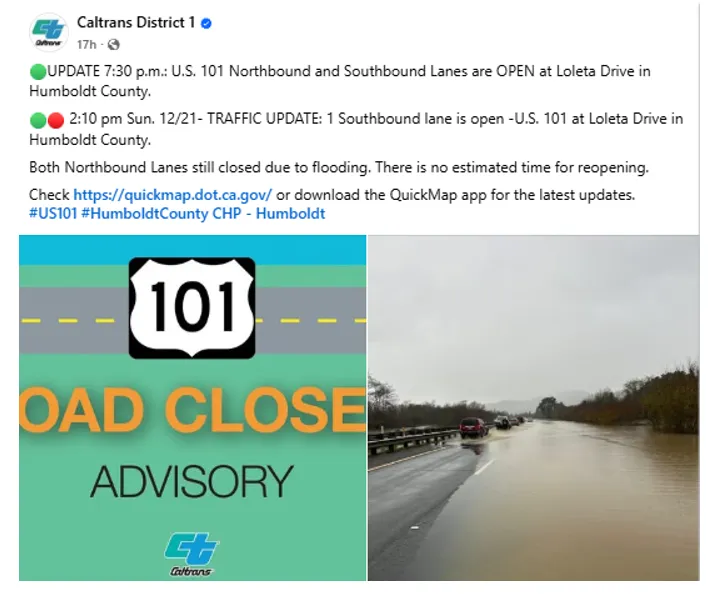
Road closure update posted on Facebook
Atmospheric River Batters the Coast
Meteorologists attributed the severe weather to an atmospheric river. This phenomenon channels massive amounts of moisture from the tropics. The system slammed into the West Coast with immense force. It dropped heavy precipitation over a short period. The ground struggled to absorb the sudden influx of water. Runoff overwhelmed local drainage systems immediately. Experts described the event as a potent winter storm. This weather pattern often brings the heaviest rains to California.
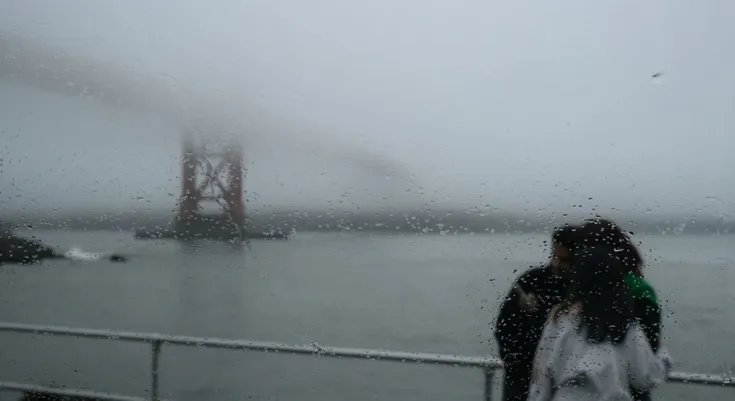
Rainfall and Wind Statistics
The National Weather Service recorded significant rainfall totals. Some areas received between 75 and 150 millimetres of rain. These totals accumulated rapidly within just 24 hours. Wind gusts reached speeds of 128 kilometres per hour along the coast. The storm struck with hurricane-force intensity in exposed areas. Meteorologists tracked the system moving inland towards the mountains. The Sierra Nevada range braced for heavy snow. Forecasters predicted snow levels would drop to 1,500 metres.
Infrastructure Under Strain
Power outages affected thousands of residents across Northern California. Utility companies dispatched crews to repair downed lines. Strong winds toppled trees onto power grids. Restoration efforts faced delays due to the ongoing rain. Public works departments scrambled to clear debris from storm drains. Officials monitored river levels closely. Several waterways reached flood stage by Monday morning. The rapid rise threatened nearby communities and businesses.
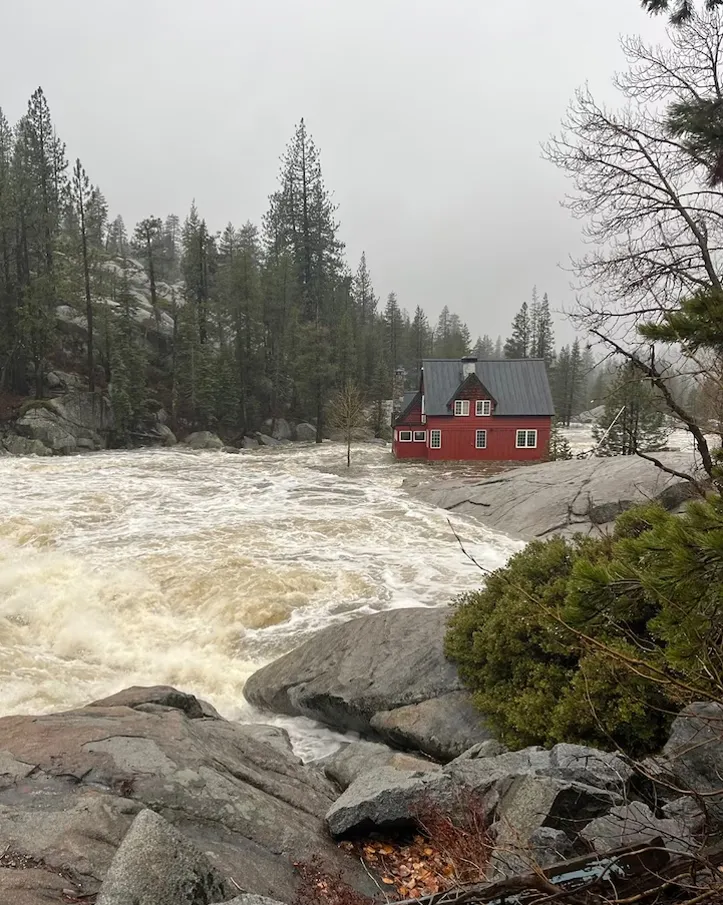
Several waterways have reached flood stage
Official Warnings Issued
The National Weather Service issued flood watches for millions of people. These warnings covered over 30 million residents across the state. Officials urged citizens to avoid non-essential travel. The agency warned of life-threatening flash floods. They specifically highlighted the danger in wildfire burn scar areas. Debris flows remain a critical concern in these zones. Authorities advised residents to prepare “go bags” immediately.
Safety Advice for Motorists
California Highway Patrol issued strict warnings to drivers. Officers stressed the dangers of driving through standing water. Vehicles can float in just 30 centimetres of moving water. Patrols noted an increase in hydroplaning accidents. Tow trucks struggled to reach stranded vehicles. Authorities requested the public stay off the roads. Keeping routes clear assists emergency responders significantly.
Forecast for Christmas Week
Forecasters predict more rain through the Christmas holiday. Another storm system approaches the coast for mid-week. Southern California will likely bear the brunt of the next wave. Meteorologists expect 100 to 200 millimetres of additional rain. Mountain passes will see dangerous travel conditions. Snow accumulation could exceed one metre in high elevations. Travellers should expect continued disruptions.
Also Read: Labour MP Breaks Ranks, Demands Federal Royal Commission On Bondi Terror Attack
Community Response and Recovery
Local communities rallied to support affected neighbours. Volunteers filled sandbags to protect properties. Businesses in low-lying areas deployed flood barriers. Residents shared updates on social media groups. The death in Redding cast a sombre mood over the region. City officials promised a full review of drainage infrastructure. Recovery operations will begin once the waters recede. The cleanup process could take several weeks.
Impact on Agriculture
Farmers in the Central Valley monitored the situation closely. Heavy rain benefits the water table but damages sensitive crops. Standing water threatens winter vegetable plantings. Orchard owners secured equipment against the high winds. Agricultural officials assessed potential losses. The storm delays crucial seasonal field work. Growers hope for a break in the weather pattern.
Historical Context of Storms
California frequently experiences atmospheric river events. Scientists note these storms create essential water supplies. However, they also pose severe flood risks. The state relies on this winter precipitation. Climate experts observe an increase in storm intensity. Warmer oceans provide more energy to these systems. The current pattern fits historical data for El Niño years. Residents remain vigilant during this active weather cycle.