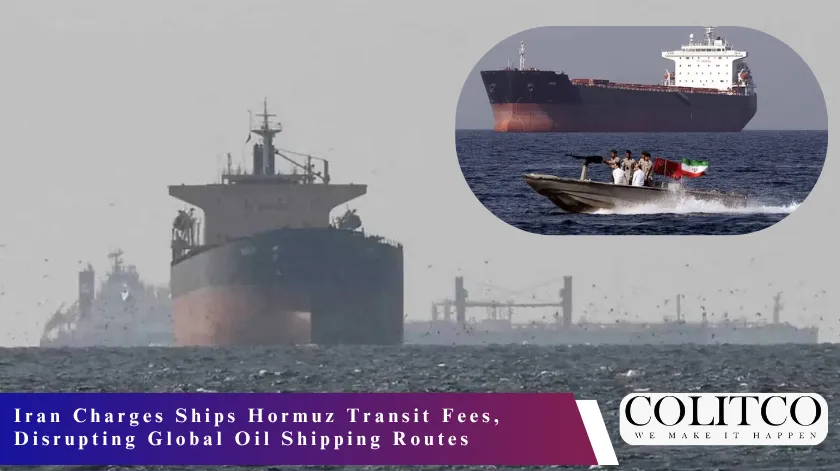
Iran Imposes Transit Fees in the Strait of Hormuz
Iran has begun charging transit fees to commercial vessels passing through the Strait of Hormuz. The move introduces fresh uncertainty into one of the world’s most critical shipping lanes.
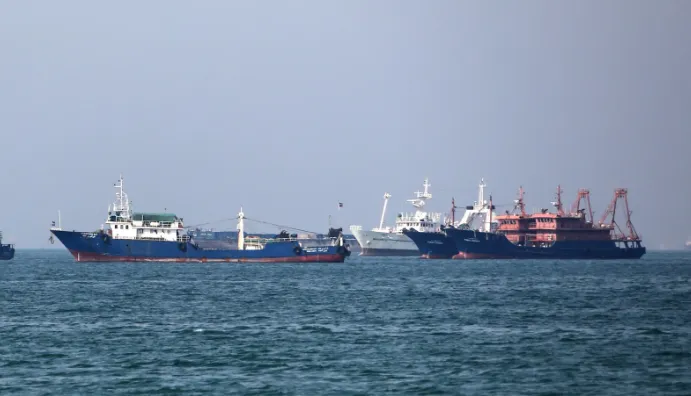
Oil tankers transit the Strait of Hormuz, a key global energy chokepoint now facing new Iranian transit fees. [Bloomberg]
Payments can reach up to $2 million per voyage. Authorities apply the charges on a case-by-case basis, with no formal system yet in place.
Several vessels have already paid to secure passage, according to shipping sources. How exactly payments are collected and enforced remains unclear. That opacity has left many shipping operators struggling to plan costs when committing to the route.
Strategic Importance of Hormuz for Global Energy Supply
Nearly one-fifth of the world’s daily oil and gas supply moves through the Strait of Hormuz, a narrow corridor with few practical alternatives. Food, metals, and other essential commodities also flow through the waterway in significant volumes.
When this region is unsettled, trade flows and energy prices feel it quickly. Transit fees pile onto a shipping environment already under strain from regional conflict.
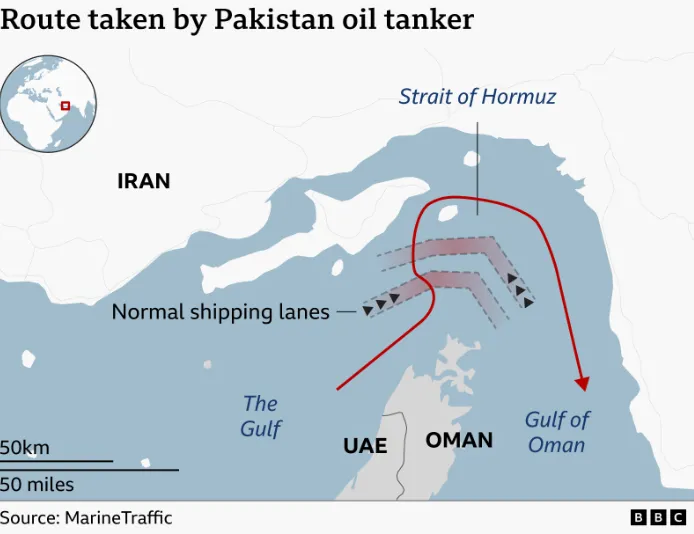
Map highlighting the Strait of Hormuz, through which nearly 20% of global oil supply passes daily. [BBC]
Vessel traffic has fallen, and the ships that do make the crossing carry greater weight for energy-importing countries than they did a year ago.
War-Driven Measures and Regional Tensions
Iranian officials and lawmakers have framed the fees as a wartime measure, tied directly to the ongoing conflict in the Middle East.
The policy also appears to reflect something more deliberate, an assertion of Iranian authority over a waterway that sits at the edge of its territorial waters.
There are signs the approach may not stay informal. Lawmakers in Tehran have floated proposals for a structured payment framework, one that would require all transiting vessels to pay. If that happens, it would represent a fundamental change in how access to the strait is governed.
Shipping Activity Shifts and New Maritime Routes
Vessel behavior has shifted noticeably. Rather than using the central shipping lane, many ships now hug Iran’s coastline, a route that passes near islands where Iranian forces reportedly keep watch over traffic.
Maritime tracking data tells a clear story: crossings have dropped sharply since the conflict escalated.
Only a handful of ships have completed transits in recent days. Some have taken alternative corridors that run closer to Iranian-controlled waters, trading one set of risks for another.
International Response and Legal Concerns
The legal pushback has been direct. India has stated publicly that international law protects free navigation through the strait and that no state holds the authority to charge vessels for using it.
Other governments have raised similar objections, though none have spelled out how they intend to respond.
For shipping companies, the absence of any recognised legal framework around these fees creates a hard problem. Pay, and you may be legitimising something with no legal basis. Refuse, and you risk delays, confrontations, or worse.
Economic Impact on Shipping and Energy Markets
A $2 million fee per voyage is not a rounding error for most shipping operators. These costs tend to move through the supply chain, and for oil and gas, where margins and pricing are sensitive to transport costs, the effect on international markets can be swift.
Rising transit costs and reduced traffic through Hormuz could increase global oil price volatility. [IStock]
Reduced traffic through the strait compounds the problem. Tighter supply and higher shipping costs, arriving together, create conditions for price volatility. Consumers in energy-dependent economies are likely to feel the consequences before anyone else does.
Concerns Over Precedent and Trade Route Control
What worries some observers is not just the fees themselves but what they represent. Charging for passage through a major international waterway, even informally, is the kind of move that others may one day cite as justification for doing the same elsewhere.
Arab Gulf producers are watching closely. A neighbor with effective control over a key export corridor is a strategic variable they cannot ignore. The concern is less about today’s fees and more about how this kind of leverage might be used down the road.
Also Read: Queensland Government Backs $2.3B Eva Copper Mine Project
Outlook for Hormuz Shipping and Global Trade Stability
Iran has given no clear indication of when or whether the transit fee policy will end. The parallel conversation about formalizing the system suggests the underlying impulse runs deeper than a temporary wartime measure.
Shipping companies and governments are monitoring the situation without many good options.
The strait is too central to global trade and energy supply to be easily routed around. A prolonged disruption, or a permanent shift in how access is controlled, would send consequences well beyond the region.
FAQS
Q1. Why is Iran charging ships to pass through the Strait of Hormuz?
A1. Iran has framed the transit fees as a wartime measure linked to ongoing regional tensions. The move also signals an effort to assert greater control over the strategically vital waterway.
Q2. How much are ships being charged to transit the Strait of Hormuz?
A2. Fees can reach up to $2 million per voyage, though they are currently applied on a case-by-case basis rather than through a formalized system.
Q3. Is it legal for Iran to charge transit fees in the Strait of Hormuz?
A3. Many countries, including India, argue that international law guarantees free navigation through the strait, meaning no single country has the authority to impose such charges.
Q4. How are shipping companies responding to the new fees?
A4. Shipping operators are adapting by either paying the fees, rerouting vessels, or taking alternative paths closer to Iranian-controlled waters, though each option comes with added risks and uncertainty.
Q5. What impact could these transit fees have on global oil prices?
A5. Higher shipping costs and reduced vessel traffic could tighten supply, leading to increased volatility in global oil and gas prices, especially for countries heavily dependent on energy imports.
Disclaimer
Sources
Last modified: March 25, 2026