
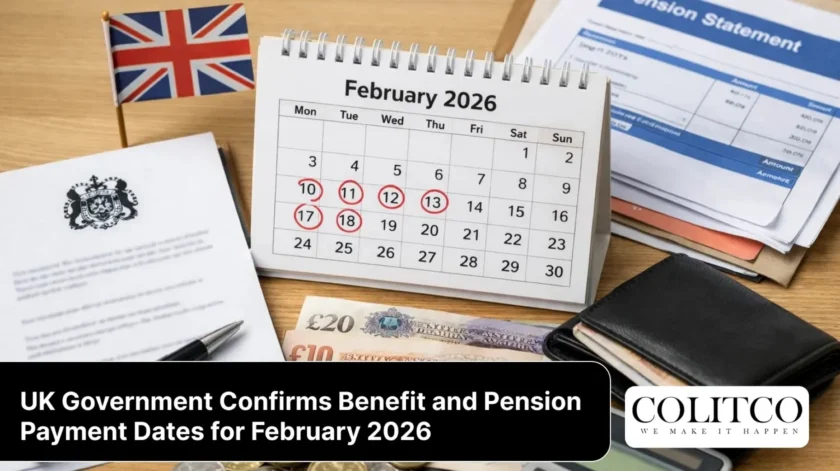
The Department for Work and Pensions maintains regular payment cycles for millions of citizens this month. Most beneficiaries receive funds directly into their bank accounts on fixed schedules. No bank holidays occur in the United Kingdom during February 2026. This lack of holidays ensures that all payments arrive on their expected weekdays.
Financial authorities confirm that Universal Credit remains the primary support for working-age households. Claimants receive this payment monthly on a date tied to their initial application. Personal Independence Payment and Disability Living Allowance continue on a four-week cycle. These schedules provide consistency for households managing tight budgets during the winter season.
State Pension Distribution Details
State Pension recipients will receive their money according to the final digits of their National Insurance numbers. The government distributes these payments between Monday and Friday each week.
- Digits 00 to 19 receive payment on Mondays.
- Digits 20 to 39 receive payment on Tuesdays.
- Digits 40 to 59 receive payment on Wednesdays.
- Digits 60 to 79 receive payment on Thursdays.
- Digits 80 to 99 receive payment on Fridays.
Official data shows the new State Pension currently stands at £230.25 per week. The basic State Pension remains at £176.45 per week for eligible retirees. These rates will stay in place until the new financial year begins in April.
Winter Energy Support and Deadlines
The Warm Home Discount scheme provides a £150 reduction on electricity bills for eligible households. Most recipients receive this support automatically through their energy suppliers. Residents in England and Wales must confirm their eligibility by 27 February 2026. This deadline is critical for those who have not yet received a confirmation letter.
Low-income families and pensioners often qualify for this one-off credit to manage heating costs. The government also continues the Cold Weather Payment scheme throughout this month. This scheme triggers a £25 payment when local temperatures drop below zero for seven consecutive days. These payments reach bank accounts automatically within 14 days of the weather event.
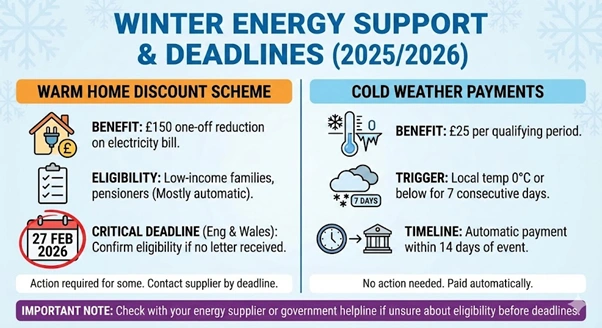
Winter Energy Support
Household Support Fund Availability
Local councils across England are distributing the final portions of the Household Support Fund. This fund assists residents with the rising costs of food, water, and energy bills. Many local authorities have set application deadlines for 27 February 2026 to clear backlogs. The East Riding of Yorkshire Council recently announced £250 payments for residents on low incomes.
- Applicants must provide evidence of financial hardship to their local council.
- Support includes vouchers for groceries and direct payments for utility debts.
- Funding levels vary significantly between different local government areas.
The Department for Work and Pensions allocated £14 million to specific regions since April 2025. Thousands of households have already accessed these emergency funds to prevent debt accumulation.
Upcoming Changes to Benefit Rates
The UK Government recently announced significant increases to social security benefits for the next financial year. These changes will take effect from 6 April 2026 to match inflation rates. Universal Credit standard allowances will rise by 3.8% plus an additional 2.3% uplift. This adjustment follows the requirements of the Universal Credit Act 2025.
State Pensions will also see a 4.8% increase under the triple lock mechanism. This rise reflects the annual increase in Average Weekly Earnings recorded in mid-2025. The new State Pension will reach £241.30 per week following this April adjustment. These figures represent the government’s effort to maintain the purchasing power of retirees.
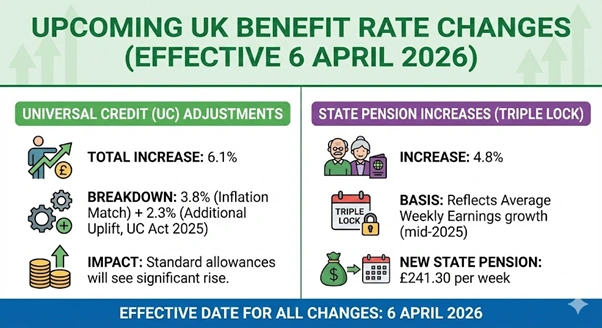
Upcoming Changes to Benefit Rates
Policy Adjustments for Families
A major policy shift involves the removal of the two-child limit for Universal Credit. This change will allow larger families to claim additional child elements for every child. Currently, the limit restricts support to the first two children born after April 2017. The government plans to implement this removal starting in April 2026.
- Families with three or more children will gain significant monthly income.
- The maximum childcare cost allowance will increase by over £700.
- New claimants with limited capability for work will receive revised rates.
The National Living Wage will also rise to £12.71 per hour in April. This 4.1% increase aims to support low-paid workers against the cost of living. Younger workers aged 18 to 20 will see an 8.5% wage increase.
Also Read: Rising UK Passport Costs Force Dual Citizens to Consider Renouncing Nationality
Guidance for Claimants
The Department for Work and Pensions advises all claimants to monitor their online accounts. Most payment issues arise from incorrect bank details or changes in household circumstances. People should report any changes in income or living arrangements immediately to avoid overpayments. The Pension Service handles enquiries regarding retirement funds via a dedicated helpline.
“We highly encourage residents who may be struggling to find out if they are eligible,” said a spokesperson. “Information about emergency help can be found at local government websites.” Authorities remind citizens that they never request bank details via text message or social media. Scams often target benefit recipients during the winter months through fraudulent links.