
If you filled up your tank this week, you already know something has changed. The national average price for 91-octane unleaded petrol sat at 172.9 cents per litre in the final week of February, according to the Australian Institute of Petroleum. That number will climb. Possibly fast.
The US and Israel launched strikes on Iran over the weekend of 28 February. By Monday, oil prices Australia drivers track had already spiked more than nine per cent globally. The Strait of Hormuz, the narrow chokepoint through which roughly one-fifth of the world’s traded oil moves, now sits in open dispute after Iran’s Revolutionary Guard claimed to have closed it.
This isn’t a distant geopolitical story. It lands directly in your mortgage repayments, your grocery bill, and the Reserve Bank of Australia’s next rate decision.

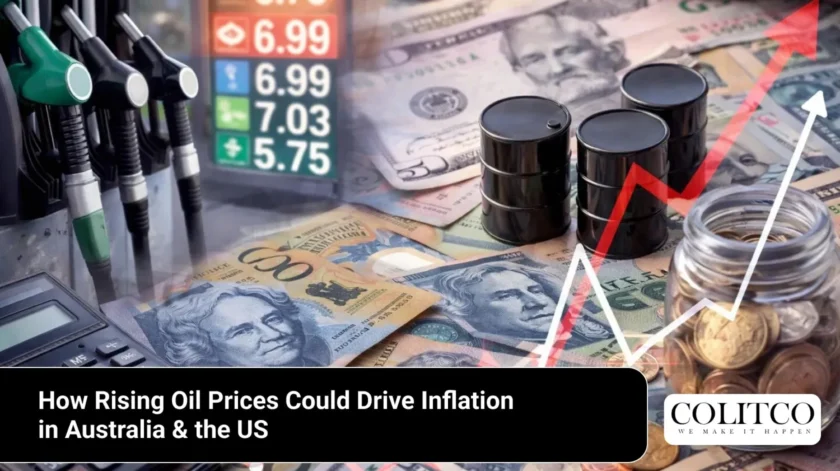
Figure 1: Rising Oil Prices Could Drive Inflation in Australia & the US
The Numbers That Should Worry You
Brent crude, the global oil benchmark, was trading at around US$79.45 per barrel early on Tuesday, up roughly nine per cent from US$72.87 on the Friday before the strikes. WTI, the American benchmark, jumped more than eight per cent to approximately US$72.74. Barclays analysts told clients that Brent could push to US$100 per barrel if the security situation spirals. UBS went further, warning of a possible US$120 scenario.
To translate: that’s the kind of oil shock that reshaped economies in the 1970s. We’re not there yet. But we’re watching the same conditions form.
Back home, the fuel price increase Australians face is compounding an already difficult situation. Headline inflation has reached 3.8 per cent annually. The RBA’s preferred measure, trimmed mean inflation, rose to 3.4 per cent in the December quarter. The central bank now expects inflation to peak at 4.2 per cent by mid-2026 before slowly retreating. That forecast assumes no major energy supply disruption. We just had one.
“A supply shock could add to inflation pressures. The potential implications for inflation expectations are something we are very alert to.” — RBA Governor Michele Bullock, AFR Business Summit, 3 March 2026
Australia’s Achilles Heel: Fuel Reserves
Here’s the part that deserves more attention than it gets. In federal parliament on Monday, Energy Minister Chris Bowen revealed that Australia holds just 36 days of petrol, 34 days of diesel, and 32 days of jet fuel. The International Energy Agency sets a 90-day minimum for member nations. We hold roughly a third of that.
That shortfall matters enormously right now. A prolonged closure of the Strait of Hormuz, through which more than 14 million barrels per day ordinarily flow, would not just push oil prices Australia buyers confront even higher. It would put pressure on physical supply chains for a country that imports a substantial portion of its refined fuel from Asian refineries reliant on Middle Eastern crude.
We have no domestic buffer to absorb a sustained shock. That’s a structural vulnerability hiding in plain sight, and it deserves urgent policy attention regardless of how the current conflict resolves.
The RBA Is Already on the Back Foot
Governor Michele Bullock raised the cash rate to 3.85 per cent in February, the RBA’s first hike since 2023, after admitting the board had misread conditions in 2025 when it cut rates. Private demand came in stronger than expected. The labour market tightened again. And inflation proved stickier than the models anticipated.
Now, with global energy prices lurching higher, the RBA faces a genuinely uncomfortable dilemma. A supply-driven spike in fuel prices adds directly to headline inflation. It also adds to the cost of transporting goods, running businesses, and growing food. The second-round effects ripple through everything.
But here’s the complication: if higher oil prices slow global economic growth significantly, that could dampen Australian export demand and drag on domestic activity. The same shock that inflates your grocery bill could also threaten the trade revenues that underpin government budgets and job markets.
Bullock herself put it plainly at Tuesday’s AFR Business Summit: it is not obvious how this might play out. That’s not evasion, that’s an honest description of a genuinely bifurcated risk environment. The RBA’s job right now is to remain calibrated rather than reactive. The next rate decision on 17 March will be closely watched.
Also Read: War, Oil and a Market Walking a Tightrope: The Australian Stock Market Today
The US Faces Its Own Reckoning
America’s inflation picture adds another layer of complexity. The US Consumer Price Index rose 2.4 per cent year-on-year through January 2026, according to the Bureau of Labor Statistics, still above the Federal Reserve’s two per cent target. Bank of America economists expect core CPI to peak at 3.2 per cent in the second quarter of this year.
The Peterson Institute for International Economics goes further, warning that US inflation could exceed four per cent by late 2026, driven by tariff pass-throughs, a tightening labour market, and looser-than-appreciated financial conditions. Add a sustained fuel price increase to that mix and the Fed’s job becomes considerably harder.
The Federal Reserve currently holds its benchmark rate between 3.75 and 4 per cent. Higher energy costs squeeze household budgets and lift transport and logistics costs across virtually every goods category. If the Strait of Hormuz disruption sustains beyond days into weeks, the inflationary pressure in the US could prove far more persistent than the base case models assume.
The spillover matters for Australia too. A US economy grappling with elevated inflation and a Fed reluctant to cut rates tends to keep the US dollar strong, which, in turn, makes Australian imports (including fuel and refined products priced in USD) more expensive in AUD terms.
You May Not Want to Let a Crisis Go to Waste
We’ve been here before. Every major oil shock of the past 50 years has followed a similar pattern: a sudden geopolitical event, a price spike, a policy scramble, and then, after things stabilise, a collective amnesia that allows the underlying vulnerabilities to persist.
The current crisis should serve as a forcing function for three things Australia has postponed for too long.
First, rebuild strategic fuel reserves. Sitting at 34 to 36 days while the IEA requires 90 is not a minor gap; it’s a national risk. The cost of holding additional reserves is modest compared to the economic disruption a genuine supply interruption would cause.
Second, accelerate the transition to domestic energy. The most durable solution to Australia’s exposure to oil prices Australia cannot control is to reduce that exposure systematically, through electric vehicle uptake, renewable energy investment, and demand-side flexibility. Not as ideology, but as economic insurance.
Third, be honest with the public about the inflation outlook. The RBA should not need to surprise markets. If the board believes another rate hike is probable later this year, saying so now is better monetary policy than a shock decision in May. Households and businesses need to plan.
The Strait of Hormuz will likely reopen. Prices will likely ease from their current spike. But the structural conditions that make Australia and the US vulnerable to this kind of shock, import dependence, thin buffers, already-elevated inflation, won’t resolve themselves.
That work has to happen in the calm before the next storm. We’re not in the calm right now. But we should be planning for it.
Sources
- AFR: https://www.afr.com/business-summit/business-summit-2026-michele-bullock-monetary-policy-and-iran-20260303-p5o6xi
- RBA: https://www.rba.gov.au/
- CNBC: https://www.cnbc.com/oil/
- Trading Economics: https://tradingeconomics.com/commodity/brent-crude-oil