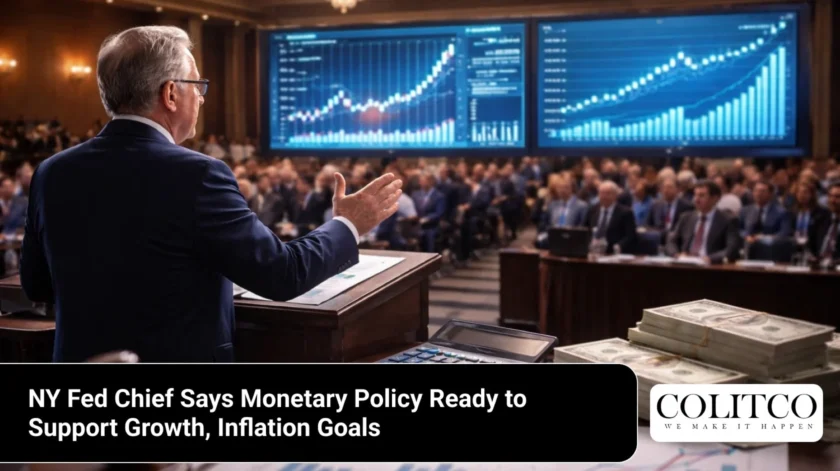
The Federal Reserve’s approach to managing the economy has entered a new phase. John Williams, President of the Federal Reserve Bank of New York, outlined his outlook for 2026 during a speech delivered to the Council on Foreign Relations.
 Figure 1: John Williams, President of the Federal Reserve Bank of New York. [Source: Federal Reserve Bank of New York]
His message was clear and measured. NY Fed monetary policy has moved closer to a neutral stance after aggressive rate cuts last year. The current position supports both labour market stability and Federal Reserve inflation goals set at 2 per cent.
Williams described his economic outlook as quite favourable. He expects GDP growth between 2.5 per cent and 2.75 per cent for the year, with unemployment stabilising and inflation gradually easing. What stands out is his confidence that NY Fed monetary policy does not need to rush into further rate cuts.
NY Fed Monetary Policy Stance Reflects Balanced Approach
The Federal Reserve cut its short-term interest rate target by three-quarters of a percentage point last year. The federal funds target range now sits between 4.25 per cent and 4.5 per cent. Williams noted that NY Fed monetary policy has moved from a modestly restrictive stance closer to neutral.
Recent months have seen shifting dynamics in the economic landscape. Downside risks to employment have increased as the labour market cooled. At the same time, upside risks to inflation have lessened. This evolving balance shapes how Federal Reserve support for economy in approaching further rate adjustments.
Figure 2: Inflation symbolism illustrating rising price pressures, a key factor shaping Federal Reserve inflation goals. [Source: Freepik]
Williams does not see an urgent need for additional rate cuts. Other Federal Reserve officials have echoed similar views in recent days. The central bank appears to be in a holding pattern, assessing economic data before committing to further policy moves. Federal Reserve support for the economy now focuses on maintaining stability rather than aggressive intervention.
Federal Reserve Inflation Goals Face Mixed Economic Signals
Williams provided specific forecasts for how Federal Reserve inflation goals will be achieved through 2027. Price pressures are expected to peak between 2.75 per cent and 3 per cent in the first half of 2026. For the full year, inflation should average around 2.5 per cent before returning to the 2 per cent target by 2027.
The Federal Reserve support for economy remains anchored at 2 per cent over the longer run. Recent job market data shows tepid demand amid inflation that still runs above target. The challenge for NY Fed monetary policy is managing this tension without tipping the economy into either recession or runaway price increases.
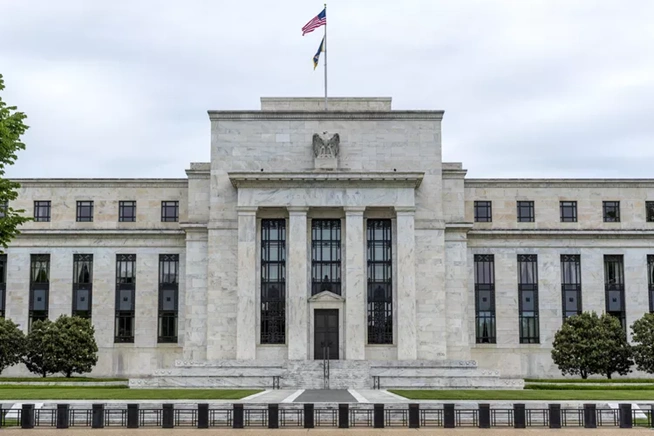
Figure 3: The Federal Reserve headquarters in Washington, DC. [Source: Investopedia]
The Federal Open Market Committee pencilled in one more rate cut for 2026 during its December meeting. Officials expect the job market to hold steady and inflation pressures to ease. The impact of trade tariffs implemented under President Donald Trump’s administration is also being factored into projections.
Williams indicated that the unemployment rate should stabilise this year and retreat in following years. This outlook suggests Federal Reserve support for the economy can achieve the dual mandate of maximum employment and price stability without dramatic policy interventions.
Federal Reserve Support for Economy Under Political Pressure
Williams’ speech came during an unprecedented period for central bank independence. Federal Reserve Chair Jerome Powell announced on Sunday that the institution had been served with grand jury subpoenas from the Justice Department. The subpoenas threatened criminal indictment over matters related to cost overruns in renovations of the central bank’s headquarters.
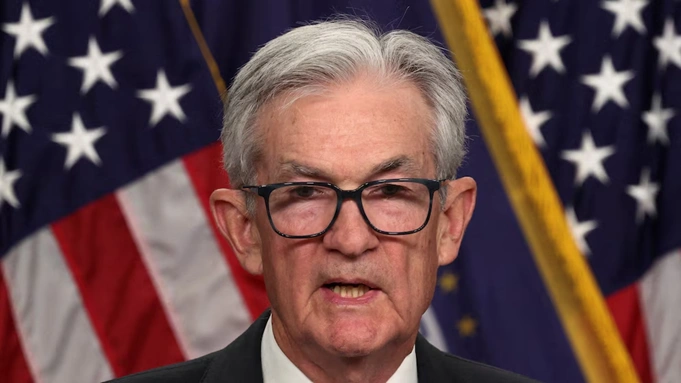
Figure 4: Federal Reserve Chair Jerome Powell. [Source: ABC News]
Powell argued the legal moves were pretexts. He stated the real issue is whether Federal Reserve support for the economy will continue based on evidence and economic conditions or face direction through political pressure and intimidation. The statement marked a forceful defence of institutional autonomy.
Financial markets have not reacted as severely as some feared. The threat of indictment generated significant bipartisan pushback in Congress. The political confrontation raised questions about the President’s ability to install new members on the central bank board while legal attacks continue. How this affects Federal Reserve support for the economy remains to be seen.
Industry Outlook: Monetary Policy Navigating Uncertain Terrain
The global economic environment remains fluid as central banks worldwide balance growth concerns against persistent inflation. NY Fed monetary policy reflects uncertainty about the trajectory of trade policy, fiscal stimulus, and structural shifts in labour markets. Williams’ outlook suggests confidence in a soft landing scenario where Federal Reserve support for economy are achieved without significant employment disruption. However, the interplay between domestic policy decisions and external pressures will remain a critical factor shaping monetary policy effectiveness through 2026 and beyond.
What NY Fed Monetary Policy Means for Markets and Investors
John Williams’ comments signal that NY Fed monetary policy is unlikely to deliver aggressive rate cuts in the near term. His favourable economic outlook and measured inflation forecasts suggest policymakers see room to pause and assess incoming data. Investors should expect the Fed to remain data-dependent rather than committing to a predetermined policy path.

Figure 5: Symbolic representation of monetary policy. [Source: Freepik]
The current NY Fed monetary policy position supports a view that interest rates may stay higher for longer than some market participants anticipated. This carries implications for bond yields, equity valuations, and borrowing costs across the economy. Federal Reserve support for the economy through careful rate management provides a framework for understanding future policy moves.
Also read: Albanese Proclaims January 22 As National Day Of Mourning For Bondi Victims
Final Thoughts
John Williams has laid out a roadmap that emphasises patience and data-driven decision-making. NY Fed monetary policy reflects confidence in the economy’s underlying strength while acknowledging ongoing challenges. Inflation is expected to moderate gradually, and employment should remain stable.
Federal Reserve inflation goals remain within reach, according to Williams’ projections. By 2027, price pressures should return to the 2 per cent target without significant labour market disruption. This scenario depends on economic conditions unfolding as expected and external shocks remaining contained.
Federal Reserve support for the economy will continue through careful calibration of interest rates. The central bank appears ready to hold its current policy stance while monitoring how inflation and employment evolve. For those watching monetary policy closely, Williams’ speech provides valuable insight into how the Fed views the road ahead.
The political challenges facing the Federal Reserve add complexity to an already delicate balancing act. Whether the institution can maintain its independence while navigating external pressures will shape not just monetary policy outcomes but the broader credibility of central banking in the United States.
FAQs
Q1. What is the current Federal Reserve interest rate target range?
Ans. The Federal Reserve’s federal funds target range currently sits between 4.25 per cent and 4.5 per cent after three-quarters of a percentage point in cuts during 2025, positioning NY Fed monetary policy closer to neutral.
Q2. When does John Williams expect Federal Reserve inflation goals to be achieved?
Ans. Williams expects inflation to peak between 2.75 per cent and 3 per cent in the first half of 2026, average 2.5 per cent for the full year, and return to Federal Reserve inflation goals of 2 per cent by 2027.
Q3. How many more rate cuts does the Federal Reserve expect in 2026?
Ans. The Federal Open Market Committee pencilled in one more rate cut for 2026 during its December meeting, though Williams indicated NY Fed monetary policy sees no urgent need for immediate action.
Q4. What is John Williams’ GDP growth forecast for 2026?
Ans. Williams expects GDP growth between 2.5 per cent and 2.75 per cent for 2026, demonstrating how Federal Reserve support for the economy aims to maintain stable expansion while achieving inflation targets.