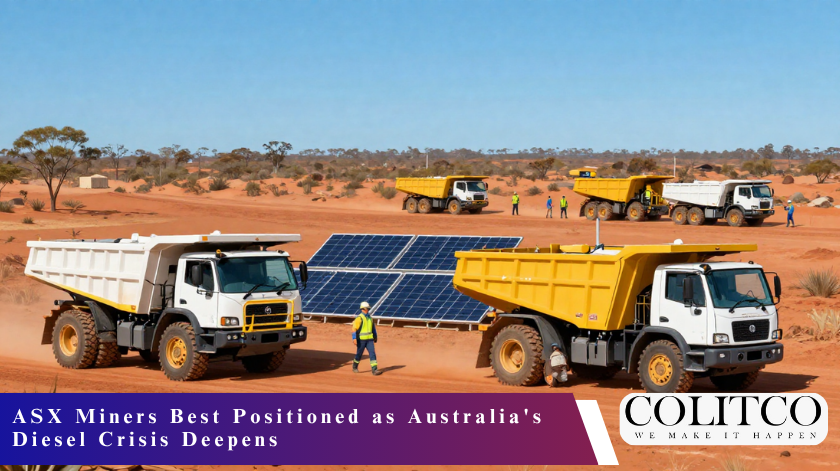
Australia’s mining sector has been rattled by a sharp spike in diesel prices following the closure of the Strait of Hormuz by Iran, which has choked off approximately 20 per cent of the world’s energy supply. Local diesel prices have surged 75 per cent this year to nearly A$3 a litre, with China and other major diesel suppliers cancelling exports in response to the disruption.
 Figure 1: Individual refuelling a vehicle at a petrol station, highlighting the consumer-level impact of fuel price increases [Courtesy: Freepik]
With Australia importing more than 80 per cent of its fuel, the exposure is significant. Analysts are now drawing a clear line between miners with large-scale open-cut operations and those running underground or alternative recovery methods, with the latter group firmly in favour.
ASX Miners Best Placed to Weather the Diesel Crisis
The miners’ analysts are currently pointing to the following as best positioned:
- Liontown Resources (ASX: LTR): 82 per cent renewable-powered underground operation
- Boss Energy (ASX: BOE) in-situ recovery with grid-connected power
- Nickel Industries (ASX: NIC) subsidised the domestic fuel market in Indonesia
- Vulcan Energy Resources (ASX: VUL) fully electric, carbon-neutral production process
- Fortescue (ASX: FMG) active diesel displacement program with estimated savings of US$3 to US$6 per tonne
The Diesel Shock and Its Impact on ASX Mining Stocks
The scale of the cost shock becomes clear when the numbers are broken down, with Bell Potter’s survey drawing a direct line to mining margins.
How the Iran Conflict Is Reshaping Mining Cost Structures
A Bell Potter survey of ASX-listed miners found that diesel accounted for up to 15 per cent of operating costs before the Iran war began in late February. Since then, Brent crude prices have soared approximately 50 per cent to above US$100 a barrel and are expected to keep climbing.
Bell Potter analyst Stuart Howe noted that the Middle East conflict and the associated rally in oil prices flow almost directly through to higher costs for much of the mining sector. He added that the sector may also have to manage the scarcity of diesel supply, potentially impacting production volumes.
With costs rising and stocks selling off, brokers are now telling clients exactly where to reposition their mining exposure.
Market Reaction and the Case for Rotating Into Low Diesel ASX Miners
The S&P/ASX 200 Materials Index fell as much as 20 per cent since the conflict erupted, with investors selling off stocks most at risk, including gold producers. Bargain hunters began returning to the sector, but brokers are advising clients to rotate selectively into low diesel ASX miners with structural insulation from fuel cost pressures.
 Figure 2: Fuel pumps displaying petrol and diesel prices amid rising global energy costs [Courtesy: Freepik]
Bell Potter recommended focusing on miners with underground operations or those utilising in-situ leach recovery, a method that uses fluid to recover minerals from the ground without the large-scale earth movement required in open-cut mining.
Liontown Renewable Energy Mining and the Underground Advantage
The contrast between fuel-exposed and fuel-resilient miners is nowhere more visible than in how individual projects are powered.
Kathleen Valley as a Blueprint for Fuel-Resilient Operations
Liontown Renewable Energy Mining at its Kathleen Valley Lithium Project stands out as a direct example of how low diesel exposure can be built into a project’s design. Bell Potter highlighted the operation given that its underground Kathleen Valley project was 82 per cent powered by renewable energy in the first half of the 2026 financial year.
Liontown Resources (ASX: LTR) is among the names brokers are pointing clients toward as the diesel crisis intensifies, with its renewable-heavy power mix offering meaningful insulation against the fuel price shock affecting open-cut peers.
Liontown is not alone, with several other ASX names carrying structural protection from the diesel shock for different but equally compelling reasons.
Other Miners With Limited Diesel Exposure
Boss Energy (ASX: BOE) also carries limited exposure to diesel costs, as its Honeymoon uranium project utilises in-situ recovery and is powered directly by the national power grid at Broken Hill in far west New South Wales. Nickel Industries (ASX: NIC) is largely insulated from the oil price shock, given it operates in Indonesia, where domestic fuel supply is near self-sufficient, and the fuel market is subsidised.
Vulcan Energy Resources (ASX: VUL) rounds out the group, with its phase 1 Lionheart lithium brine project targeting first production in 2028. The project is effectively carbon-neutral, with the lithium hydroxide production process powered entirely by electricity.
Fortescue Diesel Displacement Savings and the Iron Ore Divide
The iron ore sector sits at opposite ends of the diesel exposure spectrum, with some producers facing acute risk and one potentially emerging as a beneficiary.
Open-Cut Producers Facing the Sharpest Cost Pressures
Macquarie has warned that higher fuel prices will have an outsized effect on the iron ore industry, particularly for direct shipping ore producers. These operations extract high-grade ore requiring only simple crushing and screening, but rely heavily on diesel-powered trucking fleets across vast open-cut footprints.
Macquarie’s channel checks indicated that Western Australia-based iron ore miners had approximately three to five weeks of diesel supply remaining. The broker noted that higher fuel costs are a particular burden on less geologically endowed assets with lower grades and higher strip ratios. Mineral Resources (ASX: MIN) and its Pilbara hub were identified as among the most affected.
While peers scramble to manage costs, Fortescue’s early investment in diesel displacement is now translating into a measurable financial advantage.
Fortescue’s Decarbonisation Approach as a Competitive Edge
Fortescue diesel displacement savings could make it one of the standout beneficiaries of the current crisis. Macquarie estimated that Fortescue (ASX: FMG) could save between US$3 and US$6 per tonne depending on the prevailing diesel price, owing to its active program of substituting diesel out of its operations as part of its broader decarbonisation strategy.
Fortescue diesel displacement savings of this scale represent a meaningful cost advantage over peers that remain heavily reliant on conventional fuel, particularly as prices continue to rise.
Industry Outlook
Australia’s mining sector is navigating one of its most acute cost shocks in recent years, with diesel prices at historically elevated levels. The Bell Potter chart tracking Australia’s diesel terminal gate price shows the current wholesale price approaching 300 cents per litre, far above the historic range of 130 to 230 cents per litre seen across the past two decades.
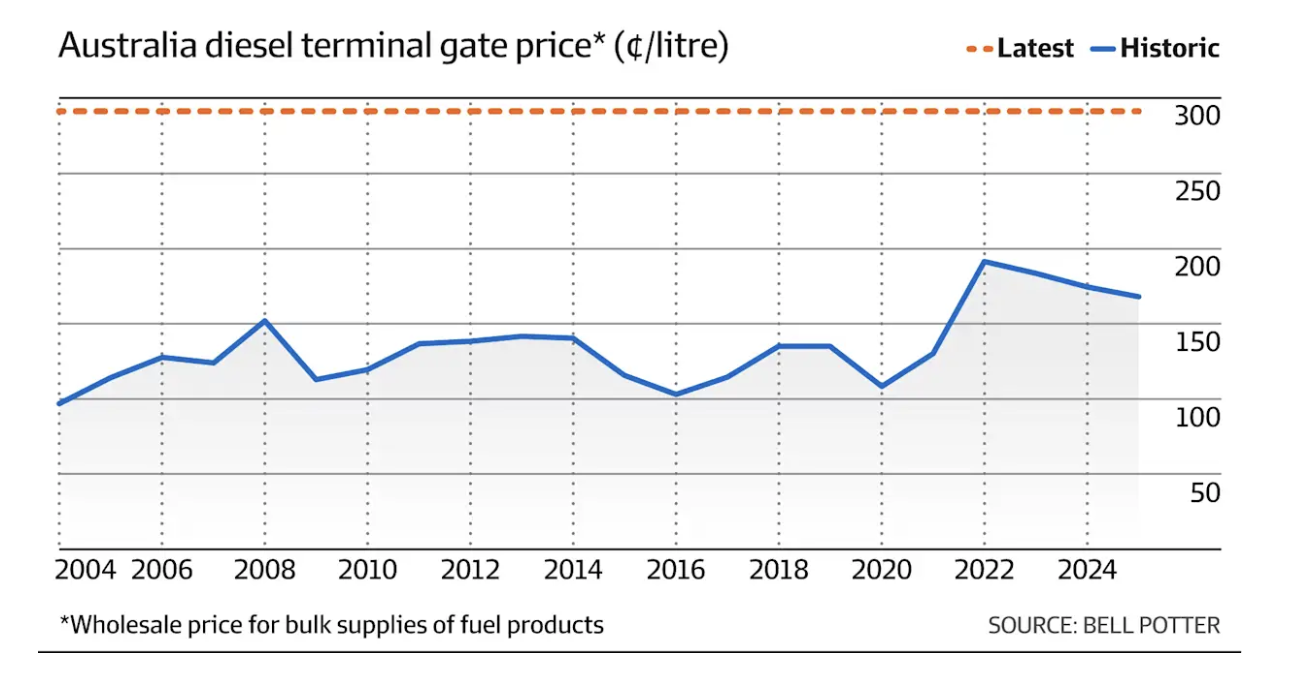 Figure 3: Australia diesel terminal gate price in cents per litre, historic and latest [Courtesy: Bell Potter]
The structural shift toward electrification, renewable energy integration and alternative recovery methods is no longer simply an ESG consideration. It has become a direct competitive advantage for low diesel ASX miners in the current environment.
Future Direction and Impact on ASX Mining Investment Strategy
The diesel crisis is accelerating a divide within the ASX mining sector that was already forming around energy transition themes. Companies that invested early in Liontown renewable energy mining models, in-situ recovery, or decarbonisation programs such as Fortescue’s are now better insulated from a shock that has blindsided much of the industry.
For investors reassessing their mining exposure, the operational energy mix of a project is now as important as its grade or jurisdiction. Low diesel ASX miners with underground operations, renewable power integration or alternative recovery methods are likely to attract a sustained premium until the diesel supply outlook stabilises.
ALSO READ: Three ASX 200 Blue Chips That May Be Trading Below Their Worth
Frequently Asked Questions
Q1. What are low diesel ASX miners?
Ans. Low diesel ASX miners are mining companies whose operations rely minimally on diesel fuel, either through underground mining, renewable energy integration, in-situ recovery methods, or grid-connected power supplies.
Q2. Why is Liontown renewable energy mining significant right now?
Ans. Liontown’s Kathleen Valley project was 82 per cent powered by renewable energy in the first half of the 2026 financial year, making it one of the most fuel-resilient lithium operations on the ASX during the current diesel crisis.
Q3. How much could Fortescue save from diesel displacement?
Ans. Macquarie estimated Fortescue diesel displacement savings of between US$3 and US$6 per tonne, depending on the prevailing diesel price, giving it a material cost advantage over open-cut peers.
Q4. Which miners are most at risk from the diesel crisis?
Ans. Open-cut producers, particularly direct shipping ore iron ore miners and gold producers with large trucking fleets, face the greatest exposure. Mineral Resources’ Pilbara hub was specifically identified by Macquarie as among the most affected.
Q5. What is in-situ leach recovery and why does it matter?
Ans. In-situ leach recovery uses fluid to extract minerals from the ground without large-scale earth movement, significantly reducing the need for diesel-powered heavy equipment compared to conventional open-cut mining.
Disclaimer
This article is intended for informational purposes only and does not constitute financial or investment advice. All content is based on reporting published online. Investing in securities involves risk. Readers should conduct their own research and seek independent financial advice before making any investment decisions. Colitco does not hold any position in the companies or organisations mentioned.
Sources
Last modified: March 26, 2026