
The Federal Reserve’s January Beige Book, released on 15 January 2026, shows economic activity increased across most U.S. regions during December. The Fed Beige Book 2026 highlights a stark divergence in US consumer spending trends, with high-income households driving growth while lower-income Americans pull back significantly.
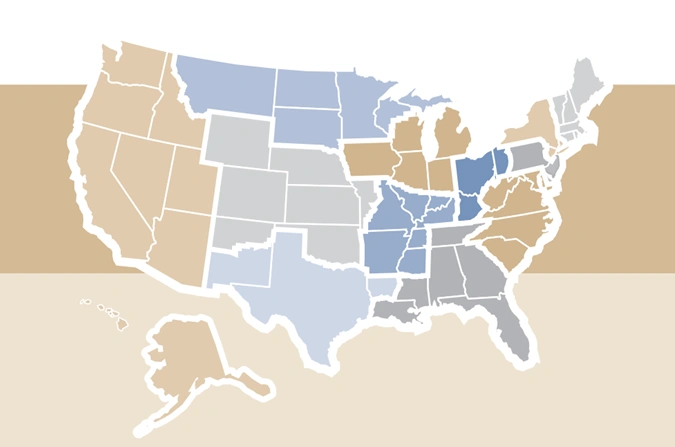
Figure 1: Overview of US regions referenced in the Federal Reserve Beige Book. [Source: Federal Reserve]
The Fed report on consumer trends 2026 paints a picture of a K-shaped economy intensifying. Eight of the 12 Fed banks reported increased economic activity, while hiring remained mostly unchanged across regions.
Fed Beige Book 2026 Shows Economic Improvement
The Fed Beige Book 2026 documented economic conditions from mid-November to early January across Federal Reserve districts. Overall economic activity picked up modestly in December compared to November, according to the comprehensive report.
Eight of the 12 Fed banks reported increased economic activity during the period. Eight districts also reported mostly no change in hiring levels, suggesting labour market stability.
Prices grew at a moderate rate across all but two districts. The remaining two districts reported only slight price growth during the survey period.
Forward-looking sentiment remained cautiously positive, as most respondents anticipated limited but steady expansion in the near term. The Fed report on consumer trends 2026 represents a modest upgrade compared to the previous Beige Book release.
US Consumer Spending Trends Show Sharp Income Divide
The US consumer spending trends revealed in the report show several districts noting stronger spending among higher-income consumers. Increased spending on luxury goods, travel, tourism and experiential activities characterised this group’s behaviour.
Meanwhile, low to moderate-income consumers were increasingly price sensitive and hesitant to spend on nonessential goods and services. The Fed Beige Book 2026 contains numerous examples of this bifurcated spending pattern.

Figure 2: Overview of US regions referenced in the Federal Reserve Beige Book. [Source: Freepik]
Businesses serving affluent consumers reported stronger sales performance, according to feedback gathered by the Minneapolis Fed. Furniture and other retailers serving middle and lower-income consumers were getting pretty beat up, according to one contact.
A Montana restaurant owner observed that wealthier customers seem to still be spending and eating out frequently. Lower-income consumers are pulling back, eating out less, or displaying more price sensitivity.
Lower-Income Households Cut Back on Essentials
The Fed report on consumer trends 2026 documented significant cutbacks among lower and moderate-income households. These consumers switched to generic brands, ate less protein, and reduced travel spending substantially.
In the Cleveland Fed district, 70 per cent of low-income workers in a survey reported higher expenses. Half of the respondents stated their income did not cover their costs currently.
Figure 3: Visual representation of economic slowdown and financial trends. [Source: Equiti]
Lower-income families budgeted more tightly during the holiday season to manage limited resources in the Dallas District. These households sought bargains and cut back on travel and dining out.
The San Francisco Fed observed that discretionary spending by high-income households continued at robust levels. Low and middle-income households continued trimming budgets and trading down to lower-cost and store-label alternatives.
Demand at quick service restaurants remained solid overall. Several sources noted that lower-income households are increasingly cutting costs by dining at home more often and reducing spending on higher-priced food items.
Healthcare Costs Pressure Vulnerable Groups
Low and moderate-income seniors in the New York District struggled to pay health insurance premiums. The Fed Beige Book 2026 noted premiums have risen sharply in the region.
The end of federal insurance subsidies raised out-of-pocket costs significantly. Two districts mentioned the drag from the end of affordable healthcare subsidies following last year’s government shutdown.

Figure 4: General healthcare activity. [Source: Freepik]
Some business contacts in the Philadelphia region expressed concern that household incomes are insufficient for consumers to maintain spending. Price pressures remain elevated, with affordability problems growing for low and middle-income households.
The US consumer spending trends data show these healthcare cost pressures adding to overall financial strain. Consumer spending makes up two-thirds of U.S. GDP, making these trends economically significant.
Federal Reserve Rate Policy Remains Uncertain
The Fed report on consumer trends 2026 provides context for the Federal Reserve’s upcoming policy meeting on 27-28 January. Financial markets expect the central bank to leave rates unchanged in the current 3.50 to 3.75 per cent range.
Fed policymakers cut rates by three-quarters of a percentage point last year. In December, they signalled an inclination to hold the policy rate steady while waiting for an improvement in inflation.
The December rate cut decision passed by a 9-3 vote, with the majority feeling the weakening labour market needed support. Several non-voting Fed bank presidents have since indicated they sided with the no voters.
Interest rate futures markets reflect expectations that policymakers will wait until June to cut rates. The Fed targets 2 per cent inflation, while consumer prices rose 2.7 per cent in December year-on-year.
Labour Market Shows Job Seeker Optimism
The Fed report on consumer trends 2026 revealed surprising optimism among low-income workers about job prospects. Despite notable economic pressures, 45 per cent said they planned to look for a job in the coming months.
Nearly all expressed confidence that they would find a new or better position. This optimism contrasts with the financial pressures documented throughout the report.

Figure 5: United States economic environment and institutional backdrop. [Source: Freepik]
The U.S. unemployment rate ticked down to 4.4 per cent in the latest reading. Employment was mostly unchanged in recent weeks across Federal Reserve districts.
Eight districts reported mostly no change in hiring during the survey period. This stability provides some support for worker confidence about finding opportunities.
The Economy Cannot Rely on the Wealthy Alone
Consumer spending makes up two-thirds of U.S. GDP, according to economic data. The economy cannot rely on wealthy consumers alone to sustain growth.
The majority of overall consumer spending is driven by low and middle-income households due to their larger share of consumption activity. When they pull back, overall growth becomes more fragile and susceptible to shocks.
The Fed Beige Book 2026 highlights this vulnerability through numerous regional examples. The bifurcated economy creates risks for sustained economic expansion.
President Donald Trump has vowed to install a Fed chief who aligns with his view that borrowing costs should be sharply lower. Fed Chair Jerome Powell’s term as head of the central bank ends before the expected June rate cut.
Final Thoughts
The Fed Beige Book 2026 reveals an economy growing on two speeds, with wealthy consumers driving luxury spending while lower-income Americans make difficult tradeoffs. The US consumer spending trends show this divide intensifying rather than narrowing.
The Fed report on consumer trends 2026 provides crucial context for upcoming monetary policy decisions. With inflation still above target and the labour market showing mixed signals, policymakers face challenging choices.
The widening gap between high and low-income consumers raises questions about the sustainability of current economic growth. As middle and lower-income households account for the bulk of consumption volume, their continued pullback poses risks to broader economic momentum.
Also Read: Ryman Healthcare Q3 Trading Update Shows Steady Sales Performance and Rising Care Occupancy
FAQs
Q1. What does the Fed Beige Book 2026 reveal about economic growth?
Ans. The Fed Beige Book 2026 shows eight of 12 Fed banks reported increased economic activity from mid-November to early January, with modest overall improvement and mildly optimistic outlooks.
Q2. How do US consumer spending trends differ by income level?
Ans. US consumer spending trends show high-income consumers increasing spending on luxury goods, travel and dining, while low and moderate-income consumers cut back on essentials, switch to generic brands and reduce protein consumption.
Q3. What does the Fed report on consumer trends 2026 say about inflation?
Ans. The Fed report on consumer trends 2026 shows prices grew at a moderate rate across most districts, with consumer prices rising 2.7 per cent year-on-year in December against the Fed’s 2 per cent target.
Q4. When is the Federal Reserve expected to cut interest rates next?
Ans. Financial markets expect the Fed to leave rates unchanged at the 27-28 January meeting, with interest rate futures reflecting expectations for a rate cut in June 2026.