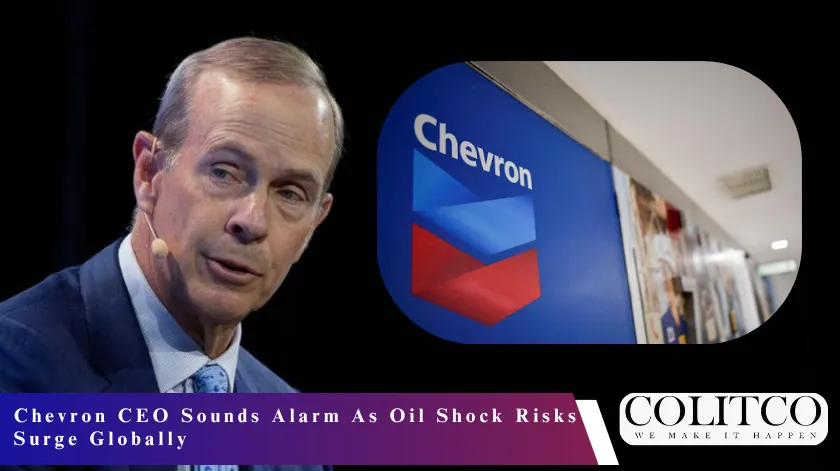
Chevron CEO announced that oil shocks are imminent because markets are not taking supply disruptions from the Strait of Hormuz near Iran seriously.
He highlighted that investors remain complacent about crude oil price movements despite visible global supply constraints and shifting geopolitical conditions.
Speaking at an energy conference in Houston, Texas, he said crude supplies are tighter than futures contracts currently indicate. He added that markets have not fully priced in real-world disruptions, increasing the likelihood of sudden price shocks ahead.
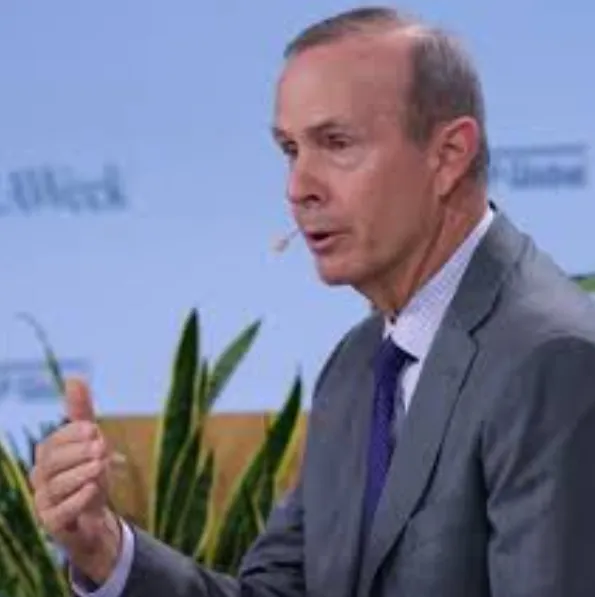
Chevron CEO warns of underpriced oil supply risks. [Courtesy: CNBC]
Why Oil Market Volatility Remains Elevated
The volatility in the oil market is still high because of conflicting messages between physical conditions in the market and futures market operations that make investors uncertain about what exactly is going on, and the magnitude of disruptions that occur in global oil flows is not reflected in the current trading.
He indicated that the strategic effects of a shutdown of the Strait of Hormuz are real and are still felt in the chain of supply, and geopolitical conditions and lack of transparency further complicate price identification, thus increasing the chances of unpredictable changes in the crude oil benchmarks in the global market.
Who Is Most Exposed To Oil Price Shocks?
Energy markets, investors and the global industries are still very vulnerable to the oil price shocks, since variations in oil prices directly impact the fuel prices, inflation and the economic stability of the regions that rely on imports.
The stock performance of Chevron itself is a bit ambivalent, as CVX has increased by +1.73% despite the rest of the oil market being uncertain.
In the meantime, the overall sentiment among the analysts is substantially positive, with 21 Wall Street analysts rating it a Strong Buy on 16 Buy and five Hold ratings, although the average price target of $197.25 implies a 3.36% decline at the current price.
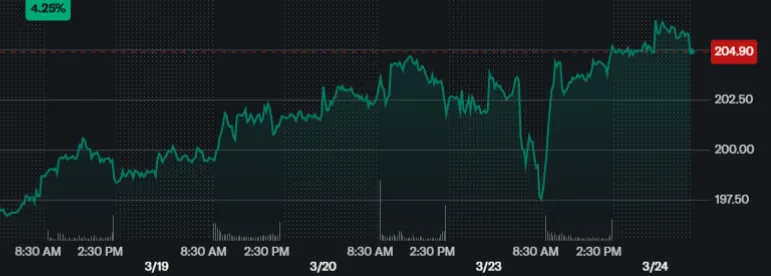
Chevron stock reflects mixed signals amid oil market uncertainty. [Courtesy: Yahoo Finance]
Where Are These Risks Emerging Globally?
Global oil market risks are rising as critical supply routes and geopolitical tensions intensify. Key developments across major regions are driving uncertainty and influencing price movements worldwide.
- Critical Oil Chokepoints: Risks are concentrated around vital routes like the Strait of Hormuz near Iran, where disruptions can significantly impact global supply chains and oil prices.
- Geopolitical Factors Between the United States and Iran: Ongoing tensions, including negotiations and a temporary five-day halt to attacks announced by U.S. President Donald Trump, are influencing market stability.
- Short-Term Price Volatility: These developments have triggered immediate fluctuations in oil prices across global markets.
- Unresolved Supply Risks: Despite temporary easing, underlying supply disruptions remain unaddressed and continue to shape global market sentiment.
When Could The Next Oil Shock Occur?
The following oil shock may arise in the near future as the markets adapt to the flawed information and changing geopolitical situations, since the recent developments have already caused an abrupt shift in prices.
Prices of crude oil dropped by over 10 per cent of their value with the announcement of diplomacy, and it serves as an example of the sensitivity of the market to the abrupt shifts.
But Chevron CEO warned that these falls might not be true supply facts, indicating that in the future, there might arise shocks again when markets realise in full the amount of disruptions that are happening in world oil systems at present.
Oil markets react sharply to geopolitical developments and supply risks. [Courtesy: Quartz]
How Will Oil Shocks Impact Global Markets?
Oil shocks would have effects on the global markets in terms of volatility, price uncertainty, and overall economic effects, as it has been observed in the recent benchmark movements.
Brent crude decreased 12 per cent to $98.95 per barrel, and West Texas Intermediate decreased 11 per cent to $87.73 per barrel on March 23. These falls point to the speed with which sentiment might change, but latent supply bottlenecks might change the trend very fast.
The disintegration between the physical supply conditions and the market pricing is an indication that any future changes will occur suddenly and will impact investors, industries, and even policymakers in various places across the world.
Also Read: Two ASX Blue-Chips Are Bleeding Quietly as Oil Blows Past US$100 a Barrel
FAQs
Q1. What did the Chevron CEO warn about?
A1: The CEO warned that oil price shocks are likely due to tightening supply and geopolitical risks.
Q2. Why are oil markets still volatile?
A2: Volatility persists due to underinvestment, supply constraints, and global geopolitical uncertainties.
Q3. Who is most affected by oil price shocks?
A3: Energy-intensive industries and emerging economies face the highest exposure to rising oil prices.
Q4. What could trigger the next oil shock?
A4: Supply disruptions, geopolitical tensions, or sudden demand increases could trigger the next shock.
Disclaimer
This article is for informational purposes only and reflects publicly available statements and recent market developments related to Chevron and the global oil industry. It does not constitute financial, investment, or trading advice. Oil markets are highly volatile and influenced by geopolitical and economic factors. Readers should conduct independent research or consult a licensed financial advisor before making investment decisions.
Sources
- https://www.tipranks.com/news/chevron-cvx-ceo-warns-more-oil-price-shocks-are-coming
- https://www.barrons.com/articles/energy-markets-should-be-more-worried-chevrons-ceo-says-f65915b8
- https://www.businessinsider.com/stock-market-forecast-oil-price-shocks-recession-risk-iran-war-2026-3
- https://www.washingtonpost.com/business/2026/03/19/gas-prices-iran-oil-companies/