The world of international travel has become more divided than ever.
Fresh data from the Henley Passport Index 2026 shows a growing gulf between those who can move freely across borders and those increasingly trapped within them. The rankings, released this week, paint a stark picture of how geopolitical forces are reshaping global mobility.
For the third consecutive year, Singapore claims the top spot with visa-free access to 192 destinations. But the real story lies in what’s happening to traditional powerhouses like the United States and United Kingdom.
Australia Holds Steady at Seventh
Australian passport holders can access 182 destinations without obtaining a visa beforehand, placing the nation in seventh position globally.
The ranking puts Australia alongside Latvia, Liechtenstein, and the United Kingdom. While the position remains unchanged from recent quarters, the country shares an unusual distinction with the US.
Australia has one of the widest gaps globally between outbound mobility and inbound openness. The nation allows only 46 nationalities to enter without prior visas, ranking 78th on the Henley Openness Index.
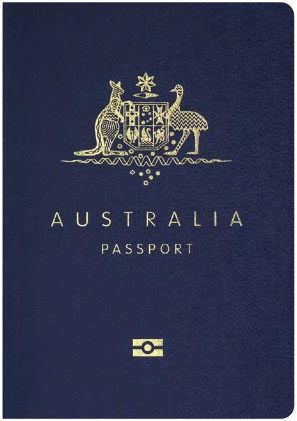
Australian passport [Wikipedia]
Asia and Europe Dominate the Upper Ranks
Japan and South Korea share second place, each providing access to 188 countries visa-free.
The third tier sees Denmark, Luxembourg, Spain, Sweden, and Switzerland offering entry to 186 destinations. A group of 10 European nations claims fourth place, including Austria, Belgium, Finland, France, Germany, Greece, Ireland, Italy, the Netherlands, and Norway.
New Zealand sits in sixth position with 183 visa-free destinations. Canada, Iceland, and Lithuania follow at eighth with 181 countries accessible without prior visas.
US and UK Experience Steep Declines
The United States has returned to tenth place after briefly dropping out of the top 10 in late 2025. American passport holders can visit 179 destinations without visas.
However, this masks a troubling long-term trend. The US has suffered the third-largest ranking decline over two decades, falling from fourth in 2006 to tenth today.
The UK has experienced even steeper losses. British passport holders lost access to eight destinations in the past year alone, the sharpest annual drop recorded by any nation.
“Passport power ultimately reflects political stability, diplomatic credibility, and the ability to shape international rules,” says Misha Glenny, rector of the Institute for Human Sciences in Vienna.
“As transatlantic relations strain and domestic politics grow more volatile, the erosion of mobility rights for countries like the US and UK signals deeper geopolitical recalibration.”
UAE Emerges as Standout Performer
The United Arab Emirates has recorded the strongest gains in the index’s 20-year history.
The nation has added 149 visa-free destinations since 2006, climbing 57 places to fifth position. UAE passport holders now access 184 countries without prior visas.
This dramatic rise stems from sustained diplomatic engagement and strategic visa liberalisation policies. The UAE’s approach demonstrates how smaller nations can build significant travel freedom through focused international relations.
China’s Strategic Pivot Towards Openness
China has risen 28 places over the past decade, moving from 87th to 59th position.
Chinese passport holders can now visit 141 countries without obtaining advance visas. Perhaps more significantly, China has granted visa-free access to over 40 additional nations in just two years.
The country now permits 77 nationalities to enter without prior visas, 31 more than the United States. This marks a deliberate shift in Chinese diplomatic strategy.
“There is a visible shift underway in the global balance of power, marked by China’s renewed openness and the USA’s retreat into nationalism,” says Dr. Tim Klatte, Partner at Grant Thornton China.
The Mobility Gap Widens
Afghanistan occupies the bottom position for another year, with access to just 24 destinations.
The 168-destination gap between Singapore and Afghanistan represents a dramatic widening of global mobility inequality. In 2006, the difference between the top-ranked US passport and Afghanistan was only 118 destinations.
“Over the past 20 years, global mobility has expanded significantly, but the benefits have been distributed unevenly,” explains Dr. Christian H. Kaelin, Chairman at Henley & Partners.
“Today, passport privilege plays a decisive role in shaping opportunity, security, and economic participation.”
Regional Success Stories
Several nations have made impressive gains through regional integration and diplomatic efforts.
Albania has climbed 36 places, Ukraine rose 34 positions, and Serbia advanced 30 spots. These improvements reflect successful visa liberalisation agreements and stronger regional cooperation.
Kosovo recorded the biggest rise over the past decade, climbing 38 places from 97th to 59th position.
Bolivia stands as the only nation to see an overall decline in visa-free access over 20 years. The South American country has lost five destinations and fallen 32 places to 61st position.
What This Means for Travellers
The Henley Passport Index bases its rankings on exclusive data from the International Air Transport Association.
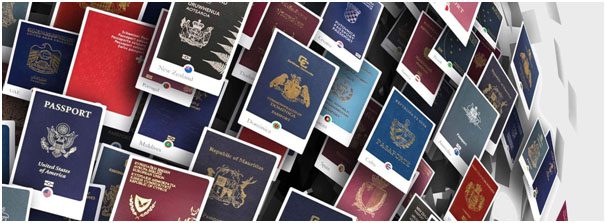
The Henley Passport Index [Henley & Partners]
The index measures 199 passports against 227 possible travel destinations. It tracks visa-free access, including destinations offering visa-on-arrival arrangements.
Airlines are preparing to carry a record 5.2 billion passengers globally in 2026. The growing demand for international travel contrasts sharply with the increasing restrictions many passport holders face.
Recent proposals by US Customs and Border Protection could further restrict visa-free travel under the Visa Waiver Program. These changes would require extensive biometric and personal data from visitors, stored for up to 75 years.
Also Read: Inflation Refuses to Budge Despite Fed Cuts, Leaving Trump on Defensive Over Living Costs
Looking Ahead
The 2026 rankings mark the 20th anniversary of the Henley Passport Index.
The data reveals how passport strength increasingly reflects broader geopolitical trends. Nations with strong diplomatic relationships, political stability, and open trade policies tend to rank higher.
For Australian travellers, the seventh-place ranking provides solid access to most global destinations. However, the widening mobility gap and shifting international relationships suggest the passport landscape will continue evolving in the years ahead.
The index serves as a reminder that travel freedom cannot be taken for granted. It must be maintained through consistent diplomatic engagement and international cooperation.