A Historic Agreement Eight Years in the Making
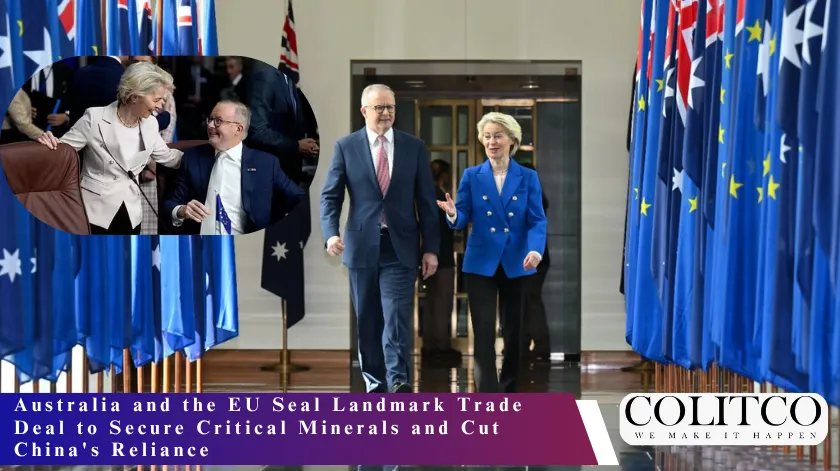
Australia and the European Union signed a landmark free trade agreement on Tuesday, 24 March 2026, in Canberra. European Commission President Ursula von der Leyen and Australian Prime Minister Anthony Albanese formalised the deal at Parliament House. The signing marks the end of eight years of complex negotiations.
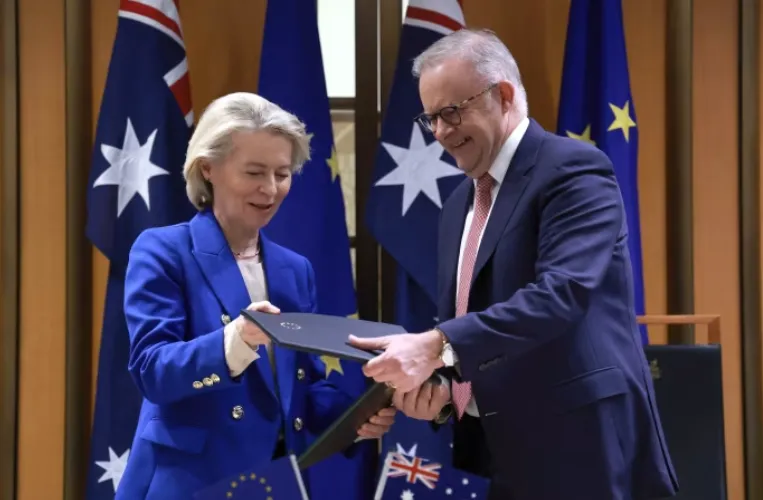
Australian Prime Minister Anthony Albanese and European Commission President Ursula von der Leyen sign the landmark Australia–EU trade agreement in Canberra. [WSJ]
The agreement removes tariffs on over 99% of European goods entering Australia. It also eliminates duties on nearly all Australian critical mineral exports to Europe.
Australian Prime Minister Anthony Albanese said the deal would add approximately A$10 billion annually to the national economy.
Critical Minerals at the Heart of the Deal
The agreement eliminates tariffs across key mineral categories, including lithium, rare earths, antimony, nickel, cobalt, copper, and uranium.
Both sides view this as a strategic priority. European Commission President Ursula von der Leyen told Australia’s parliament that over-dependence on any single supplier posed an unacceptable risk.
Von der Leyen stated: “We cannot be over-dependent on any supplier for such crucial ingredients, and that is precisely why we need each other.” The critical minerals provisions directly support the EU’s goal of sourcing at least 10% of its critical mineral processing capacity from allied nations by 2030.
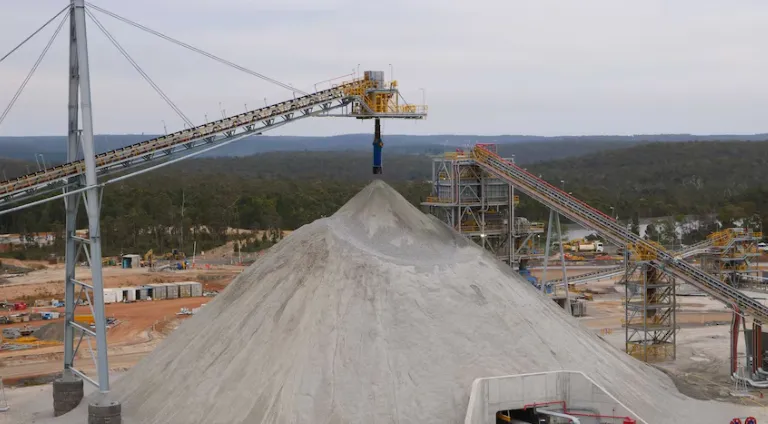
Australia’s mining sector plays a central role in supplying critical minerals like lithium and rare earths to global markets. [ABC]
Reducing Reliance on China-Dominated Supply Chains
Both parties designed the deal partly to reduce dependence on China, which currently dominates global rare earth refining and critical mineral processing.
China’s export controls on strategic materials have alarmed Western governments and manufacturers in recent years.
Von der Leyen addressed this directly, telling Australian lawmakers: “For both Europe and Australia, getting China right is a strategic imperative, and this is why bringing to life our critical minerals partnership will be crucial to our success.” The Minerals Council of Australia noted the deal would play a key role in diversifying supply chains away from concentrated or higher-risk sources.
Projected Economic Benefits and Trade Growth
The EU expects its exports to Australia to grow by up to one-third over the next decade. The agreement will cut approximately one billion euros annually in duties for European companies.
EU firms exported goods worth 37 billion euros to Australia in 2025, and services valued at 28 billion euros in 2023.
The EU ranks as Australia’s third-largest trading partner and second-largest source of foreign investment.
The Minerals Council of Australia confirmed that removing trade barriers would improve Australia’s competitive positioning while supporting long-term commercial relationships with European strategic partners.
Defence Cooperation and Security Partnership
Beyond trade, Australia and the EU also signed a formal security and defence partnership. This reflects Europe’s expanding engagement in the Indo-Pacific region.
Von der Leyen described the security dimension plainly: “Our security is your security, and with our new security and defence partnership, we have each other’s back.”
The security partnership comes as global instability has intensified. Conflict in the Middle East has pushed oil prices higher and exposed energy vulnerabilities. Both Australia and Europe depend heavily on stable trade routes and energy imports.
The Australian Industry Group noted that the deal should be viewed as a strategic tool to improve market access and support more resilient supply chains.
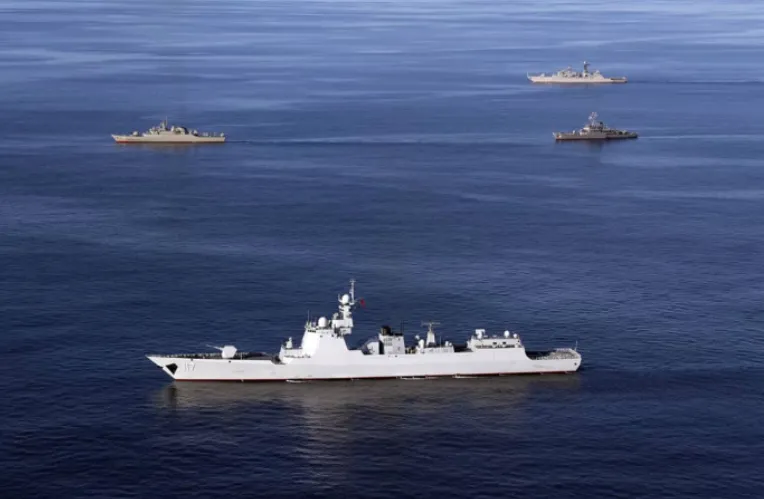
Australia and the EU expand cooperation through a new security and defence partnership focused on regional stability. [WSJ]
Agricultural Access Falls Short for Australian Farmers
The deal has not satisfied Australia’s agricultural sector. Under the agreement, the quota of Australian beef allowed into the EU will increase more than tenfold over the next decade, but that falls short of what farmers sought.
The EU will allow tariff-free access for 30,600 metric tons of beef, with around 55% entering duty-free.
National Farmers’ Federation president Hamish McIntyre expressed strong disappointment, stating the deal appeared to offer no material change on key agricultural commodities compared to a proposal Australia rejected in October 2023.
Despite these criticisms, tariffs on European goods such as wine, sparkling wine, fruits, vegetables, and chocolates will drop to zero immediately under the agreement.
Geographical Indications and Luxury Car Tax Concessions
Several specific compromises shaped the final text. Australian winemakers may continue using the term “prosecco” in the domestic market, but must stop using it for exports after ten years.
Australia may also continue using some geographically linked names, such as feta and gruyere, where producers have used the name for at least five years.
European carmakers also walked away with a notable win. Under the deal, Australia agreed to lift the luxury car tax threshold for EU electric vehicles to A$120,000, a change that effectively shields about 75% of those cars from the tax altogether. It’s a telling sign of just how wide-ranging these negotiations were, stretching well beyond minerals and raw materials into consumer markets.
Also Read: Aussie Broadband Director Phillip Britt Resigns from Board
A Template for Strategic Resource Partnerships
Trade analysts and industry groups have been quick to point to the agreement as a potential blueprint for similar deals between developed economies.
The Australian Industry Group called it a strategic tool for cutting input costs and strengthening supply chains at a time when geopolitical uncertainty is pushing governments to think more carefully about where critical materials come from.
Whether the deal delivers on that promise is another question. A lot will hinge on how quickly both sides can build out the infrastructure, align regulations, and train the workers needed to actually scale up production and processing. Both governments say they’ll be watching trade volumes, investment flows, and supply chain stability closely as the agreement kicks in — though the real test will come in the years ahead.
FAQs
- What is the Australia–EU trade deal about?
Ans. It is a free trade agreement between Australia and the European Union that removes tariffs on most goods and strengthens cooperation in critical minerals, trade, and security.
- Who signed the agreement?
Ans. The deal was signed by Australian Prime Minister Anthony Albanese and European Commission President Ursula von der Leyen in Canberra on March 24, 2026.
- What are the main minerals covered in the deal?
Ans. The agreement covers key resources such as lithium, rare earths, nickel, cobalt, copper, antimony, and uranium, which are vital for clean energy and manufacturing.
- Why is this agreement considered strategically important?
Ans. It helps both regions reduce dependence on dominant suppliers like China and strengthens secure, diversified supply chains for critical materials.
- What economic impact is expected from the deal?
Ans. The agreement is projected to boost Australia’s economy by around A$10 billion annually while increasing EU exports and improving long-term trade and investment flows.
Disclaimer
This article is intended for informational and editorial purposes only. The content is based on publicly available information at the time of writing and may be subject to change as new developments occur. It should not be considered legal, financial, or investment advice. Readers are encouraged to verify facts independently and consult qualified professionals before making any decisions based on this information
Sources
https://discoveryalert.com.au/australia-eu-critical-minerals-trade-2026/
Last modified: March 25, 2026