
NASA’s Artemis II crew has returned safely to Earth, completing the first crewed mission to travel around the Moon in more than 50 years. The Orion spacecraft, named Integrity by its crew, touched down in the Pacific Ocean off the coast of San Diego, California at 5:07 pm local time on 10 Apr 2026.
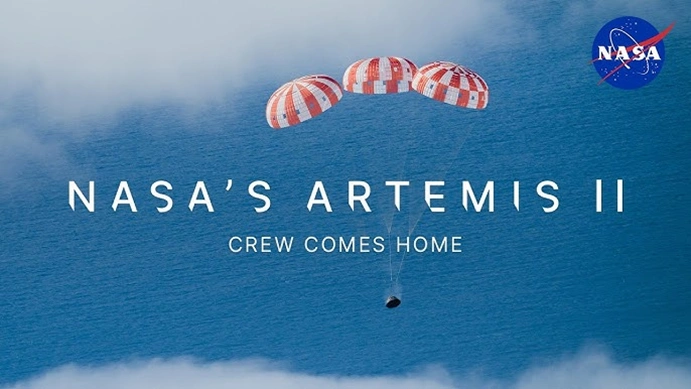
Figure 1: NASA graphic announcing Artemis II crew’s return to Earth [Courtesy: NASA]
The Artemis II splashdown location marks the final chapter of a mission that pushed the limits of human spaceflight, broke a 56-year-old distance record, and set the stage for NASA’s first lunar landing since the Apollo era.
A 13-Minute Plunge Through Fire to Reach the Pacific
The Artemis 2 mission duration spanned 10 days from launch to splashdown, concluding with one of the most demanding phases of the entire journey.
The Orion spacecraft re-entered Earth’s atmosphere at approximately 40,000 kilometres per hour, with exterior temperatures climbing to around 2,760 degrees Celsius, hot enough to generate a plasma layer around the capsule.
Communications Cut Out Before Parachutes Brought Orion Home
That plasma layer triggered a temporary communications blackout with Mission Control in Houston. Contact was restored as drogue parachutes deployed, stabilising the capsule.
Three main parachutes then slowed Orion’s descent to approximately 27 kilometres per hour before it hit the water at the confirmed Artemis II splashdown location off the San Diego coast.
Recovery crews aboard the USS John P. Murtha, an amphibious transport dock ship, were already in position and moved quickly to extract the crew from the capsule, approximately 90 minutes after splashdown.
Four Astronauts, Three Historic Firsts and One Shared Moon View
On board Orion were NASA Commander Reid Wiseman, Pilot Victor Glover, Mission Specialist Christina Koch, and Canadian Space Agency Mission Specialist Jeremy Hansen. The Artemis 2 mission duration of 10 days included a flyby of the far side of the Moon and a series of system tests critical to future crewed lunar landings.

Figure 2: Artemis II Commander Reid Wiseman ahead of the historic lunar mission [Courtesy: AmericaSpace]
Glover, Koch and Hansen Each Made History on This Mission
The mission marked three crew firsts. Glover became the first person of colour to travel around the Moon. Koch became the first woman to do so. Hansen became the first non-American to fly around the Moon.
Minutes before re-entry, Commander Wiseman radioed Mission Control from the spacecraft: “We got a great view of the Moon out window 2 — looks a little smaller than yesterday.” Houston replied: “Guess we will have to go back.”
The NASA Moon Distance Record That Had Stood Since 1970
Among the defining achievements of the Artemis II mission was breaking the NASA moon distance record set during Apollo 13 in 1970. On 6 Apr 2026, six days into the Artemis 2 mission duration, the crew reached a maximum distance of 252,756 miles from Earth.
That surpassed the previous record of 248,655 miles set by the Apollo 13 crew by more than 4,100 miles.
Koch Called on a Generation to Make the New Record Short-Lived
At the moment the new NASA moon distance record was confirmed, Koch transmitted from Orion: “We most importantly choose this moment to challenge this generation and the next to make sure this record is not long-lived.”
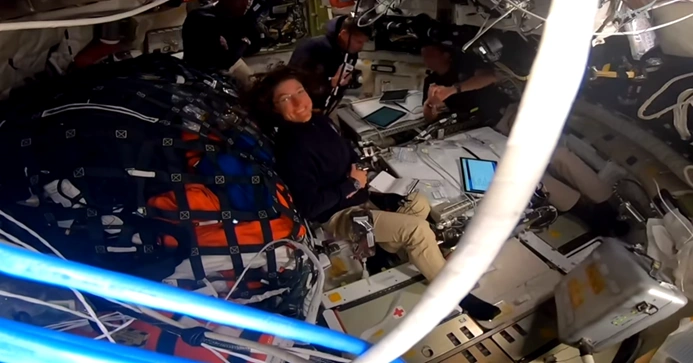
Figure 3: Artemis II crew inside Orion during their record-breaking Moon journey [Courtesy: NASA]
The total journey covered approximately 694,481 miles across the full Artemis 2 mission duration. During the lunar flyby, the crew came within approximately 4,067 miles of the lunar surface and witnessed both a solar eclipse and meteorite impacts on the Moon’s surface.
What the Mission Tested and Why the Data Matters
Artemis II was designed as a crewed test flight for the Orion spacecraft, built by Lockheed Martin. Engineers will now analyse performance data from the heat shield, navigation systems, and life-support technology gathered across the Artemis 2 mission duration.
The spacecraft passed behind the Moon during the flyby, producing one of the longest planned communications blackouts in human spaceflight history, lasting approximately 40 minutes.
NASA Chief Jared Isaacman, speaking from the USS John P. Murtha recovery ship following the Artemis II splashdown location confirmation, said: “We are back in the business of sending astronauts to the Moon, bringing them back safely and set up for a series more.”
Future Direction and Impact on NASA’s Artemis Programme
The Artemis II splashdown and the data collected across the full Artemis 2 mission duration now directly inform planning for Artemis IV, which aims to land astronauts on the lunar surface for the first time since the Apollo era. Engineers will examine every system tested during the mission before the next phase proceeds.
Commander Wiseman reflected on the mission’s broader significance, saying the crew hoped that “for just a moment, we could have the world pause — and remember that this is a beautiful planet in a very special place in our universe.”
The breaking of the NASA moon distance record, combined with the successful Artemis II splashdown, positions NASA to move forward with confidence toward a permanent human return to the Moon.
ALSO READ: Resolution Minerals Unveils Significant Scale Potential at Antimony Ridge with Advanced 3D Modelling
Frequently Asked Questions
Q1. What was the Artemis II splashdown location?
Ans. Orion splashed down in the Pacific Ocean off the coast of San Diego, California at 5:07 pm local time on 10 Apr 2026, and the crew was recovered aboard the USS John P. Murtha.
Q2. What was the Artemis 2 mission duration?
Ans. The Artemis II mission lasted 10 days, launching from Kennedy Space Center in Florida on 1 Apr 2026 and concluding with splashdown on 10 Apr 2026.
Q3. What NASA moon distance record did Artemis II break?
Ans. The crew reached 252,756 miles from Earth on 6 Apr 2026, surpassing the record of 248,655 miles set by Apollo 13 in 1970 by more than 4,100 miles.
Q4. Who were the Artemis II astronauts?
Ans. The crew comprised NASA astronauts Reid Wiseman, Victor Glover, and Christina Koch, along with Canadian Space Agency astronaut Jeremy Hansen.
Q5. What historic firsts did Artemis II achieve?
Ans. Victor Glover became the first person of colour to travel around the Moon, Christina Koch the first woman, and Jeremy Hansen the first non-American.
Disclaimer
This article is intended for informational purposes only. All content is based on reporting published online on 10 and 11 Apr 2026. Colitco does not hold any position in any organisations mentioned. Readers are encouraged to verify details through official NASA channels.
Sources
https://www.nasa.gov/blogs/missions/2026/04/10/artemis-ii-flight-day-10-re-entry-live-updates/
https://www.nasa.gov/blogs/missions/2026/04/06/artemis-ii-flight-day-6-lunar-flyby-updates/
https://www.cbsnews.com/live-updates/artemis-ii-splashdown-return/
https://www.planetary.org/articles/artemis-ii-what-to-expect
https://www.geekwire.com/2026/moon-joy-artemis-2-distance-record/
Last modified: April 11, 2026