
Meridian Energy Limited (NZX: MEL, ASX: MEZ) has released its monthly operating report for August 2026, lodged on 15 Sep 2026. The update lands in a month when New Zealand recorded an all-time peak in national electricity demand, alongside a sharp climb in hydro storage across both main islands.
Chief Executive Mike Roan said the Company and the wider sector met the early August demand peak comfortably, pointing to strong renewable generation and the support North Island batteries now provide to the system.
He also said Meridian remains optimistic about holding strong hydro storage through summer, as strengthening El Niño conditions are expected to bring more rainfall to the Company’s hydro catchments even as drier weather affects eastern regions.
Meridian’s Hydro Storage Surges Ahead of Summer
The report’s hydrology data points to a fast turnaround in water storage across Meridian’s catchments through August and early September:
- National hydro storage rose from 128% to 155% of the historical average between 10 Aug and 7 Sep 2026
- South Island storage climbed to 178% of average by 7 Sep 2026
- North Island storage fell to 79% of average over the same period
- August 2026 monthly inflows across Meridian’s catchments were 145% of historical average
- Waitaki catchment water storage ended August at 161% of historical average, 147% higher than the same time last year
- Waiau catchment storage stood at 172% of average at the end of August
- Snow storage in the Waitaki catchment measured 106% of average in early September
| Metric | Value |
|---|---|
| National hydro storage (10 Aug to 7 Sep 2026) | 128% to 155% of average |
| South Island storage (7 Sep 2026) | 178% of average |
| North Island storage (7 Sep 2026) | 79% of average |
| August 2026 monthly inflows | 145% of average |
| Waitaki catchment storage (end Aug 2026) | 161% of average |
| Waiau catchment storage (end Aug 2026) | 172% of average |
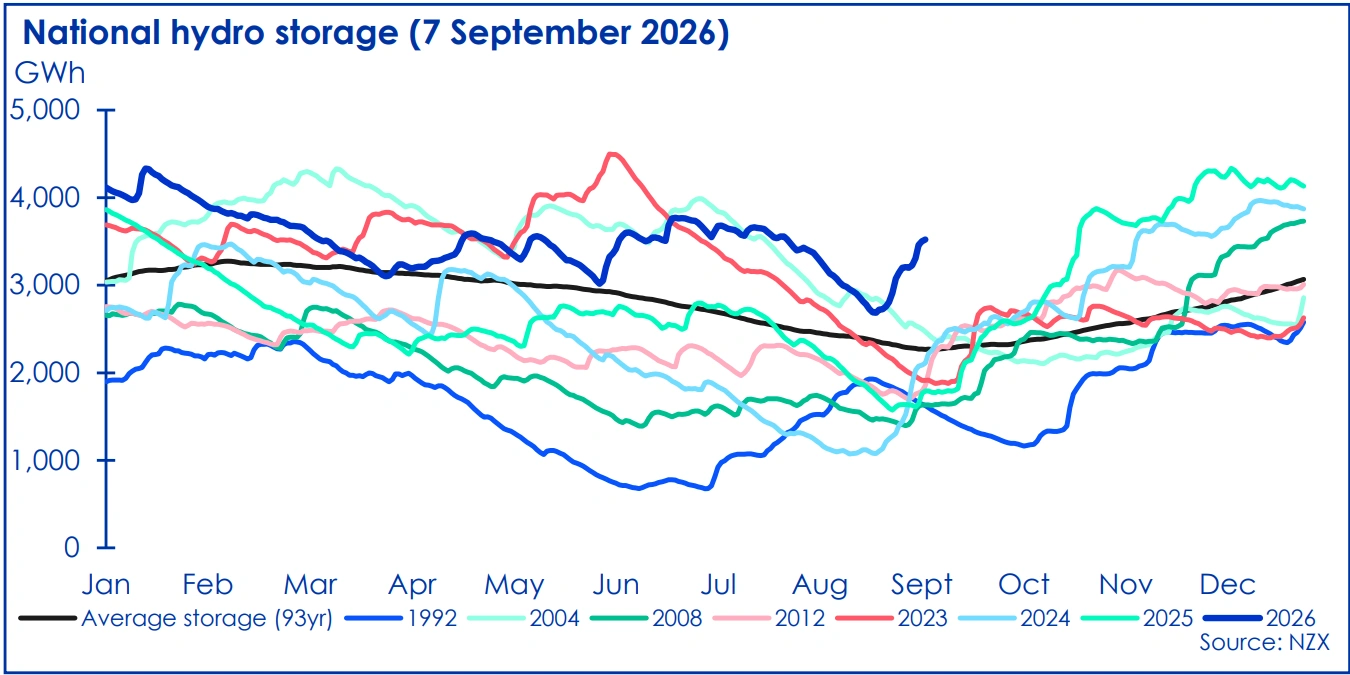
Figure 1: A comparison of national hydro storage levels in 2026 against the long-term average and past dry years. [Courtesy: Meridian Energy Limited]
National Electricity Demand Hits a Record Peak
August told two different stories depending on how you measure it. On 6 Aug 2026, New Zealand’s power network reached a new high in the morning. Even so, the total electricity use for August came in 0.3% less than in August 2025.
Still, the bigger picture looks different. Over the past 12 months, demand ran 3.2% above what it was compared with the 12 months before.
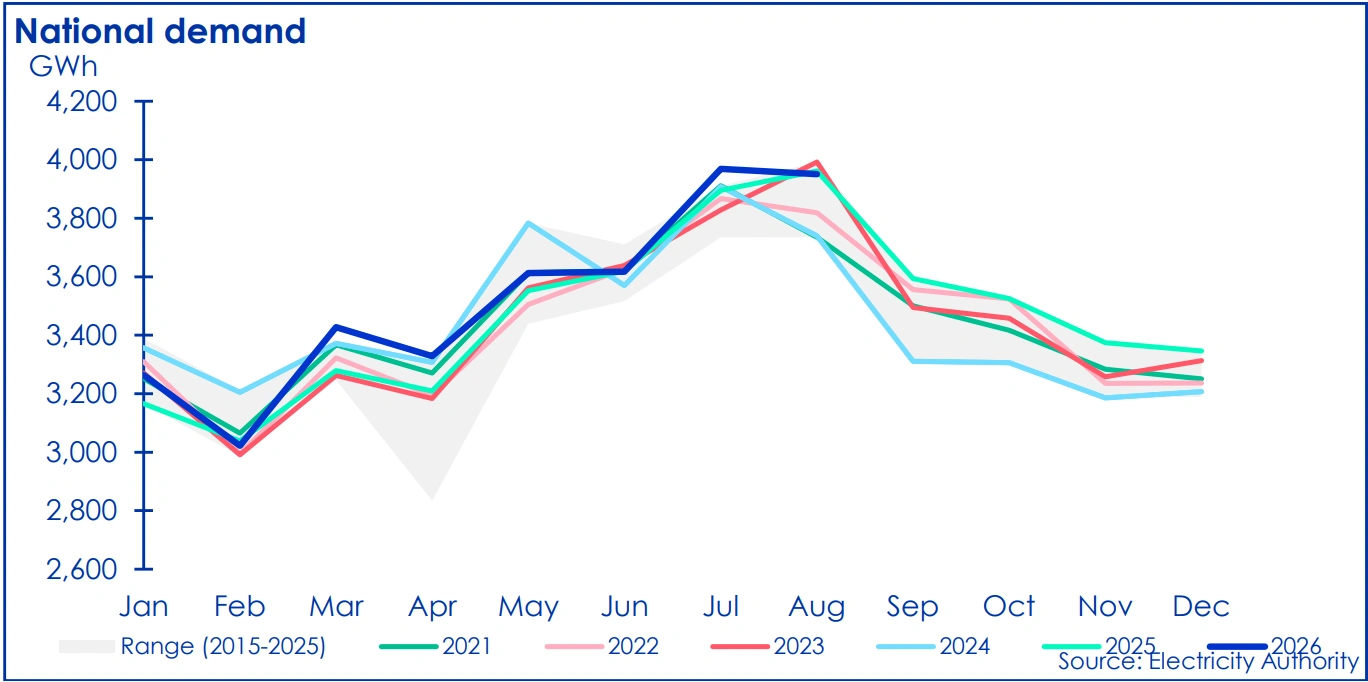
Figure 2: A year-by-year comparison of New Zealand’s national electricity demand through 2026. [Courtesy: Meridian Energy Limited]
NZAS also took in more power. In August, the average was 578 MW. That is higher than the 565 MW seen a year earlier. The rise mostly lines up with the end of a 50 MW demand response deal between Meridian and NZAS. That arrangement ran from March 2025 to August 2025. It was not due to a sudden change at the smelter.
On the retail side, sales volumes slipped 4.7% against August 2025. Not every segment moved the same way: residential fell 2.7%, small and medium business dropped 4.3%, agriculture eased 3.3%, and corporate declined 9.2%, while large business bucked the trend with a 5.1% gain.
Generation Volumes Climb as Wholesale Prices Fall
Meridian’s own generation told a different story to retail demand. Total generation in August 2026 was 21.1% higher than August 2025, thanks to stronger hydro and wind output. Generation for the year to date this financial year is 19.6% higher than the same period last year.
At the same time, prices dropped. Meridian’s returns from generation were also down. The average price Meridian received for generation was 62.3% lower than a year earlier in August 2026.
| Metric | Aug 2026 | Aug 2025 |
|---|---|---|
| Hydro generation (GWh) | 1,258 | 1,030 |
| Wind generation (GWh) | 168 | 148 |
| Total generation (GWh) | 1,432 | 1,179 |
| Average generation price (NZ$/MWh) | 66.6 | 176.6 |
| Retail contracted sales volume (GWh) | 870 | 913 |
| Average retail contracted sales price (NZ$/MWh) | 170.9 | 172.5 |
| Total NZ customer connections | 448,573 | 450,317 |
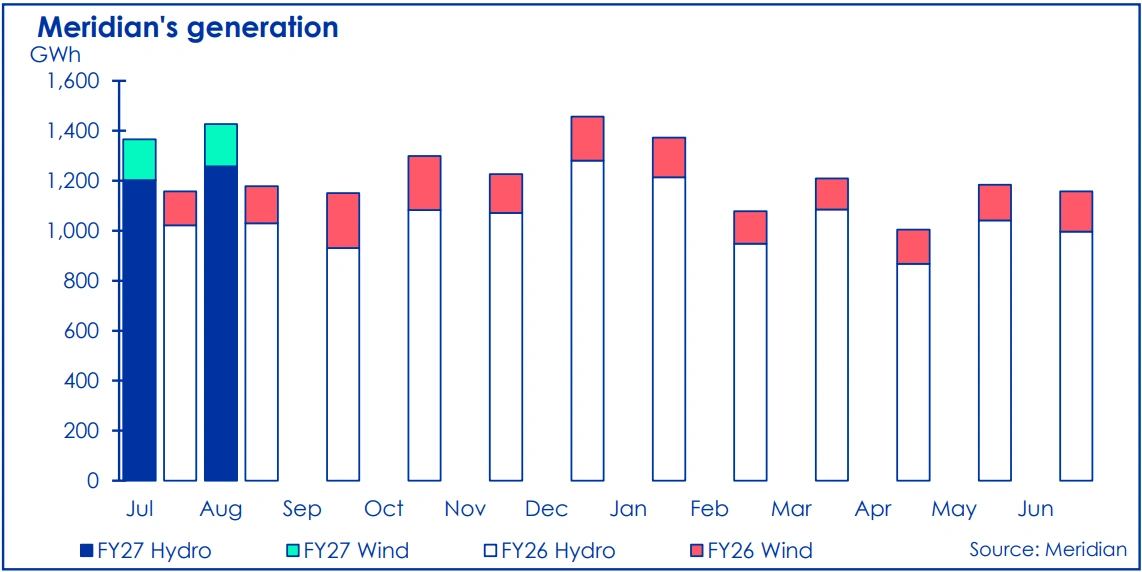
Figure 3: A monthly comparison of Meridian’s hydro and wind generation volumes across FY26 and FY27. [Courtesy: Meridian Energy Limited]
Retail Market Contracts as Customer Connections Slip
Meridian’s customer connection numbers fell 1.2% during August 2026 and are down 0.4% over the past 12 months. Year to date this financial year, retail sales volumes are running 1.3% lower than the same period last year, with residential sales up 5.1% but corporate sales down 8.4% against last year’s pace.
Why the August Report Matters for Meridian Energy Investors
For readers tracking New Zealand electricity market signals, the report points to two forces moving in different directions. Hydro storage well above average and rising wind output are pushing wholesale and generation prices sharply lower, which should support margins on Meridian’s own generation. At the same time, retail sales volumes and customer connections are both trending down, a signal worth watching alongside the pricing gains.
Meridian Energy Share Price
| Metric | Value |
|---|---|
| Last price | A$4.260 |
| Market capitalisation | A$11.36 billion |
| 52-week range | A$4.200 to A$5.300 |
Industry Outlook
New Zealand’s national electricity demand grew 3.2% over the past 12 months, even as short-term demand eased slightly through a milder August 2026. Hydro storage running well above the historical average, combined with rising wind and battery generation, gives Meridian scope to meet growing demand without heavy reliance on thermal backup.
Future Direction and Impact
- Weekly lake storage updates continue on Meridian’s website through summer, impacting near-term visibility on hydro storage levels
- Management remains optimistic about maintaining strong hydro storage through summer based on expected El Niño rainfall in hydro catchments, impacting supply reliability
- FY27 operating metrics will continue to be reported monthly, impacting ongoing transparency on generation, retail and cost trends
Colitco will continue to bring you the latest insights into the global energy and mining sectors.
ALSO READ: Why St George Mining (ASX:SGQ) Looks Undervalued on Araxá’s MRE
FAQs
Q1. What is Meridian’s August 2026 hydro storage level?
Ans. National hydro storage stood at 155% of the historical average by 7 September 2026.
Q2. Did New Zealand hit a record electricity demand in August 2026?
Ans. Yes, national demand reached an all-time high on the morning of 6 August 2026.
Q3. Are Meridian’s retail sales volumes growing or shrinking?
Ans. They are shrinking, down 4.7% year on year in August 2026.
Q4. What risk does Meridian flag for the summer ahead?
Ans. El Niño could bring drier conditions to eastern regions despite current high storage.
Disclaimer
This article is intended for informational purposes only. If you pay attention to the New Zealand and Australian electricity and energy sector as an investor, then all the data in this content is from third-party sources. Please check out the complete share price and market data information. Investing carries a high risk, and you should only invest at your own risk. Colitco has no involvement in the above-listed company.

Elizabeth Jones is a finance and mining content specialist with over 10 years of experience creating clear, SEO-driven content across fintech, investing, banking, insurance, cryptocurrency, and resource markets. She transforms complex financial data and industry trends into engaging, reader-focused articles that improve understanding and audience engagement.