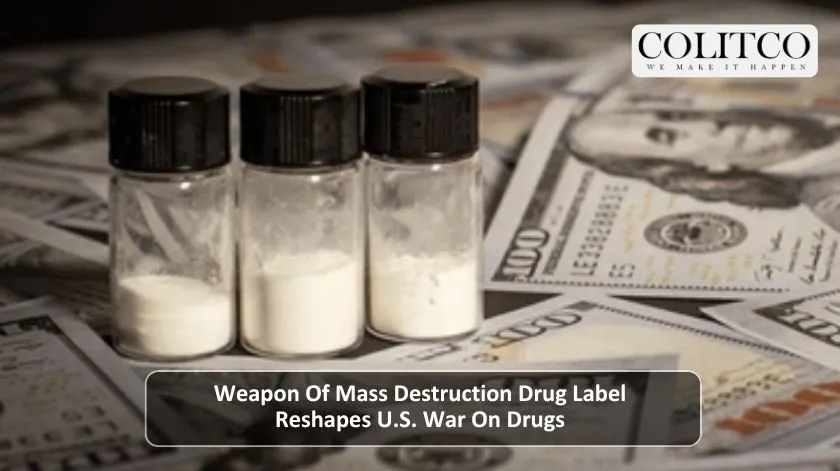
The drug label of Weapon of Mass Destruction has become the main point of America’s new enforcement strategy. Fentanyl has been officially reclassified by the United States, which means that the modern U.S. war on drugs has now escalated to a security issue with global consequences.
The decision represents a transition from the public health narrative to a militarised one during the second term of President Donald Trump. International observers are watching very closely as the government’s drug enforcement activities go beyond the borders.
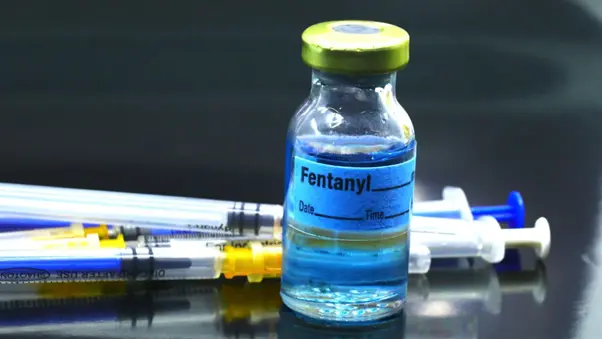
Fentanyl reclassified, escalating U.S. global drug enforcement.
Why Was Fentanyl Given A Weapon Of Mass Destruction Drug Label?
The White House, under the existing U.S. law, has declared fentanyl a weapon of mass destruction. This definition entails the means that can inflict considerable harm on living organisms and infrastructures.
Last year, synthetic opioids, including fentanyl, were the cause of approximately 48,000 deaths. This figure corresponded to around 60 per cent of the total U.S. overdose fatalities. Lawmakers discussed the classification in a similar manner during Trump’s first term and under Joe Biden.
Only then were the attempts to abandon the issue revived by the escalating geopolitical tensions that led to substantial discussions about the classification.
What Does The New Drug Classification Allow Legally?
The drug label of Weapon of Mass Destruction widens the executive powers significantly without any new legislation being enacted. It considers the trafficking of fentanyl similarly to that of chemical and biological weapons.
Such a designation will fortify the imposition of terrorism charges along with asset seizures and justifications for military actions that cross borders.
On the very first day of his return to the office, Trump also declared certain drug cartels to be terrorist organisations. These measures, when taken together, represent the backbone of an intensified U.S. war on drugs.
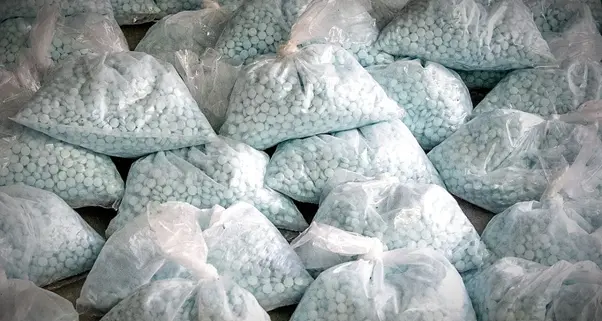
WMD label expands powers, treating fentanyl like chemical weapons.
How Has Government Drug Enforcement Already Escalated?
The U.S. military has been reported to have carried out 25 strikes on drug trafficking vessels since the beginning of September. According to the officials, the death toll has at least risen to 95 casualties.
In the meantime, a strike is being scrutinised for potential war crimes while Vice President J. D. Vance has vocally backed the operations, saying that the use of military force was necessary.
Trump has, however, asserted that the average number of people who die during the interception of a boat is 25,000, a figure that has no backing from any source.
Military Strikes Are Redefining The U.S. War On Drugs
The government claims that the presence of military forces has made it harder for the cartel to operate, and thus lives of Americans are protected. Drugs that were mainly transported in huge amounts by sea and that were caught included cocaine and marijuana.
No fentanyl has ever been found on the ships the military attacked. The critics say that the death strikes are the same as those in war. The whole plan of government against drugs also raises questions under international humanitarian law.
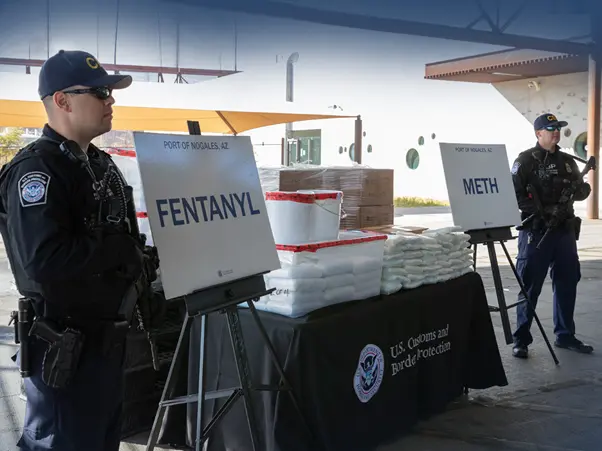
Military actions aim to protect Americans, but no fentanyl has been found.
Global And Regional Tensions Are Influencing Drug Policy
The area around the Caribbean Sea has become the main location for recent actions against drug trafficking. The conflicts with Venezuela have also played a role in the selection of the strategy.
Some experts believe that by labelling fentanyl as an issue, the U.S. government gains more negotiating power in foreign relations. It means that drug enforcement can be combined with foreign policy and defence goals.
This alignment is a step away from the previous promotion of multilateral public health frameworks that were widely accepted worldwide.
Public Health Experts Warn Of Long-Term Consequences
Health activists alert that the militarisation of the law and order hardly ever eliminates the demand for drugs. They claim that it is the easy access to drugs in the country that leads to overdose deaths, not the maritime smuggling.
The WMD drug label may change the way prosecutions are headed, but not the addiction situation. Critics argue that the strategy endangers non-combatants and, at the same time, overlooks the treatment mechanism. Proponents assert that a deterrent is needed after a long period of policy failure.
Also Read: Could This Common Drug Stop One of Childhood’s Deadliest Cancers?
Frequently Asked Questions
Q1: What Is The Weapon Of Mass Destruction Drug Label?
The label is the legal status that allows fentanyl to be treated like a chemical or biological weapon.
Q2: How Does This Affect The U.S. War On Drugs?
It will provide the military, legal, and intelligence support that is applied to drug trafficking networks.
Q3: Has Fentanyl Been Found On Attacked Boats?
No fentanyl has been confirmed or reported on the boats that have been targeted so far.
Q4: Why Is Government Drug Enforcement Becoming Militarised?
The government sees drug trafficking as a national security problem, besides being a health issue only.