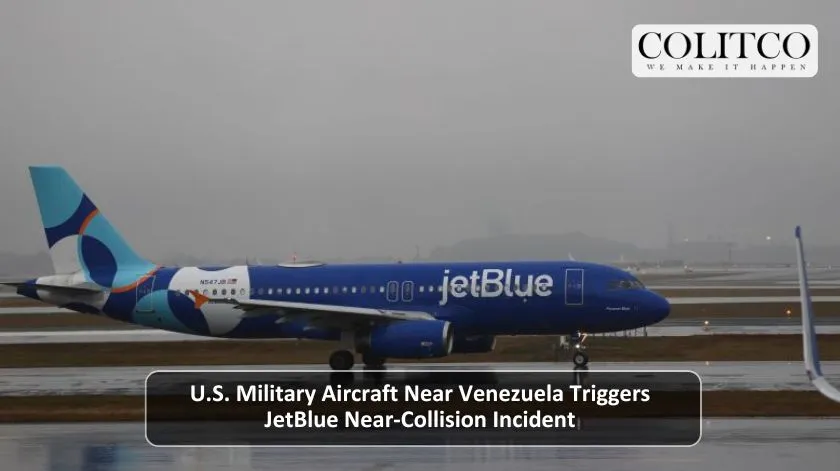
On December 12, 2025, a JetBlue Airbus A320 nearly collided with a U.S. military aircraft in the air over Venezuela. The flight, which departed from Curaçao, was en route to New York’s JFK Airport when the crew spotted an Air Force tanker directly in front of them at the same altitude.
The pilot quickly stopped the climb to avoid collision and continued to maintain separation through evasive manoeuvres. Reportedly, the crew became aware of the military plane only through their eyes as it was not sending out standard tracking signals.
The lack of a transponder signal made the plane invisible to commercial radars, thus significantly reducing the warning time for JetBlue pilots. Afterwards, the aircraft completed its trip safely, with no injuries or damage.
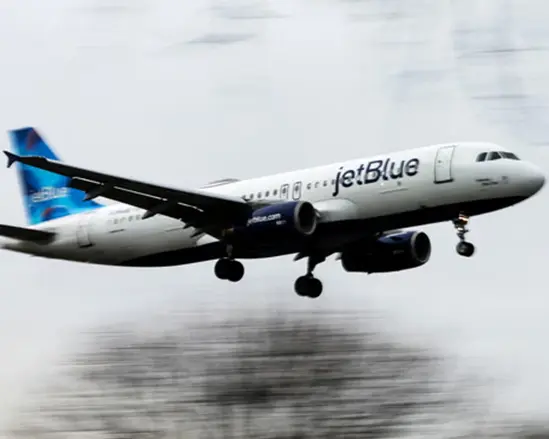
JetBlue flight narrowly avoids U.S. military mid-air collision
Why Did The Incident Occur Near Venezuela?
The near-miss incident happened in an area where military activities were on the rise, due to security and surveillance operations. The U.S. authorities have continuously warned the airlines about increased dangers around the Venezuelan airspace, attributing it to the unstable geopolitics and hazardous operations.
The warnings apply to all altitudes, including the overflight routes of international carriers. Military planes in the international corridors may sometimes not be required to follow the civilian tracking rules.
This situation has generated anxiety among the aviation safety experts, particularly in places where commercial and military traffic co-exist in the same airspace with limited coordination.
How Did JetBlue Respond To The Near-Collision?
JetBlue has stated that its flight team effectively followed all safety protocols and made quick moves to prevent the incident. The carrier reported that the crew had notified the incident to the authorities in the aviation sector and the internal safety team immediately.
JetBlue confirmed its simultaneous cooperation with the incident-related investigations. The airline pointed out that the safety of the passengers is still its first concern and, at the same time, commended the professionalism of the pilots. No immediate operational changes were made public, but the aviation regulators’ findings will be the basis for the next actions.
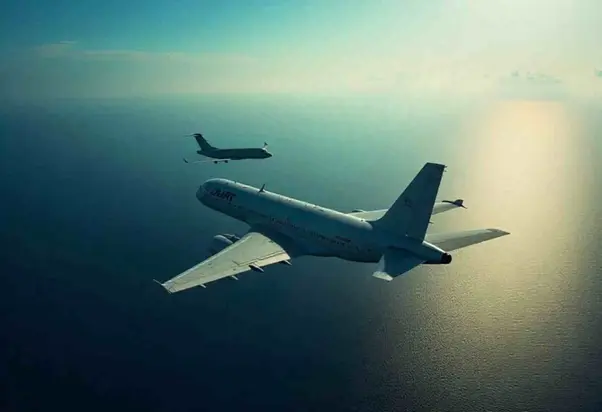
The JetBlue crew followed protocols and promptly reported the incident
What Are The Immediate Safety And Policy Issues?
With this incident, the requirement of military planes being mandated to initiate transponder systems when operating in the proximity of civilian flight paths has once again become a matter of discussion.
Aviation experts have pointed out that the shared airspace needs to be more transparent to prevent the occurrence of near-misses in the future. The politicians have also raised the question of whether the current communication protocols between military and commercial aviation are still sufficient.
The number of reported close encounters with military aircraft, particularly in the case of those happening in international airspace, has been a factor in the increase in concerns. Industry watchers have cautioned that without clearer guidelines, the risk for commercial planes may heighten in politically sensitive areas.
How Are International Airlines Managing Venezuela-Related Risks?
Many global airlines have rerouted their flights to bypass some regions near Venezuela after the issuance of safety alerts. A few of the airlines have made higher altitude margins or changed their operating hours to cut the risk of being in the affected area.
The carriers still depend on live assessments of risk when determining routes through the Caribbean and northern South America. The global aviation authorities are watching the situation very closely; the discussions are still going on, which are generally about the standards for safe separation and better communication across borders.
Global airlines reroute flights and adjust operations near Venezuela
What Could Change After The JetBlue Near-Collision?
The near-crash incident involving JetBlue is seen by experts as a possible catalyst for speeding up the reviews of military aircraft visibility policy in the civilian airspace. One of the solutions being looked into is the imposition of mandatory tracking, together with better coordination with the traffic control.
The verdicts of the regulators might set the operating standards for the military and commercial airlines during the same period. The investigations are likely to impact the issuance of safety recommendations for the next months.
In the meantime, airlines and pilots are on the lookout when flying close to the border with Venezuela, as the security situation there continues to change.
Also read: A320 Solar Flare Vulnerability Sparks Global Aviation Disruption
Frequently Asked Questions
- Did the JetBlue flight collide with the military aircraft?
The flight managed to avoid a collision when the pilot stopped the ascent and kept the aircraft at a safe distance.
- Was the U.S. military aircraft visible on radar?
The military aeroplane was said not to be sending out a regular transponder signal, which made it harder for the radar to see it.
- Are airlines avoiding Venezuelan airspace?
The majority of air carriers have either changed their flying paths or have taken extra measures because of the safety warnings that are still in place.
- Who is investigating the incident?
The authorities responsible for aviation safety and military monitoring are both looking into the near-crash incident.