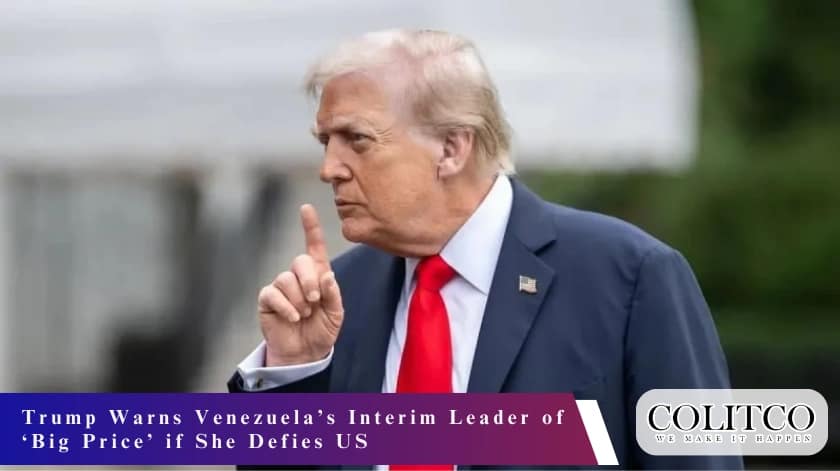
In the wake of Venezuela’s President Nicolás Maduro being seized by US forces, President Donald Trump has warned interim leader Delcy Rodríguez that she will pay a “very big price” if she does not comply with Washington’s demands. The statement comes amid ongoing uncertainty in Caracas and heightened military readiness across the region.
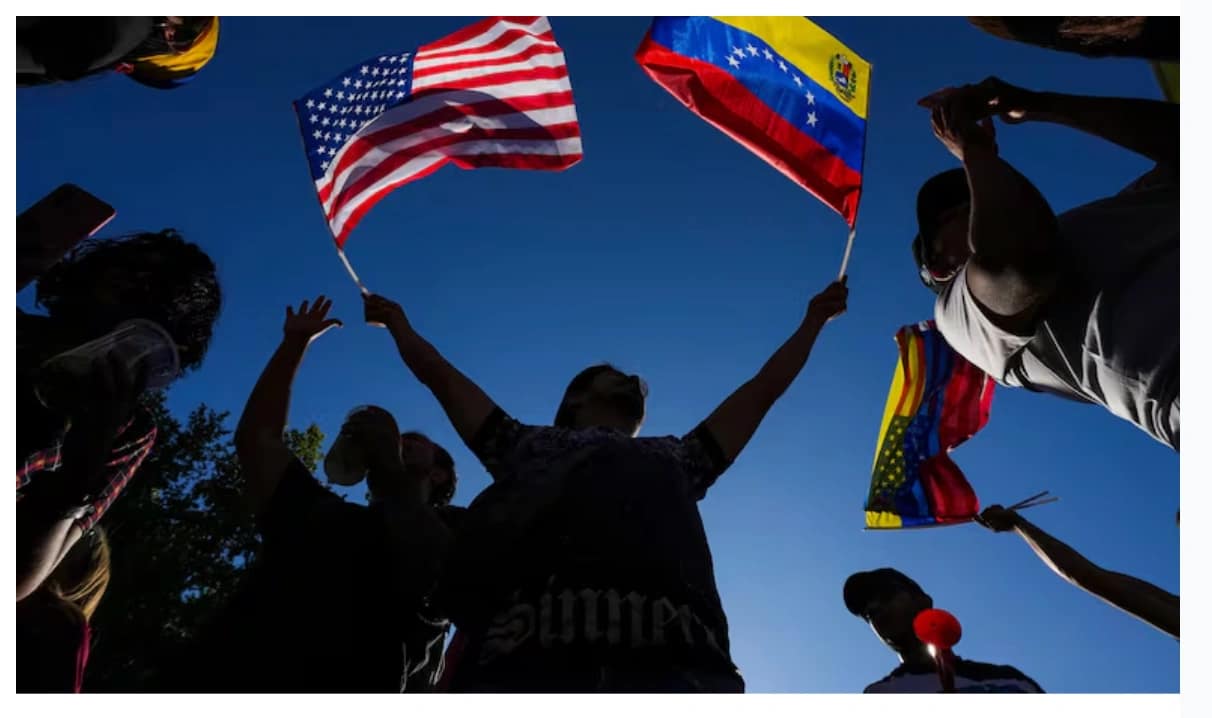 Donald Trump warns Venezuela’s interim leader Delcy Rodríguez of a “very big price” if she does not cooperate following Maduro’s capture. (Source: mysuncoast)
US officials confirmed that a 15,000-strong force remains in the Caribbean to respond if the interim government hinders US objectives, though they insisted this presence is not a formal invasion.
Trump’s Warning to Delcy Rodríguez
Speaking to The Atlantic, Trump said Rodríguez faces consequences greater than those endured by Maduro if she refuses to cooperate with US directives. Rodríguez, who previously served as Venezuela’s vice president and oil minister under Maduro, addressed the nation, calling for Maduro’s immediate liberation while pledging to defend Venezuela’s sovereignty.
Trump also indicated that the United States would “run” Venezuela temporarily to stabilize the country and secure its vast oil reserves. He emphasized that rebuilding the nation’s oil infrastructure would cost billions, which would be reimbursed by international oil companies.
Interim Government Response
Rodríguez sought to balance her defiance of the US intervention with calls for cooperation, describing a “balanced and respectful” relationship with Washington. She emphasized the protection of Venezuela’s natural resources and stated that the country is prepared to defend its sovereignty.
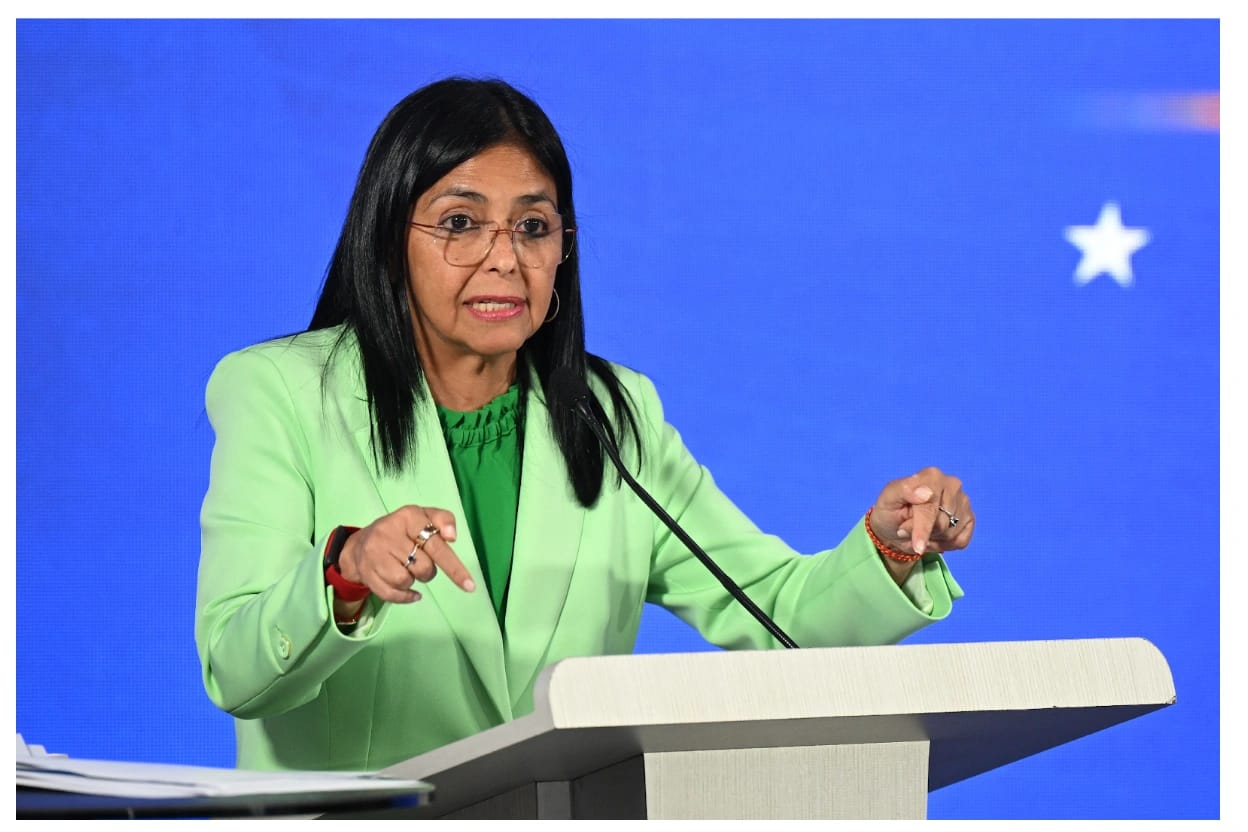 Delcy Rodríguez addresses the nation, calling for cooperation while defending Venezuela’s sovereignty. (Source: Axios)
Military and government figures in Caracas have pledged loyalty to Rodríguez while calling for a return to normality. Defense Minister Vladimir Padrino López encouraged citizens to resume economic, work, and educational activities. Maduro’s son, Nicolás Ernesto Maduro Guerra, reaffirmed support for the ousted president and vowed to mobilize opposition in the coming days.
Regional Tensions Rise
The Trump administration has suggested that Colombia and Mexico could face military action if they fail to curb the flow of illicit drugs to the United States. Trump commented that “Operation Colombia sounds good to me,” escalating tensions in the region. Colombian President Gustavo Petro denied accusations of state involvement in drug trafficking and rejected US threats.
In Caracas, life has begun to resume, with shops and cafes reopening, though citizens expressed anxiety about potential further US operations. Supermarket queues formed as residents stocked up on essential supplies amid uncertainty.
US Officials Clarify Military Role
Secretary of State Marco Rubio downplayed the idea of a full-scale invasion, stating that US forces in Caracas operated in a law enforcement capacity and are not intended as an extended military presence. The US continues a “quarantine” around Venezuela to control the flow of oil under existing sanctions, maintaining leverage over Maduro’s successor.
The Cuban government confirmed that 32 Cuban military and police personnel were killed during the US operation, prompting international condemnation. Spain, Brazil, Chile, Colombia, Mexico, and Uruguay issued a joint statement denouncing US actions as a dangerous precedent for regional security.
Legal Proceedings Against Maduro
Maduro faces federal charges in the United States, including narco-terrorism and conspiracy to import cocaine. He, along with two Venezuelan officials and an alleged gang leader, is set to appear in Manhattan federal court for arraignment. The White House released footage of Maduro being escorted by DEA officials in New York, marking a significant humiliation for the former president and his supporters.
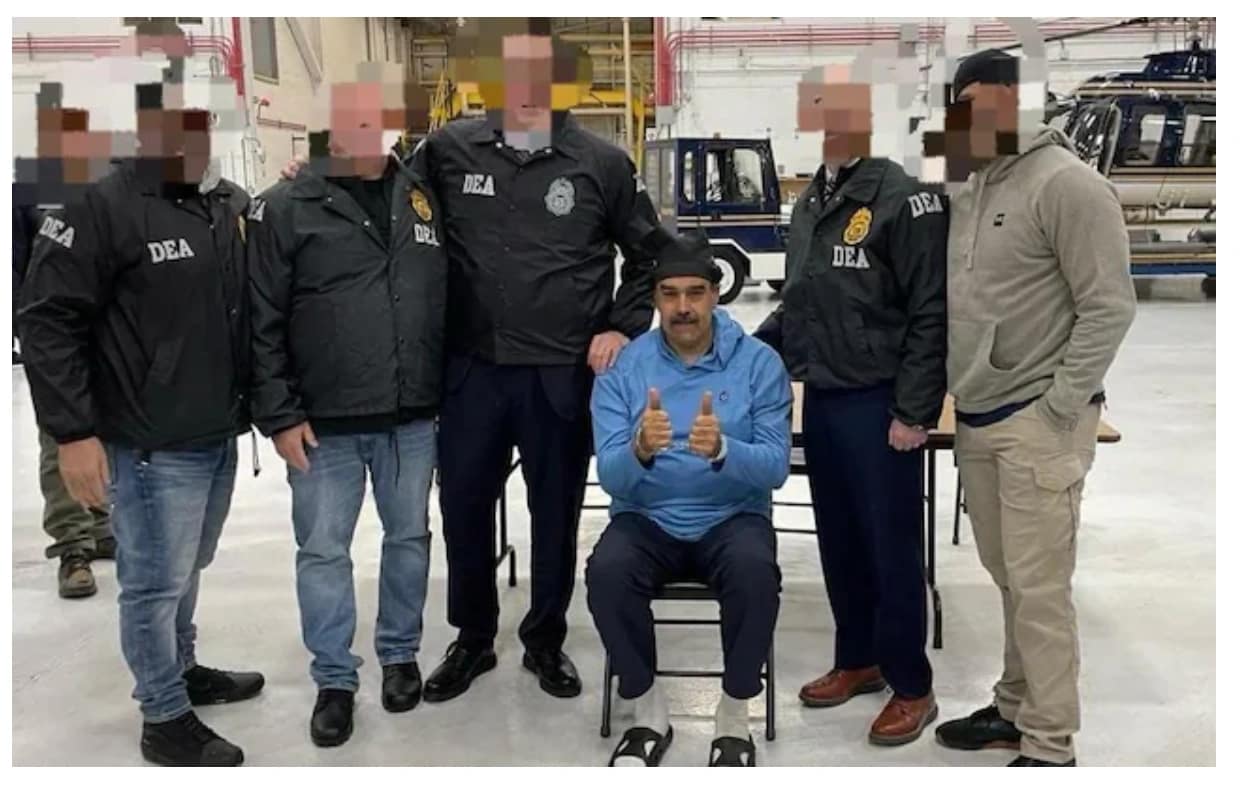 US forces captured President Nicolás Maduro in Caracas and transported him to the United States to face federal charges. (Source: Telegraph)
Uncertain Path Forward
Rodríguez now faces the challenge of reconciling US demands with Venezuela’s socialist legacy and the remnants of Hugo Chávez’s anti-imperialist policies. The Trump administration appears content with her interim leadership but has signaled that strict compliance is expected.
In Caracas, residents cautiously resume daily routines, including jogging and cycling in public spaces, while remaining wary of possible future interventions. Observers note that the country faces a delicate transition as Washington attempts to secure economic and political objectives.
Also Read: Liberal Deputy Leader Sam Groth Quits Politics After One Turbulent Term
Final Thoughts
The removal of Nicolás Maduro has plunged Venezuela into a period of uncertainty, balancing US strategic interests with domestic political tensions. While Trump has threatened further consequences for non-compliance, Rodríguez’s ability to maintain control and safeguard Venezuela’s sovereignty will define the next chapter in the country’s turbulent history. Regional and international actors continue to monitor developments closely, with the potential for further diplomatic and military ramifications across Latin America.
FAQs
- Why did Donald Trump warn Venezuela’s interim leader of a “big price” if she doesn’t cooperate?
US President Donald Trump warned Venezuela’s acting president, Delcy Rodríguez, that she could face severe consequences if she does not cooperate with US demands following the capture of Nicolás Maduro by US forces. Trump framed the warning as part of expectations for Venezuelan leadership alignment with American objectives.
- Who is Delcy Rodríguez and why is she in charge in Venezuela?
Delcy Rodríguez, the former vice-president and oil minister under Nicolás Maduro, was confirmed by Venezuelan authorities as interim leader after Maduro’s capture. She has since sought to balance working with the US while asserting Venezuelan sovereignty.
- What prompted the United States military action in Venezuela?
US forces carried out a military operation in Venezuela that resulted in the capture of President Nicolás Maduro and his wife, who were transported to New York to face narcoterrorism charges. The intervention reflects a broader US strategy against narcotics trafficking and geopolitical aims in the region.
- Has the US taken control of Venezuela?
While Trump has said the US would “run” Venezuela temporarily, US officials, including Secretary of State Marco Rubio, have described the operation as limited in scope and deny an extended military occupation. Rodríguez and Venezuelan authorities continue to assert domestic control.
- What is the role of other countries regarding the US action in Venezuela?
International reaction has been mixed, with several Latin American and European governments condemning the US raid as dangerous for regional peace and security. Neighboring countries are also bracing for possible political and humanitarian impacts.
- Could there be further US military action in the region?
Trump has hinted that further operations could occur if allied countries such as Colombia fail to meet US objectives on drug trafficking. He also suggested that countries like Cuba might face pressure, though the details and likelihood of new military engagements remain uncertain.
- What happens to Nicolás Maduro now?
Maduro and his wife Cilia Flores are in US custody and are expected to be arraigned on federal drug trafficking and related charges in a Manhattan federal court. Their detention is part of broader US legal action against alleged Venezuelan narcotics networks.
- How are Venezuelans responding to the political changes?
Reactions within Venezuela are mixed. Some citizens and government loyalists call for Maduro’s return and protest foreign intervention, while others seek stability amid disrupted daily life. Concerns include uncertainty around governance, security, and essential supplies.


