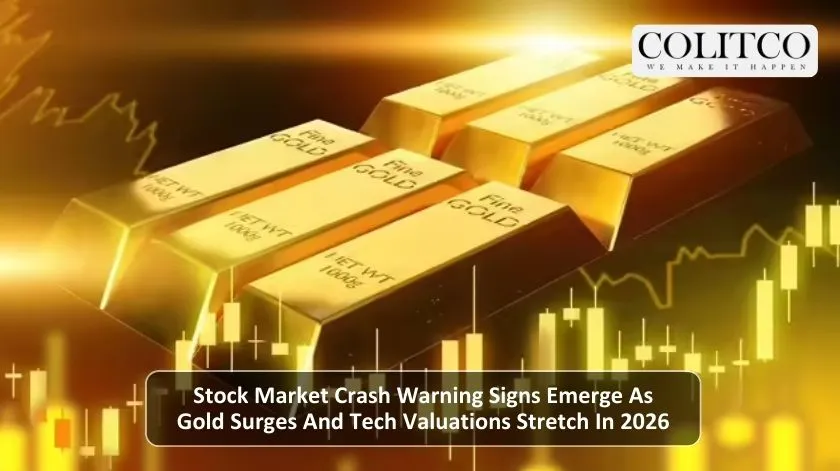
The world markets have entered 2026 with mounting anxiety as investors observe various pointers of a stock market crash taking shape simultaneously. Gold has broken above and over 5000, and silver is above and over 100 an ounce, and it is an indication of the great flight to safety in portfolios.
Most investors usually purchase precious metals as equity confidence falls. The government bonds have also fallen out of favour, and this implies that there is greater mistrust of the traditional safe assets.
The currency markets contribute to the pressure as the US dollar weakens against its counterparts. All these steps are signs of caution instead of optimism in growth, and they usually precede radical adjustments.
The question traders ask now is whether the existing outlook in the stock market for 2026 would stand or whether the volatility would increase in the near future.

Investors keep eyeing laptops as gold and silver rates skyrocket drastically. [Mint]
Precious Metals Rally Signals Defensive Behaviour
The exponential increase in the price of gold and silver indicates that investors are setting up instability and not expansion. When metals do so better than shares at the first stage, capital tends to abandon risk assets.
This is a defensive rotation that has been observed in the past before the recession. It is what analysts refer to as insurance purchasing as opposed to speculation. This kind of behaviour restricts liquidity in equities and amplifies short-term movements.
Such a change in itself will not be a crash, but it frequently will decrease market resilience. The present rally thus heightens the fears of the possibility of encountering a stock marke crash in 2026.
Could Inflation And Policy Shifts Trigger A Broader Sell-Off?
The problem of inflation is still persistent in prime economies, and the labour markets are displaying signs of exhaustion. The US business prospects remain weak in 202,5 and the growth projections remain reserved.
There are also changes of leadership and unpredictable policies among the central banks. Investors are worried that any abrupt reduction in the rates will cause distortion of the valuation or trigger capital flight.
The problem is increased by the declining trust in cash-based assets. In cases where inflation has been elevated and growth is declining, equities find it difficult to command premium multiples.
Such circumstances are able to undermine the feeling within a short time and trigger more extensive selling within industries.
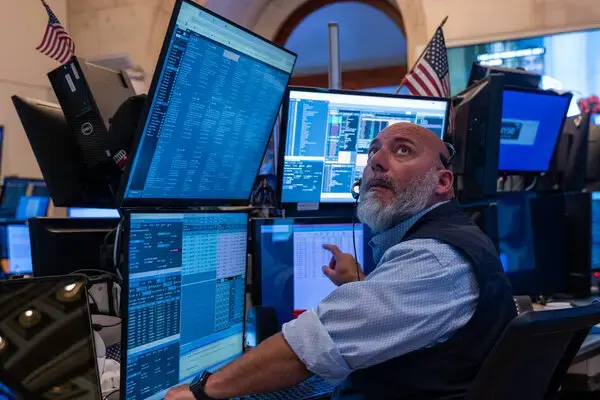
Traders are viewing inflation data and central bank announcements on huge screens. [The New York Times]
Tech Valuations Remain Stretched Despite The AI Boom
The investment in artificial intelligence is still fast, with corporations investing billions in infrastructure and chips. But there are a great number of companies that do not have clarity in profit paths. The estimates are still speculative, with revenue and costs being heavy.
The vacuum generates a far-fetched valuation that is based on future success. In a scenario where the expectations exceed the earnings, minor disappointments will trigger a steep fall in prices.
There is a risk of volatility being increased by a congested trade in popular technology names. The excitement of the market covers a fragility that lies behind and encourages the market to correct suddenly.
What Can Investors Do To Prepare For A Downturn?
Planning is more important than guessing in unpredictable cycles, and controlled plans tend to be more effective than knee-jerk responses. Keeping additional cash will give one room to manoeuvre in case prices fall abruptly.
Investors are then able to purchase good-quality shares at reduced levels compared to panic selling. Shock absorption may also be cushioned by diversifying into defensive products like supermarkets and staples.
Tesco has demonstrated relative stability in the UK market, and its market trades at an approximate forecast P/E ratio of 15.5. It has a 3.4% dividend yield, which is comparable to the FTSE 100 and provides a low level of income. These characteristics are attractive in turbulent times, and they can assist in risk balancing.

Tesco is a shop that is being passed by customers as a store that offers value. [LinkedIn]
Staying Patient Supports Long-Term Wealth Creation
Market crashes are exciting, but long-term discipline tends to pay off in the long run with patient investors. The purchase of companies with sustainable income can level off returns over a period of decades.
The ten-year ownership rule, as stipulated by Warren Buffett, brings out this kind of mindset. Rather than headlines, the investors can be interested in valuation and strong cash flows.
Opportunities emerge even in hard times for those who are ready. The balanced strategy will facilitate the manoeuvring of stock market crash red flags and save capital to be used during recovery periods.
Also Read: Microsoft Stock Tumbles as AI Spending Surge and Slower Azure Growth Rattle Markets
FAQs
Q1: What are the main stock market crash warning signs in 2026?
A1: Rising gold and silver prices, weak confidence in bonds, inflation pressure, and stretched tech valuations.
Q2: Does a precious metals rally always mean a crash?
A2: No, but it often signals defensive positioning before volatility increases.
Q3: How should investors protect portfolios?
A3: Hold some cash, diversify sectors, and focus on defensive or value shares.
Q4: Is Tesco considered defensive?
A4: Yes, stable earnings, a 15.5 P/E, and a 3.4% yield support resilience during downturns.