
What Happened: A $2.5 Billion Smuggling Scheme Just Blew Up One of AI’s Biggest Names
Super Micro Computer is in crisis. Shares plunged this week after the Company found itself in the midst of yet another scandal. The U.S. Justice Department indicted three individuals connected to the Company, including one of its co-founders, for violating the Export Control Reform Act.
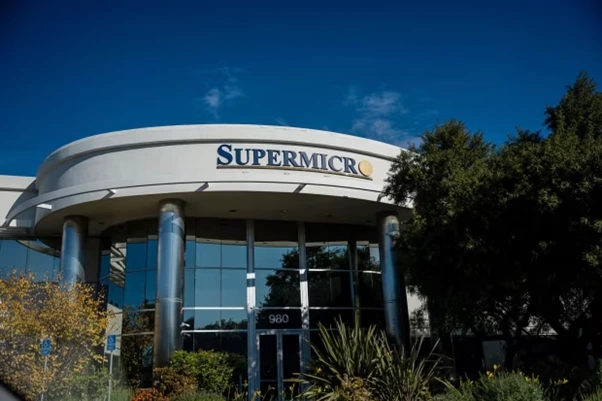
Super Micro Computer shares collapsed 33% after the DOJ charged co-founder Wally Liaw with smuggling $2.5 billion in AI chips to China. (Source: WSJ)
The indictment charged that Yih-Shyan “Wally” Liaw, Ruei-Tsang “Steven” Chang, and Ting-Wei “Willy” Sun engaged in a conspiracy to use false documents and staged dummy servers to illegally ship billions of dollars worth of servers and graphics processing units to China.
The scheme was elaborate and deliberate. Social media buzzed with outrage over tactics like using hair dryers to fake serial numbers on dummy servers. The cover-up was as audacious as the crime itself.
Super Micro shares cratered 28.37% in Friday trading to $22.06. That was the steepest single-day drop in months. The U.S. Justice Department had unsealed the indictment charging co-founder Wally Liaw and two others with conspiring to smuggle $2.5 billion worth of AI servers containing advanced Nvidia chips to China in violation of U.S. export controls. By end of week the cumulative loss reached 33%.
Why This Matters: Trust Is the One Thing AI Infrastructure Cannot Afford to Lose
Super Micro is not a household name to most people. But inside the AI industry it is foundational. Super Micro Computer takes advanced computer chips for artificial intelligence and assembles them into supercomputers to sell to AI data centres.
Its servers power some of the most critical AI infrastructure being built right now across the United States and allied nations.
The issue is not merely legal exposure. It is trust. Super Micro sells infrastructure at the heart of the AI buildout, often built around Nvidia chips, so it sits squarely in one of the most politically sensitive areas in global technology.
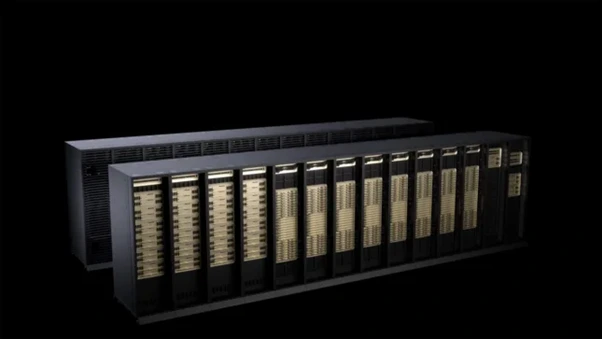
The alleged scheme involved routing Nvidia GPU-loaded servers through Southeast Asian intermediaries using fake paperwork and dummy hardware. (Source: Nvidia)
When the co-founder of a company in that position is charged with smuggling restricted technology to China, the market does not wait for a verdict. It sells first and asks questions later.
One analyst cited by Yahoo Finance called the company uninvestable. MarketWatch noted analysts are raising fresh concerns about the company’s credibility and internal controls even though the indictment targets individuals and not the firm. That distinction matters legally. It does not matter commercially.
Who Is Involved: The Co-Founder, the DOJ and the Analyst Sounding the Alarm
Company: Super Micro Computer Inc. (NASDAQ: SMCI) Headquarters: San Jose, California Co-Founder Charged: Yih-Shyan “Wally” Liaw Regulator: U.S. Department of Justice Lead Analyst: Bernstein, Market Perform rating
The U.S. filed charges against Wally Liaw, a co-founder and board member of Super Micro Computer. The indictment also names a company contractor and another employee. Liaw’s involvement is particularly damaging given his history at the company.
Bernstein analyst Newman flagged the rehire and board reappointment of Wally Liaw in 2023 despite his resignation in 2018 over an accounting scandal.
Newman also pointed to Liaw being named in a 2024 lawsuit that alleged improper revenue accounting at Super Micro Computer. The board brought him back knowing his history. That decision now looks catastrophic.
Analysts at Bernstein warned that the charges pose serious credibility issues that could impact the business and flagged the risk of a potential distancing by Nvidia.
If that happens it could disrupt SMCI’s critical GPU supply and have severe consequences. Dell gained share price amid SMCI’s crisis, suggesting investors see Dell as a safer rival in the AI server space, possibly benefiting from clients or orders redirected from SMCI.
Where It Happened: A Scheme That Ran Through Southeast Asia to China
According to the indictment, the alleged scheme involved routing shipments through a Southeast Asian intermediary, using fake paperwork, dummy servers and misleading compliance reviews to conceal the final destination. The sophistication of the operation suggests it ran for an extended period without detection.
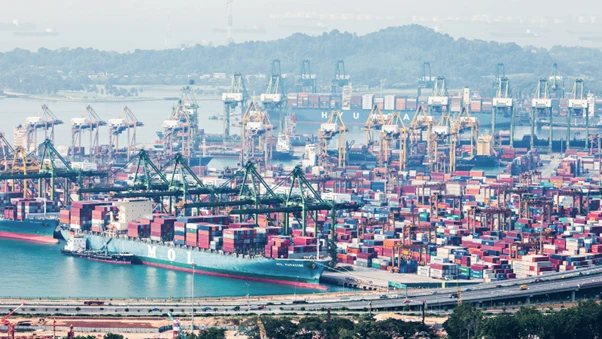
Prosecutors allege the scheme routed billions in restricted AI hardware through Southeast Asian intermediaries to conceal the final destination. (Source: Beacon)
The Nasdaq composite fell about 1% on Friday dragged lower after federal prosecutors charged the Super Micro co-founder with conspiring to smuggle billions of dollars in AI chips to China. Nvidia dropped 1.66% to $175.60 as the chips at the centre of the alleged smuggling scheme are Nvidia products.
AMD also slid 2.32%, reflecting broader anxiety across the AI semiconductor space. The fallout spread well beyond Super Micro itself.
When It Happened: A Pattern of Controversy Years in the Making
This crisis did not emerge overnight. It is the latest in a series of governance failures that stretch back years.
In 2020 the Company faced SEC charges tied to accounting violations including prematurely recognising revenue and understating expenses. Then in 2024 a short-seller report from Hindenburg Research accused the company of accounting manipulation and other irregularities, reopening old wounds around internal controls and financial reporting.
A case filed in February 2025 saw three rogue employees of Super Micro Computer alleged to have conspired to lie about the fact that their AI server exports were bound for China.
That case apparently did not trigger enough alarm inside the boardroom. Less than 13 months later a far larger version of the same scheme has now been charged by the DOJ.
The timeline is damning precisely because of its repetition. One controversy can be an outlier. Three controversies across five years is a pattern.
How It Will Play Out: Three Outcomes Investors Need to Watch
The key question is whether this is an isolated case of rogue employees or evidence of systemic compliance gaps inside Super Micro’s global sales and channel operations. That question will determine everything that follows.
Outcome 1: Charges Remain Individual
Super Micro has clarified it is not a defendant in the case. The company has suspended the employees involved and terminated its relationship with the contractor while cooperating with investigators. If the DOJ case proceeds only against the three individuals named, Super Micro may survive with reputational damage but no direct legal liability.
Outcome 2: DOJ Expands the Investigation
If prosecutors expand the case to target the company itself rather than just the individuals charged, the legal and reputational fallout would be far more severe. New filings, cooperation agreements or company-level subpoenas would signal that escalation. That outcome would likely trigger a second major selloff.
Outcome 3: Nvidia Distances Itself
Super Micro accounts for roughly 9% of Nvidia’s revenue, making the legal exposure a direct business risk. Nvidia stressed its compliance with export rules but the association is enough to weigh on sentiment.
Any public signal that Nvidia is redirecting GPU allocations away from Super Micro would be the most commercially devastating outcome of all three.
The SMCI collapse shed approximately $4.5 billion in market capitalisation in a single session. As of March 20 Super Micro Computer stock is down 28.1% in the last week and 81.5% from all-time highs.
The average analyst price target of $38.89 implies 76% upside from current levels. But buying into a company described by one analyst as uninvestable requires a very high tolerance for uncertainty.
Also Read: Alcoa 2025 Results: Profit Surge, Debt Cut, Strategy Reset
SMCI Verified Key Metrics March 20 2026
Share price as of March 20 2026 was $22.06. The single-day drop was 28.37%. The weekly loss reached 33%. Market cap wiped in one session was approximately $4.5 billion. The stock is down 81.5% from all-time highs.
Alleged smuggling value was $2.5 billion. Three individuals were charged including co-founder Wally Liaw. The median analyst price target is $38.89. Super Micro accounts for approximately 9% of Nvidia’s total revenue. The company reported revenues of $12.7 billion in Q2 2026.
FAQS
Q1: Why did SMCI stock crash in 2026?
A1: SMCI stock crashed after a U.S. Department of Justice indictment linked individuals, including a co-founder, to a $2.5 billion AI chip smuggling scheme to China, raising serious credibility concerns.
Q2: Is Super Micro Computer involved in the DOJ case?
A2: Super Micro Computer itself has not been charged. The case currently targets individuals, though the company is cooperating with authorities and has taken internal action.
Q3: What is the AI chip smuggling scandal about?
A3: The case alleges that restricted AI servers containing advanced chips were illegally exported to China using false documents, dummy shipments, and intermediary routes to bypass U.S. export controls.
Q4: How much did SMCI stock fall after the news?
A4: SMCI stock dropped around 27% in a single day, with total losses reaching roughly 33% over the week following the indictment.
Q5: What does this mean for Super Micro’s future?
A5: The company faces reputational risk, potential supply chain disruption, and increased scrutiny. Future performance will depend on whether the issue remains isolated or expands into a broader investigation.
Disclaimer
This article is for informational and educational purposes only. It does not constitute financial or investment advice. Always conduct your own research and consult a licensed financial adviser before making any investment decisions. Investing involves risk including possible loss of capital.
Sources
Last modified: March 21, 2026