
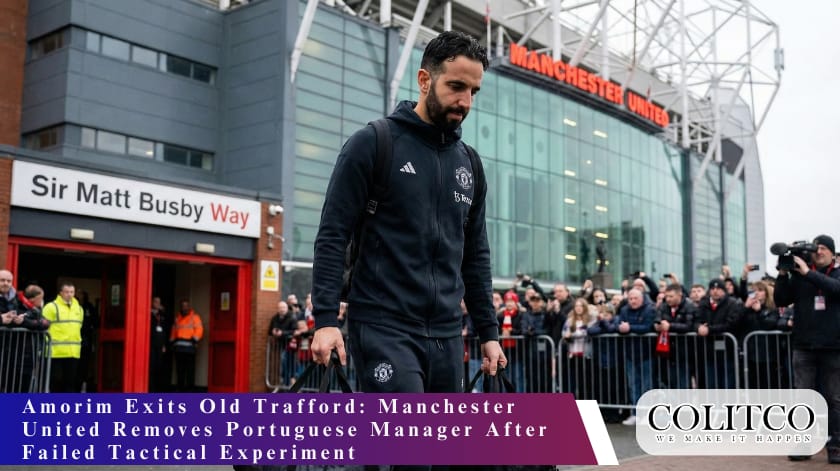
Manchester United confirmed Ruben Amorim’s departure as head coach on Monday morning. The Portuguese manager departed after 14 months in charge at Old Trafford. United’s leadership made the difficult decision to end his tenure following deteriorating results and rising tensions within the club hierarchy.
The Announcement That Changed Everything
United released an official statement confirming Amorim’s exit from his position. The statement declared: “Ruben Amorim has departed his role as Head Coach of Manchester United. With Manchester United sitting sixth in the Premier League, the club’s leadership has reluctantly made the decision that it is the right time to make a change. This will give the team the best opportunity of the highest possible Premier League finish. The club would like to thank Ruben for his contribution to the club and wishes him well for the future.”
Amorim received the news during a Monday morning meeting with chief executive Omar Berrada and director of football Jason Wilcox. The club moved swiftly to remove him from his post following weeks of mounting pressure.
View this post on Instagram
14 Months of Mounting Pressure Come to a Head
The Portuguese manager took charge of Manchester United in November 2024, replacing Erik ten Hag. His appointment generated significant optimism throughout Old Trafford. However, his 14-month tenure proved considerably turbulent. Amorim’s final match came on Sunday, a 1-1 draw against Leeds United at Elland Road.
He oversaw a total of 63 matches during his time at the club. His record showed 24 victories across all competitions. In the Premier League, he recorded only 15 wins from 20 games this season. United sat sixth in the league table, 17 points behind leaders Arsenal.
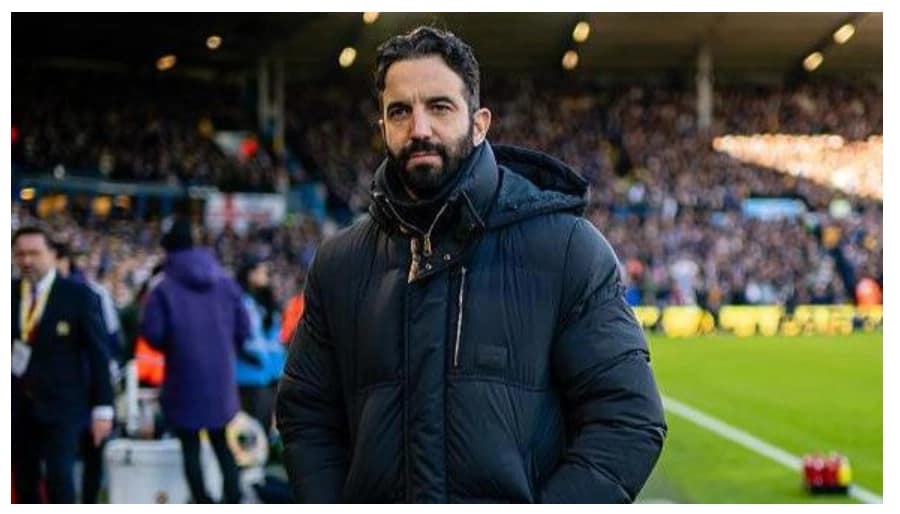
Ruben Amorim’s 14-month reign ends
The Press Conference Moment That Sealed His Fate
Amorim’s dismissal followed a dramatic press conference after the Leeds match. He directly confronted United’s hierarchy, expressing frustration about his role within the organisation. He forcefully stated, “I came here to be the manager of Manchester United, not to be the coach of Manchester United. And that is clear. I know that my name is not Thomas Tuchel, it’s not Antonio Conte, it’s not Jose Mourinho but I’m the manager of Manchester United.”
He continued with pointed remarks directed at the club’s recruitment department. He instructed the scouting staff and director of football Jason Wilcox: “Do your job.” These comments created immediate tension between Amorim and United’s decision-makers.
“I will do my job for 18 months and then we move on.” 😤
In a cryptic answer during his post match press conference, Ruben Amorim repeatedly stated that he came to “manage” Man Utd, not just to be a coach. pic.twitter.com/K2KEr3mZUh
— BBC Sport (@BBCSport) January 4, 2026
Underlying Tensions
Multiple issues contributed to the breakdown between Amorim and the club’s hierarchy. Earlier reports suggested frustration over the January transfer window activity. Before the Leeds match, Amorim expressed concerns about his system requirements.
He told journalists: “I have the feeling if we have to play a perfect 3-4-3, we need to spend a lot of money and we need time. I’m starting to understand that is not going to happen.” These comments revealed growing dissatisfaction with transfer backing.
Club sources denied the immediate cause stemmed purely from tensions with Jason Wilcox. Instead, they claimed the decision reflected insufficient progress and evolution within the playing squad. However, the timing of Amorim’s exit coincided directly with his press conference outburst at Elland Road.
System Wars: Why Tactical Inflexibility Doomed His Tenure
Amorim remained committed to implementing his preferred 3-4-2-1 formation throughout his time at United. His stubbornness in maintaining this system despite poor results frustrated both supporters and internal stakeholders. The manager showed reluctance to adapt tactically, even when evidence suggested alternative approaches might prove more effective.
He finally fielded a back four for the first time on Boxing Day against Newcastle. United won that match decisively. However, he reverted to his three-man defence system for the subsequent match against Wolverhampton Wanderers, which ended in a disappointing 1-1 draw. This inconsistency highlighted his tactical inflexibility.
Bruno Fernandes and the Midfield Crisis
Questions emerged regarding Amorim’s handling of Bruno Fernandes, United’s captain and most consistent performer. Fernandes had received a Saudi Arabian offer during the summer transfer window. The deal would have generated approximately £100 million for the club. Amorim chose to retain Fernandes, deploying him as a midfielder in his preferred formation.
This decision sidelined other midfield options, including academy prospect Kobbie Mainoo. Mainoo, a favourite among supporters, struggled to secure regular playing time. Some analysts contended that Fernandes’ positioning became the catalyst for Amorim’s ultimate downfall.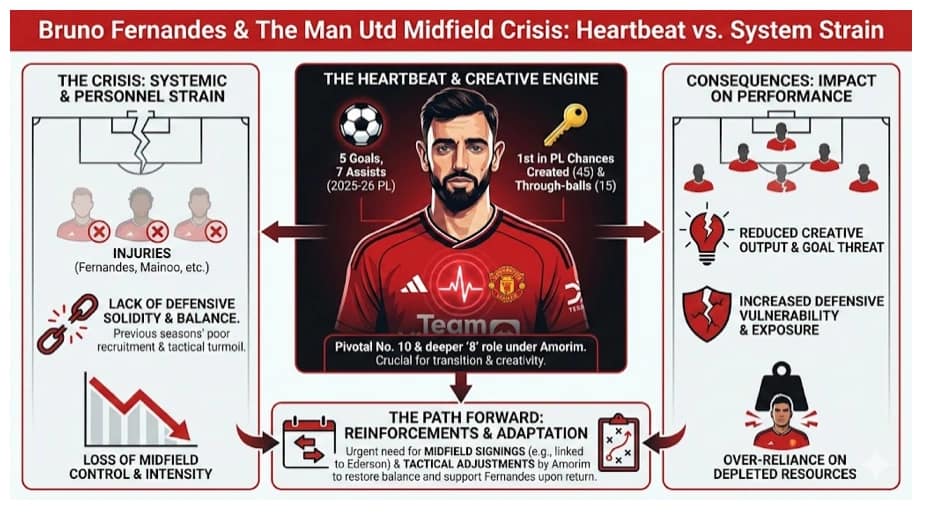
Man Utd’s Midfield Crisis
Darren Fletcher Steps in as Interim Solution
Darren Fletcher, United’s current Under-18s coach, assumed interim charge of the team. The club legend will lead United’s squad for the upcoming fixture against Burnley on Wednesday evening. Fletcher’s appointment signals United’s intention to stabilise the situation quickly following Amorim’s removal.
Also Read: Australia Day Celebrations: Liz Campbell Named Australia Day Ambassador 2026
Another Chapter in United’s Managerial Chaos
Amorim’s 14-month tenure ranks as the shortest permanent managerial reign since David Moyes departed in 2014 after just eight months. His dismissal adds another chapter to United’s ongoing managerial instability. Sir Alex Ferguson’s departure in 2013 triggered a succession of 10 managerial appointments across various tenures.
United’s recent history includes departures of David Moyes, Louis van Gaal, Jose Mourinho, Ole Gunnar Solskjaer, Ralf Rangnick, and Erik ten Hag. Amorim’s exit raises fundamental questions about the club’s structural direction and decision-making processes.
The Financial Cost of Yet Another Failed Experiment
Amorim’s dismissal comes at considerable financial cost to United. The club faces approximately £12 million in compensation payments for terminating his contract. This further compounds concerns regarding boardroom efficiency at Old Trafford.


