
Australia’s second-largest aluminium smelter will stay open until at least 2040 after Rio Tinto, the Queensland Government, and the Commonwealth struck a $2 billion funding agreement to keep Boyne Smelters Limited running beyond its expiring power contract.
The deal, announced on 25 March 2026, secures roughly 3,000 jobs in Gladstone and positions the facility as one of the world’s first major aluminium smelters to run primarily on solar and wind power.
Rio Tinto and Governments Strike Landmark Boyne Smelter Agreement
The Queensland and Commonwealth Governments will each invest $1 billion over the next 10 years, with funding running through to 2040. The agreement forms part of the Federal Government’s Future Made in Australia initiative and finalises a previously announced partnership between Queensland and Rio Tinto.
Rio Tinto’s side of the deal is considerably larger. The mining giant will underwrite close to $7.5 billion in new renewable energy generation and transmission infrastructure across central Queensland.
Rio has also added a new offtake agreement, taking 40% of Lightsource bp’s Lower Wonga solar and battery hybrid project near Woolooga, northwest of Gympie. The agreement equates to 112 MW of solar capacity paired with roughly three hours of battery storage. That brings Rio Tinto’s total contracted renewable capacity in Queensland to more than 2.8 gigawatts across five projects.
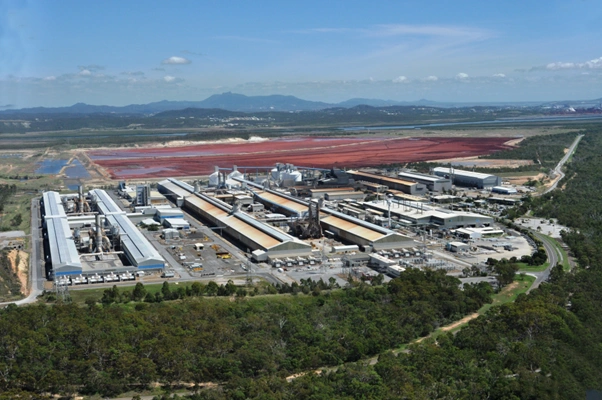
Boyne Smelters Limited has been producing aluminium in central Queensland since 1982. [Boyne Smelters Limited]
Why the Boyne Aluminium Smelter Deal Matters for Queensland
Boyne’s current electricity contract expires in 2029. Without a new deal, the smelter faced an uncertain future in a power market where fossil fuel costs keep climbing. This agreement removes that uncertainty for at least a decade.
Federal Industry Minister Tim Ayres described the investment as one of the most significant decarbonisation commitments in Australian history. “With a considerable public investment, we are catalysing a fivefold private investment that will build out the renewable energy grid and keep thousands of good regional jobs in central Queensland,” he said.
Gladstone Mayor Matt Burnett put it plainly. “If we were to lose our aluminium industry, it would decimate our local economy,” he told the ABC. “A 10-year plan means they’re not just throwing a sugar hit at it, they’re investing over many years to make sure we have long-term secure jobs.”
The deal is also significant for Australia’s industrial sovereignty. Australia is unique in that it hosts the entire aluminium supply chain onshore, from bauxite mining through to finished products. Gladstone sits at the heart of that chain.
Rio Tinto Chief Executive on Boyne’s Future as a Renewables-Powered Smelter
Rio Tinto Aluminium and Lithium Chief Executive Jérôme Pécresse said the partnership positions Boyne to be among the world’s first aluminium smelters powered primarily by solar and wind.
“It also ensures heavy manufacturing like aluminium smelting can continue in Gladstone for the long term and preserves one of the few fully integrated aluminium value chains in the world, from bauxite mining to alumina refining to aluminium smelting, all in Queensland, as demand for aluminium continues to grow with the energy transition,” he said.
Gladstone Mayor Matt Burnett was equally direct about what was at stake. He told media that losing the aluminium industry would decimate the local economy and welcomed the 10-year timeframe as a genuine long-term commitment rather than a short-term fix.
Who Owns Boyne Smelters Limited and Who Backs This Deal
Boyne Smelters Limited is owned by Rio Tinto, which holds a 73.5% majority stake, with YKK Aluminium at 9.5%, UACJ at 9.29%, and Southern Cross Aluminium at 7.71%.
The public funding comes from two sources. Queensland is contributing its share as part of a pre-existing state-level partnership with Rio Tinto. The Commonwealth’s contribution is channelled through the Future Made in Australia initiative, which targets domestic manufacturing and energy-intensive industries facing the green transition.
Renewable energy developer Lightsource bp is also a key partner, with Rio Tinto’s new offtake agreement for the Lower Wonga project adding another layer to the company’s Queensland clean energy portfolio.
Gladstone’s Boyne Smelter: A Queensland Industrial Institution Since 1982
Boyne Smelters Limited has been operating since 1982 and is Australia’s second-largest aluminium smelter. Located at Boyne Island in central Queensland, the smelter’s activities include manufacturing carbon anodes, aluminium production in reduction lines, and casting of molten metal into aluminium products ready to ship.
The smelter sits adjacent to Queensland Alumina Limited’s refinery, connected by a direct conveyor belt for alumina supply. Raw materials travel from Rio Tinto’s Weipa bauxite operations in Cape York Peninsula, making Gladstone the downstream hub of a vertically integrated chain.
The city’s economic reliance on the smelter is hard to overstate. It is one of the largest single employers in the region and has been for over four decades.
Timeline of the Boyne Smelters Power Transition
The Boyne deal fits inside a broader multi-year sequence of renewable energy commitments Rio Tinto has made for its Queensland operations:
- January 2024 onwards: Rio Tinto begins contracting large-scale renewable capacity for Gladstone operations
- 2024: Signs offtake for European Energy’s 1.1 GW Upper Calliope solar project
- 2024: Signs Australia’s largest single renewable deal for the 1.1 GW Bungaban wind project
- 2025: Adds Edify Energy’s Smoky Creek and Guthrie’s Gap solar and battery project, 540 MW / 2,160 MWh
- March 2026: Announces $2 billion government partnership and adds Lightsource bp Lower Wonga offtake
- 2029: Current Boyne power contract expires; new renewable-backed arrangements take effect
- 2040: Target end date for the government funding commitment
How Rio Tinto Plans to Keep Boyne Smelters Running Beyond 2029
The funding model addresses a specific problem. Renewable energy, while increasingly cheap to build, costs more to procure in the early years of a transition than the coal-fired power Boyne has historically relied on. The government contribution bridges that gap.
Rio Tinto’s own capital commitment is substantial. Its Queensland renewable portfolio now spans five projects and more than 2.8 GW of generation capacity, with over 600 MW of associated battery storage. That infrastructure does not just power Boyne. It feeds into the state grid and supports broader Queensland decarbonisation goals.
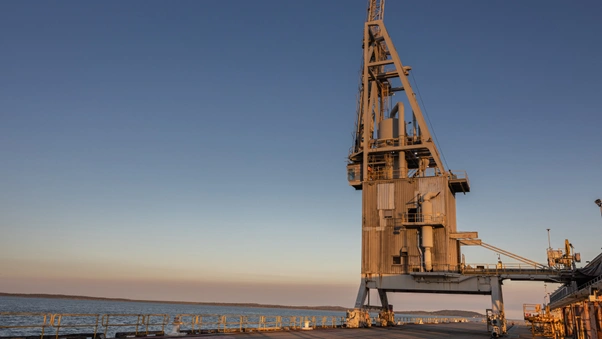
Rio Tinto has contracted more than 2.8 GW of renewable capacity in Queensland across five projects since 2024. [Rio Tinto]
This is also not an isolated precedent. Australian governments have recently moved to support Glencore’s copper smelter, the Whyalla steelworks, and Nyrstar’s lead and zinc smelters in Tasmania and South Australia through similar gap-funding approaches. The pattern signals a deliberate national policy to retain energy-intensive manufacturing onshore through the transition rather than allow it to shift to cheaper-energy jurisdictions overseas.
For a broader look at Rio Tinto’s Queensland strategy, see our earlier coverage of Rio Tinto’s Yarwun production cut and the company’s 2025 restructure and capital allocation shift.
Also Read: Santos Shuts Down Barossa LNG Just as the World Runs Out of Gas
FAQs
Q: What is the Boyne Aluminium Smelter?
A: Boyne Smelters Limited (BSL) is Australia’s second-largest aluminium smelter, located at Boyne Island near Gladstone in central Queensland. It has been producing aluminium since 1982 and is majority-owned by Rio Tinto.
Q: How much is the government investing in Boyne Smelters?
A: The Queensland and Commonwealth Governments are each contributing $1 billion, totalling $2 billion in public funding over 10 years to 2040.
Q: What does Rio Tinto contribute to the deal?
A: Rio Tinto is underwriting approximately $7.5 billion in new renewable energy and storage projects in Queensland, including solar, wind, and battery infrastructure.
Q: How many jobs does the Boyne Smelter support?
A: The smelter employs around 1,000 workers directly and supports approximately 2,000 additional jobs across the Gladstone region.
Q: When does Boyne’s current power contract expire?
A: The smelter’s existing power contract expires in 2029. The new deal ensures the facility continues operating through to at least 2040.
Disclaimer: This article is for informational purposes only and does not constitute financial or investment advice. Always seek independent financial advice before making investment decisions.
Source:
- https://www.riotinto.com/en/news/releases/2026/rio-tinto-queensland-and-commonwealth-secure-long-term-future-for-boyne-aluminium-smelter-at-gladstone
- https://statements.qld.gov.au/statements/104772