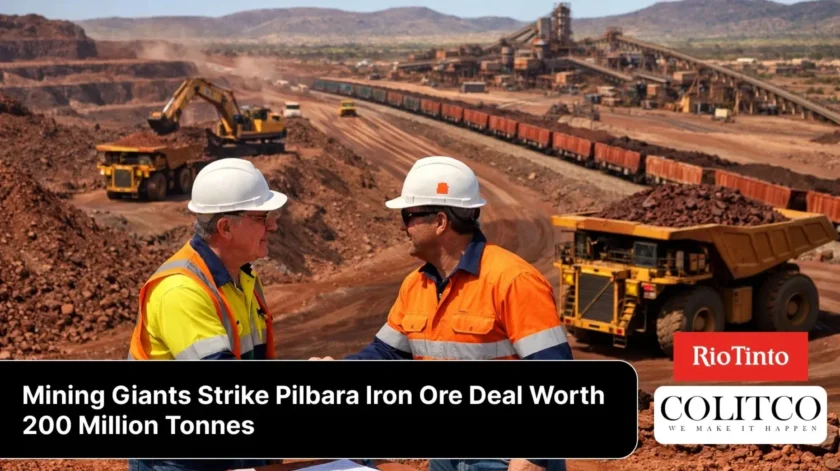
Australia’s two largest mining companies have joined forces in a move that sent ripples through the ASX on Thursday. Rio Tinto (ASX: RIO) and BHP Group (ASX: BHP) announced non-binding agreements to extract up to 200 million tonnes of iron ore from neighbouring Pilbara operations.
The deal pushed BHP shares up 2.47% to close at $49.31, while Rio Tinto gained 0.61% to finish at $147.56. Mining stocks across the board lifted as investors welcomed the collaboration.
Two Deposits, One Strategy
Under separate memoranda of understanding, the miners will explore joint development of Rio Tinto’s Wunbye deposit. BHP will also supply ore from its Yandi Lower Channel Deposit to Rio Tinto for processing at existing wet plants.
The arrangement builds on a 2023 agreement between the pair to mine the Mungadoo Pillar, which opened access to previously untouchable ore along their shared boundary.
Rio Tinto Iron Ore Chief Executive Matthew Holcz described the approach as “working smarter” to unlock production with minimal capital outlay. BHP WA Iron Ore Asset President Tim Day called it “productivity in action.”
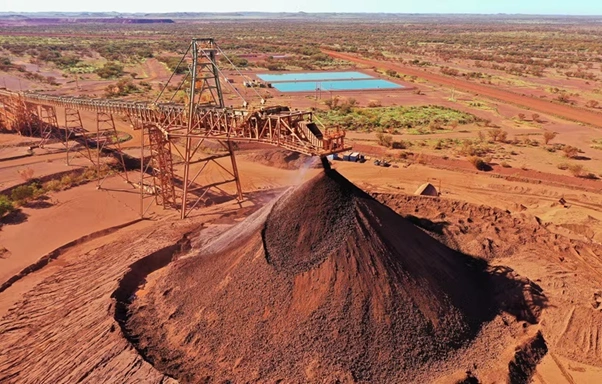
Neighbouring Yandicoogina and Yandi operations in the Pilbara form the basis of the collaboration [BHP]
Capital Light, Returns Heavy
The deal’s appeal lies in what it doesn’t require. Both companies can tap new tonnes without building fresh rail lines, processing plants or port facilities. They’ll use assets already sitting on the ground.
Key elements of the agreement include:
- Joint development studies starting immediately
- Conceptual work followed by order-of-magnitude assessment
- First ore anticipated early next decade
- Subject to regulatory and joint venture approvals
- Traditional Owner consultation required throughout
The 200 million tonne target represents roughly two to three years of current global seaborne iron ore trade. That scale matters when China’s property sector struggles and steel demand wavers.
Pilbara Powerhouse Expands Footprint
Western Australia’s Pilbara region continues its reign as the world’s premier iron ore province. Rio Tinto, BHP and Fortescue ship hundreds of millions of tonnes annually from the area’s world-class deposits.
Rio Tinto recently committed $191 million to progress the Rhodes Ridge feasibility study. The miner also invested $1.1 billion to extend life at West Angelas through new deposits.
BHP reached a two-year share price high following the announcement. The stock touched $49.75 during Thursday’s session before closing slightly lower. Investors appear convinced the arrangement delivers genuine value without demanding major upfront spending.
Iron ore prices held steady near $107.68 per tonne despite the news. Benchmark 62% fines slipped just 0.2% on Wednesday as markets digested the implications.
Industry Turns Toward Partnerships
The Rio Tinto-BHP deal reflects wider mining sector trends. Consolidation through collaboration rather than takeovers has gained traction as companies seek growth without overextending balance sheets.
Miners face pressure to maintain returns while commodity prices remain volatile. Iron ore prices have retreated from 2021 peaks above $200 per tonne as China’s economic growth slows.
The arrangement also signals pragmatism about Pilbara’s future. Rather than chase headline-grabbing greenfield projects, both miners are squeezing more from existing footprints.
Industry observers note the deal’s timing coincides with broader M&A speculation. Rio Tinto recently confirmed preliminary talks with Glencore about a potential merger that could create a $200 billion mining giant.
BHP publicly stated it won’t compete for Glencore, clarifying the competitive landscape for any Rio Tinto bid.

Pilbara iron ore awaiting export to global steel markets [Britannica]
What Investors Should Watch
The collaboration requires sophisticated coordination across rail networks, processing facilities and port operations representing billions in historical infrastructure investment.
Rio Tinto operates approximately 350 kilometres of dedicated mining rail in the Pilbara. Both companies maintain separate processing plants sized for their individual operations.
Rail scheduling coordination presents the most complex operational challenge. Integrating BHP ore movements through Rio Tinto facilities demands dispatch frequency alignment and shared capacity protocols.
Processing plant capacity allocation taps Rio Tinto’s existing wet beneficiation facilities, which can process over 150 million tonnes annually of Pilbara ore.
Studies will determine whether the deposits justify full-scale development. Subject to final investment decisions, first production could begin around 2030.
Any implementation needs regulatory approvals, joint venture partner consent and Traditional Owner agreement. Those hurdles could extend timelines or reshape project scope.
Market Performance Snapshot
BHP Group (ASX: BHP)
- Last Price: $49.31 (up 2.47%)
- 52-Week Range: $39.50 to $49.75
- Year-to-Date: up 8%
Rio Tinto (ASX: RIO)
- Last Price: $147.56 (up 0.61%)
- 52-Week Range: $105.11 to $148.20
- Market Cap: $143 billion
Fortescue (ASX: FMG) also gained 0.44% to close at $22.75 as the broader mining sector lifted.
Also Read: 2026 Rankings Reveal Winners and Losers in Global Travel Freedom
The Road Ahead
Both companies expect to complete initial studies over coming months. Results will determine whether the collaboration proceeds to detailed engineering and final investment decisions.
Success could establish a template for similar arrangements across the Pilbara. Other miners may explore partnerships that maximise existing infrastructure rather than duplicate capital spending.
The deal underscores iron ore’s continuing importance despite mining sector rhetoric about copper and energy transition metals. Iron ore still generates over 80% of Rio Tinto’s underlying earnings.
For now, investors appear content to back the strategy. Whether the collaboration delivers promised value remains to be seen once studies conclude and real costs emerge.