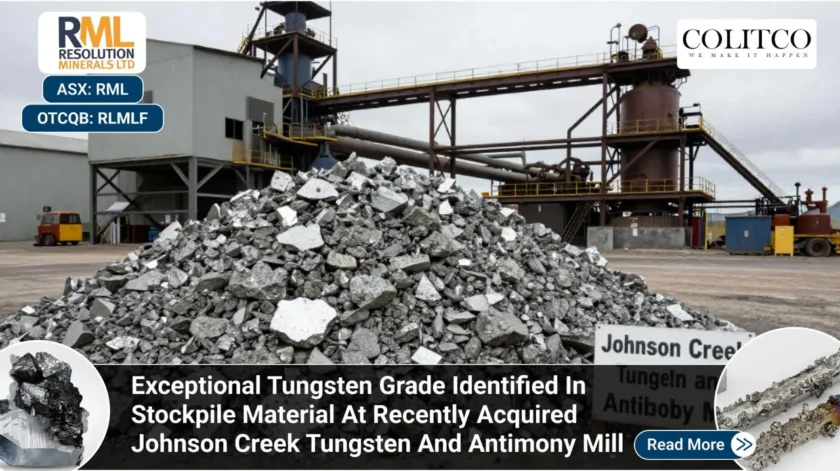
Resolution Minerals Limited (ASX: RML; OTCQB: RLMLF) has delivered a significant milestone in its push to become a leading U.S.-focused critical minerals producer, announcing high-grade tungsten assay results from preliminary sampling of historical ore stockpiles at its recently acquired Johnson Creek Tungsten and Antimony Mill in Idaho, USA.
The Company completed a mini-bulk composite sample of 93.6kg, drawn from six individual grab samples collected across the stockpile surface in late 2025. The results confirmed a tungsten trioxide (WO₃) grade of 1.85%, accompanied by material gold levels of 0.11g/t — figures that align closely with the historical production grades recorded at the site decades ago and that stand far above the global underground mining average of just 0.15–0.20% WO₃, as cited by the U.S. Geological Survey.

Figure 1: Aerial/satellite view of the Johnson Creek Mill and stockpile site with sample locations marked. [Source: Resolution Minerals]
Independent laboratory analysis by Independent Metallurgical Operations Pty Ltd (IMO) further established that:
- Scheelite (CaWO₄) is the dominant tungsten ore mineral — well understood and metallurgically favourable
- Quartz accounts for over 90% of the gangue (non-ore) minerals, supporting easier grinding and scheelite liberation
- Impurity elements are remarkably low — arsenic (As) at just 97 ppm, molybdenum (Mo) below detection, and phosphorus (P) below detection
- Iron (Fe) registers at 0.48%, and manganese (Mn) at 263 ppm
- Silicon (Si) at 44.81% confirms the dominant quartz-rich gangue mineral assemblage
These metallurgical characteristics suggest the stockpile material could support a relatively simple, low-cost processing pathway — a compelling proposition given the surging global demand for tungsten.
In this context, Resolution Minerals Executive Director, Aharon Zaetz, commented:
“Confirming a high-grade 1.85% WO₃ result from the Golden Gate stockpile is a significant milestone for Resolution Minerals. The combination of strong grade, scheelite-dominant mineralisation and low impurity levels highlights the potential for a simple, low-cost processing pathway.
— Aharon Zaetz, Executive Director, Resolution Minerals Ltd

Figure 2: UV/blue-light photograph showing vivid white scheelite mineralisation in stockpile rocks [Source: Resolution Minerals]
A Stockpile Dormant Since the 1980s, Now Back in Focus
The stockpiles at the Johnson Creek Mill represent the accumulated legacy of multiple phases of historical mining at the nearby Golden Gate Tungsten Mine. Exploration and development at Golden Gate began in the late 1940s, when scheelite-bearing veins were discovered. By the early 1950s, an open-pit tungsten mining operation was underway.
Tungsten ore from Golden Gate was initially processed at the Stibnite Mill — not an asset of the Company — until its closure in 1952. Historical records indicate that 1,814 tonnes of tungsten were mined and milled during this phase, at an average grade of 1.5% WO₃. Following that closure, the Johnson Creek Mill was built on 15 acres of adjacent land.
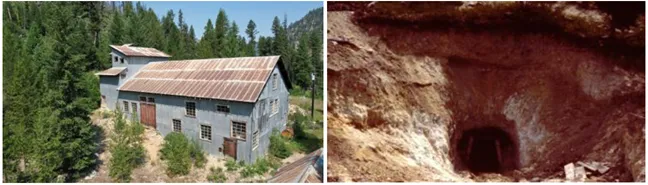
Figure 3: LEFT: Image from the 2 March 2026 ASX announcement showing the Johnson Creek Tungsten and Antimony Mill. RIGHT: Image from the same announcement displaying the entrance (adit) of the closed Golden Gate tungsten mine.
Key historical production milestones include:
- 1973: 227 tonnes of ore at an average grade of 2.03% WO₃ were processed at the Johnson Creek Mill
- 1977: A further 456.6 tonnes were mined and stockpiled at an average grade of 1.8% WO₃
- 1979–1980: Underground mining began, adding approximately 1,905 tonnes of mill feed to the stockpiles
The stockpiles, estimated at roughly 2,000 tonnes of tungsten ore, have remained untouched since the 1980s, as evidenced by decades of tree and vegetation regrowth across their slopes. The Company acquired the Johnson Creek Tungsten and Antimony Mill, its associated infrastructure, and the ore stockpiles in early March 2026, completing an unconditional transaction that positions it to fast-track tungsten production in a market hungry for domestic supply.
Resolution Minerals Executive Director Aharon Zaetz highlighted the strategic importance of the historical operations and the opportunity presented by the stockpiles:
“Given that Golden Gate has previously been mined for tungsten, and has supplied the US Government with critical metals for several war efforts during the 20th century, this presents a compelling opportunity to fast-track the stockpiles should further planned work prove positive.”
— Aharon Zaetz, Executive Director, Resolution Minerals Ltd
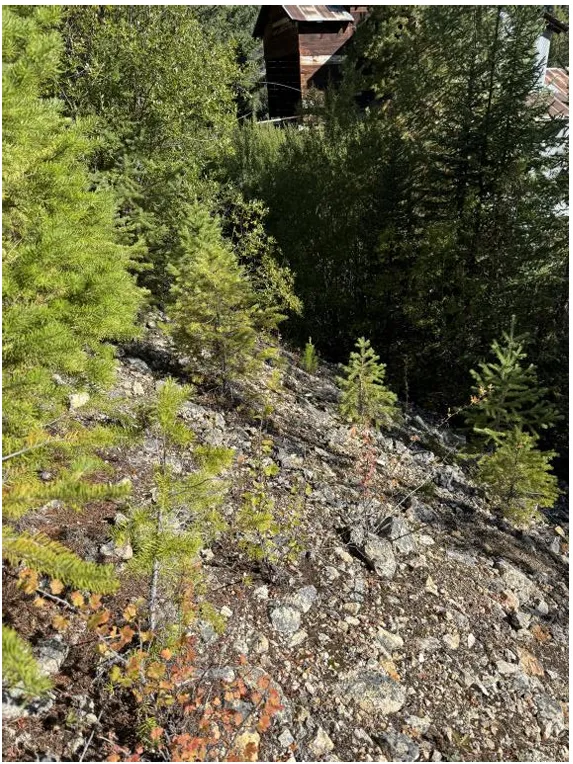
Figure 4: A historical stockpile at the Johnson Creek Tungsten & Antimony Mill, mapped and sampled by RML’s field team, has remained undisturbed since mining at Golden Gate ceased in the 1980s. [Source: Resolution Minerals]
Tungsten: A Critical Metal in Rising Demand
The timing of Resolution’s announcement aligns perfectly with a shifting global landscape. Tungsten prices have skyrocketed from under US$400 per metric tonne to approximately US$2,200, propelled by international conflicts and supply chain vulnerabilities caused by a heavy reliance on offshore production. In response, the U.S. Government has launched a US$12 billion strategic initiative to bolster domestic critical mineral stockpiles and reduce foreign dependency.
This urgency is mirrored globally. Valued at USD 1.86 billion in 2024, the tungsten market is forecast to reach USD 2.84 billion by 2033, growing at a CAGR of 4.7%. Key demand drivers include:
- The Asia Pacific region currently holds a 54.1% market share, but U.S. demand is accelerating with a projected 3.9% CAGR through 2033.
- Mill products account for the largest market segment at over 43% of revenue
- Electronics and robotics are the fastest-growing segments, with a 4.6% CAGR, driven by tungsten’s essential heat resistance and durability.
In this environment, U.S. projects featuring high-grade resources and straightforward mineralogy are exceptionally rare, making Resolution’s Johnson Creek stockpiles a strategic standout.
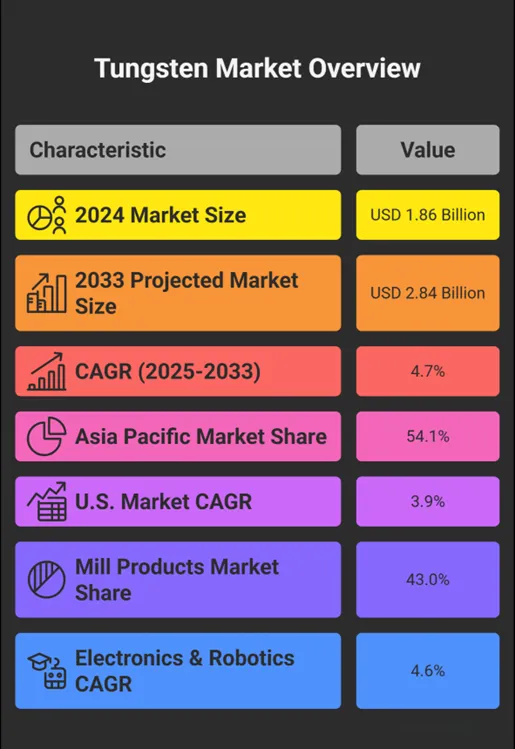
Figure 5: Rising tungsten prices, supply constraints, and strong global demand, especially in electronics, highlight the strategic value of U.S. projects like Resolution’s Johnson Creek stockpiles.
Metallurgical Case for Simple, Low-Cost Processing
Beyond the impressive headline grade, the stockpile’s mineralogy provides strong grounds for optimism. An independent study by the Company identified several key characteristics that could streamline the transition to a saleable tungsten concentrate:
- Scheelite (CaWO₄) is well understood metallurgically and generally presents an easier processing route than other tungsten ore types such as wolframite
- High quartz content is a positive for grindability, given quartz’s brittle nature, and supports the potential liberation of scheelite at a coarser grind size — reducing energy costs
- The absence of significant arsenic, phosphorous, and molybdenum simplifies the production of a high-grade concentrate capable of meeting ammonium para-tungstate (APT) refinery specifications — the standard intermediate product in the tungsten supply chain
Next Steps: Pathway to JORC Compliancy
The Company is now moving swiftly to unlock the full value of the stockpiles. The upcoming exploration and evaluation program will include, but will not be limited to:
- A detailed sub-surface and interior sampling program to complement current surface results
- A volumetric survey to accurately quantify cubic metres of stockpile material
- Specific gravity analysis to allow reliable tonnage calculations from volumetric data
- Assessment of direct offtake options for stockpiled tungsten in the near term, whilst the process flowsheet is developed in parallel
These steps are designed to bring the stockpiles into full JORC Code 2012 compliance, allowing the Company to formally define a mineral resource and advance discussions with potential processing and offtake partners. The work also supports Resolution’s broader ambition to become one of the very few U.S.-focused critical minerals companies with in-house processing capability across antimony, tungsten, and gold.
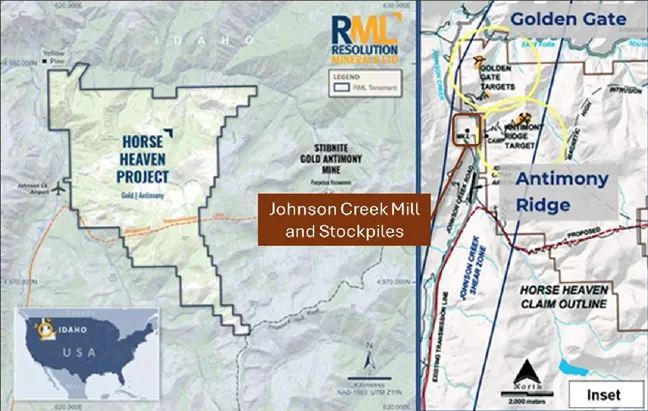
Figure 6: Project location map highlighting the Johnson Creek Mill, the stockpile area, and key prospects within the Horse Heaven Project including Golden Gate and Antimony Ridge. [Source: Resolution Minerals]
Investors’ Outlook
Resolution Minerals has attracted growing market attention as the critical minerals narrative gains momentum in Washington and across global commodity markets. The Company’s shares on the ASX last traded at $0.049, up by 2.08% on the day of this announcement.
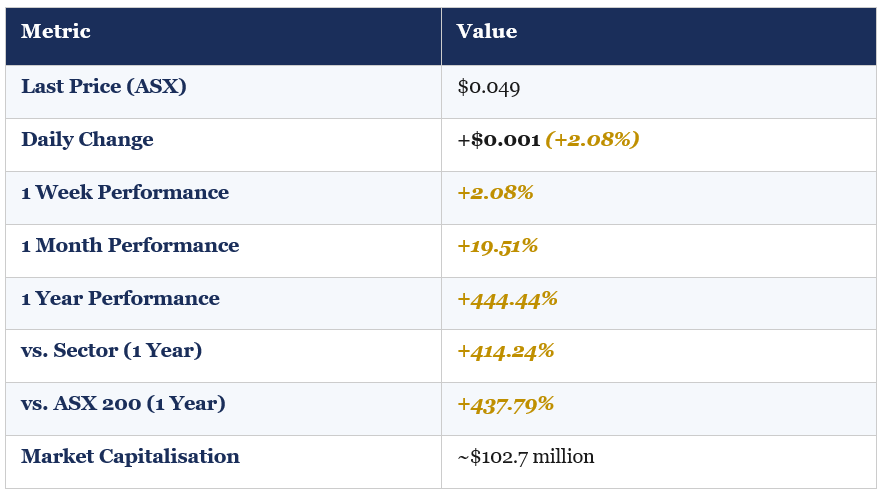
With a market capitalisation of approximately $102.7 million, combination of high-grade tungsten results, a highly favourable U.S. policy environment, surging tungsten prices, and an accelerating JORC upgrade pathway gives investors a clear and credible near-term catalyst to monitor closely.
Validation of tonnage and grade aligning with historical estimates—roughly 2,000 tonnes at 2.0% WO₃—could trigger a substantial re-rating of the Company’s valuation. This is further bolstered by the global tungsten market’s projected expansion to USD 2.84 billion by 2033 and the increasing urgency from the U.S. Government to secure domestic critical mineral supplies.
For more information, visit Resolution Minerals’ official website.
Disclaimer
This editorial is for informational purposes only and does not constitute financial or investment advice. The historical production data and stockpile estimates cited are Foreign and Historical Estimates and have not yet been classified as a Mineral Resource or Ore Reserve in accordance with the JORC (2012) Code. Readers should conduct their own due diligence before making any investment decisions. Past performance is not indicative of future results.
Last modified: March 26, 2026