
NVIDIA’s stock fell in after-hours trading after showing increases. The share had ended the day almost 3 per cent up. The rally came after new support from analysts and new capital commitments.
Nevertheless, delayed headlines turned the tide in technology counters worldwide. Such moves in the US policy are closely monitored by ASX tech investors Nvidia. The future chip demand can be strained by any curbs on exports. Traders were fast responding to geopolitical risks and not earnings strength.
Caution is not the collapse in fundamentals but is the pullback. Nonetheless, the cyclical instability scared the momentum buyers. Such stress is the reason optimism was lost in a few hours
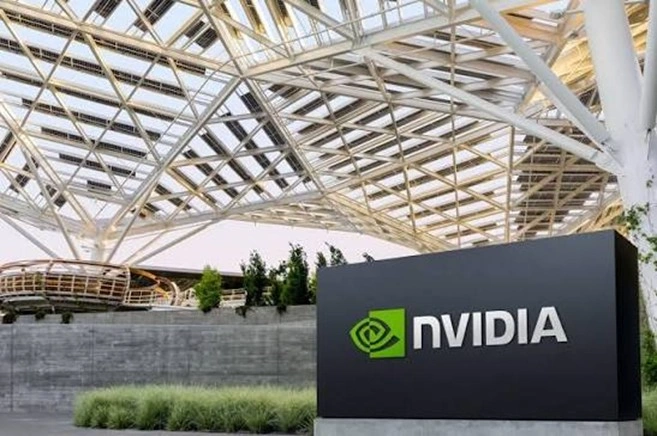
NVIDIA headquarters and AI chips remain central to global tech portfolios. [Reuters]
What Triggered The Nvidia Stock Price Drop After The Rally?
The first leap was made with Nvidia being reiterated by Morgan Stanley as its Top Pick. The institutional investors were boosted by that approval. NVIDIA has also promised two suppliers 2 billion each.
These investments focus on optical components applied internally in AI data centres. Those elements enhance speed and energy efficiency. The strategic expansion into the supply chain was accepted by the markets.
However, after-hours trading presented the contrary. There were new concerns over exports raised by Bloomberg in a late report. The note proposed further American regulations on the sale of advanced AI chips to China.
Such a possibility was more than the previous positive catalysts. Traders were quick to get out of positions. Risk management had been the order of the day in decision-making.
Strategic Investments Strengthen Nvidia’s AI Ecosystem
NVIDIA affirmed two $2 billion investments in order to achieve supply resilience. Money will be financed to Coherent and Lumentum. Both companies provide components of high-speed AI networking.
The links reinforce the overall ecosystem strategy of Nvidia. Vertical integration minimises links in the peak demand periods. It enhances margins long term scalability, too. In the case of ASX tech Nvidia, this is an indication of sustainability.
The corporation wishes to have more control over performance and expenses. These investments tend to favour increased valuation. These positives were, however, overridden by near-term headlines.
Policy risks usually pay off faster than structural payoffs in markets. The late slide came about as a result of that mismatch.

Optical component suppliers support Nvidia’s expanding AI infrastructure.[Network World]
How Do China’s Export Caps Affect Nvidia’s Sales Outlook?
Based on negotiations, authorities could limit their exports to Chinese consumers. The company was limited to giving each company 75,000 H2O00 chips. The same amount of restrictions can be imposed on similar hardware used by rivals.
This figure is way lower than the previous demand projection. The volumes of Chinese technology giants are much greater. These chips are trained and trained on advanced AI models.
The suppression of supply restricts national AI development plans. The overall shipments of Nvidia could reach one million units. However, the largest requests are made by several mega clients. Fixed limits decrease the orders of such important customers.
Concentration of revenue is therefore a risk factor. One of the reasons why investors fear slower growth is due to a region. Prices were pressured after the bell with that fear.
Market Sentiment Weighs On Nvidia Stock Australia Exposure
The company booster has gone past Nvidia to peer names. Advanced Micro Devices lost approximately 0.6% on the same report. The correlated moves demonstrate that there is policy sensitivity across the sector.
These are the cues that are observed by Nvidia stock Australia traders. Most local portfolios will have an exposure to US chips in ETFs. Weaker Nasdaq tends to pull the ASX tech market down.
Nevertheless, analysts reckon that there are strong fundamentals. The demand for data centres is on the rise worldwide. The AI workloads continue to increase in businesses.
That background is one that favours a long-term outlook in terms of revenues. Noise is generated by short-run headlines. Patient investors tend to use dips as entry points.

Volatility in global chip stocks influences Australian investor sentiment.[The Economic Times]
Analysts Still Back Long-Term Growth For ASX Tech Investors Nvidia
Wall Street feeling remains good, notwithstanding the wobble. NVIDIA has a Strong Buy consensus rating. It consists of 38 Buy, one Hold and one Sell calls. The midpoint price target is at $271.11.
It means that there is 48.57% Upside potential at the current levels. These figures are indications of trust in AI leadership. The company owns the GPUs for training large models.
Its software stack introduces switching costs to the customers. In the case of ASX tech investor Nvidia, it is still a core growth play. The regional sales might be curtailed by the export risks.
However, AI expenditure in the world is increasing. Probably, long-term demand countermeasures the short-term constraints. Investors are thus sensitive to the development of policies.
Also Read: NVIDIA Just Posted the Biggest Year in Chip History. The Next One Looks Even Bigger.
FAQs
Q1. Why did Nvidia shares fall after rising 3% earlier?
A1: Late reports suggested tighter US export limits to China, hurting sentiment.
Q2. How much is Nvidia investing in suppliers?
A2: It plans $2 billion each in Coherent and Lumentum.
Q3. What is the current analyst view on NVDA?
A3: Wall Street shows a Strong Buy with 38 Buy ratings.
Q4. Should ASX investors worry about the Nvidia stock price drop?
A4: Short-term risks exist, but AI demand still supports long-term growth.