
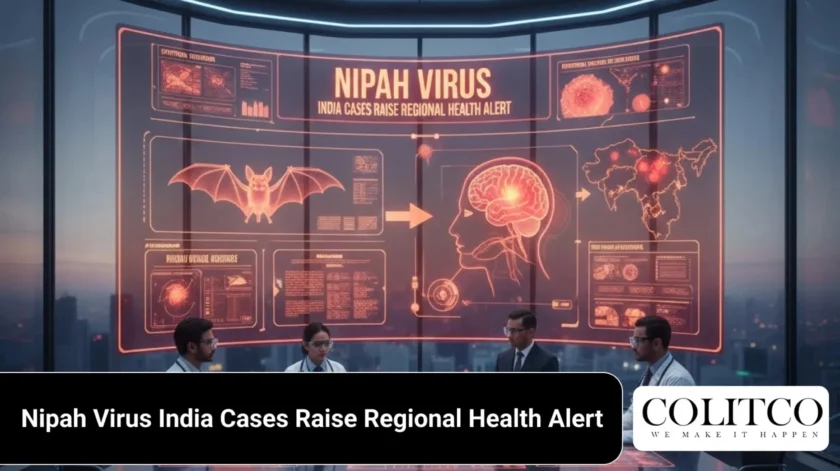
This week, new cases of the Nipah virus India were reported in the state of West Bengal. Indian health officials reported two infections. The trend has precipitated increased surveillance within the neighbouring nations.
The virus is associated with high mortality rate after the symptoms deteriorate. Authorities emphasized that it is not an easily contagious disease. Nevertheless, the intensity of illness remains on guard by agencies of public health.
Australia has started monitoring by means of federal surveillance. Health Minister Mark Butler denied the necessity to tighten the borders yet. The authorities are still collecting information to detect the prevailing risks.
Experts indicate that there is need to continue being vigilant as there are increasing travel connections. The scenario is symptomatic of broader issues of zoonotic spillover diseases on an international scale. The past pandemics have made governments to take each cluster seriously.

Field workers use bat samples in Nipah virus surveillance efforts in South Asia. [Health and Me]
How Serious Is The Nipah Virus Outbreak 2026?
The Nipah virus outbreak of 2026 has once again raised eyebrows of epidemiologists around the globe. Nipah is characterised by extreme respiratory and neurological symptoms. Death cases in previous outbreaks were alarming. Nonetheless, transmission usually involves close contact with the infected fluids.
This restricts the fast transmission of the virus within the community as opposed to airborne viruses. According to the health teams, early detection leads to a significant change in deaths. The symptoms usually start with fever and headache.
Confusion and difficulty in breathing may subsequently develop in the patients. Sometimes intensive care is needed within days. There is no specific vaccine that is popularly available. Therapy is aimed at supportive hospital care.
According to experts, hospital preparedness is a pressing issue. This is the reason why protocols are being strengthened by regional governments. The population of bats is also being monitored by surveillance teams. The virus is still dominated by bats as their main natural reservoir.
Australia Monitors Risks Through Public Health Response
Australia has not registered any Nipah infection yet. Officials believe that border closures are unwarranted. Rather, emphasis is put on preparedness and intelligence exchange. The federal government is still liaising with the Indian equivalents.
The hospitals have revised their response plans for rare infectious threats. Labs are ready to make rapid tests on suspected individuals. There is a review of isolation procedures by the public health officers.
This is to avoid local transmission. Juris people lay stress on rational decisions instead of panic. This was a calculated approach that is in line with the World Health Organisation standards.
Constant surveillance assists the government in responding quickly in case risks change. Routine hygiene practice is recommended for international travellers. Analysts state that precise communication will ensure that the spread of misinformation is not faster than the spread of the illness.

Australian health officials assess hospital preparedness plans and surveillance of laboratories. [RACGP]
Why Does Nipah Spread From Animals To Humans?
Scientists attribute the Nipah infections to be predominantly bat-to-human. Fruit bats are the carriers of the virus without any signs of sickness. It can be transmitted via contaminated food or contact with animals. Pigs served as intermediates in certain outbreaks.
Communities in rural areas are more likely to be exposed. Human activities in farming have the potential of increasing contact with animals. Health education is currently emphasising safe food handling.
Potential exposure is avoided by avoiding raw date palm sap. Scholars also suggest protective equipment for animal workers. These proactive measures constitute the basic protective measures. An excellent education reduces the risk of infection considerably.
Scientists are still examining ecological aspects leading to the occurrence of spillover. Change in climate and the diminishing of habitats can increase contact areas. The knowledge of these drivers contributes to the effective prevention in the long term.
Governments Strengthen Surveillance And Communication
Asian governments have increased disease surveillance systems. Alerts are received at the hospitals quicker as compared to earlier days. Data sharing across borders enhances early containment mechanisms.
The medical teams are provided with new case management instructions. There is the capacity to test rare pathogens in laboratories. The purpose of public briefings is to keep citizens informed without panicking.
According to experts, even in times of outbreaks, trust is vital. Open communication creates collaboration between communities. Airlines and ports subscribe to normal screening procedures. The authorities emphasise that travelling is safe at the moment.
Nevertheless, drills of preparedness are ongoing in large cities. This formalised strategy is a learning about COVID-19. Authorities think preparedness decreases economic disturbance. The greatest protection is through action.

Surveillance drills and community awareness campaigns are organised by health officials to enhance preparedness in case of an outbreak. [IFRC]
What Happens Next For Nipah Virus India Cases?
The second step will be based on the success of containment in West Bengal. Contact tracing will also help to identify whether additional infections will arise. Provided that clusters are kept small, risks are contained.
Further expansion would encourage more severe measures. Australia will continue to stay in touch with international developments. Analysts believe that there will be a slow recovery and not a rapid growth.
Data communicated by the Nipah virus public health response is based on the rapid isolation. Vaccine and antiviral medical research is ongoing. International collaboration is very crucial in preparedness. Healthcare impacts are also observed by investors. In the meantime, the government focuses on being watchful rather than fearful.
The information is developing with the focus keyword being central. The cases of the Nipah virus in India are thus taken as a precursor. The readiness of today might be the difference between a bigger crisis tomorrow.
Also Read: JPMorgan Healthcare Conference 2026 Breaks Ground On Pharma Frontiers
FAQs
1: What are the Nipah virus cases in India?
1: They refer to confirmed human infections recently reported in West Bengal, India.
2: Does Nipah spread easily between people?
2: No, transmission usually requires close contact with bodily fluids.
3: Has Australia recorded any Nipah cases?
3: No cases have ever been recorded in Australia.
4: How are governments responding to the outbreak?
4: They are strengthening surveillance, hospital readiness, and cross-border health coordination.