
The acquisition of McLaren Minerals consists of the purchase of a new mineral sands project in the eastern Eucla Basin, South Australia. McLaren Minerals Limited gained the mining rights from Iluka Resources, thereby increasing its involvement with heavy mineral sands. The deal not only gives the company access to the titanium-focused projects but also broadens its asset base.
The gained properties are collectively known as the Barossa Project, which includes Kalahari, Mojave, and Gobi prospects. Previous exploration in these areas revealed the presence of heavy minerals. This previous research lowers the risk of early-stage development and increases the speed of project evaluation.
According to the contract, McLaren is going to pay a combination of cash and equity upfront. More money will be given when the development milestones are reached. These include resource definition and the results of the economic study.

McLaren Minerals acquires Eucla Basin mineral sands project
Why Does This Acquisition Matter Internationally?
The purchase of McLaren Minerals has put the company in the middle of a mineral sands province that is of global importance. Zircon, which is a non-metallic mineral and an essential industrial mineral, is widely used in ceramics, refractories, and high-tech manufacturing. In this way, having an asset that is rich in zircon guarantees that the company will remain relevant in the international supply chains for a long period.
The eastern Eucla Basin has been considered a place for mineral sands deposits that are large-scale and of very high quality. McLaren’s entering this area boosts its development credibility. The company’s move also corresponds to the global mining trend favouring the assets with proven geological continuity.
It has become a trend that international investors prefer to make acquisitions that come with historical drilling and metallurgical data. The Barossa Project is one of such cases, as it provides the very data, plus the clarity on the mineral composition, and the potential development pathways.
How Will McLaren Minerals Advance The Project?
McLaren Minerals is planning to advance the Barossa Project systematically after the completion of the project. This will be followed by drilling to confirm the resource, estimating the resource and carrying out technical studies. The development payments are tied directly to these milestones being reached.
The assemblage of heavy minerals consists mainly of zircon (about 16% on average) and ilmenite (around 60%) with rutile and other valuable minerals. The combination of these minerals creates various revenue possibilities for the company.
The management of the company has pointed out that the project is in harmony with McLaren’s strategy of being present in stable, mining-friendly regions. The acquisition not only adds to the company’s existing project but also strengthens its current operations.
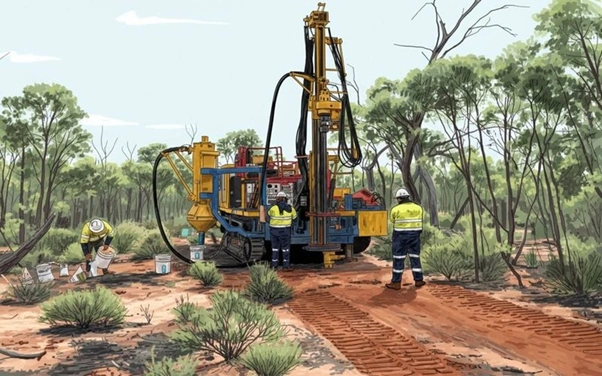
McLaren plans drilling, resource estimates, and studies tied to milestones
Barossa Project Strengthens Mineral Sands Portfolio
In addition to this, the Barossa Project gives McLaren a stronger foothold in the Australian mineral sands industry. The Eucla Basin, with its several deposits of world-class quality, has made it an appropriate place for continuous exploration and development.
Moreover, the existing infrastructure and regional expertise, already in place, support the project’s efficient advancement. The project’s large size and diversity of minerals increase its strategic importance. It is a new addition to McLaren’s portfolio that is aimed primarily at high-demand commodities.
As the markets for mineral sands are shifting, having a diversified exposure may help the company in dealing with the price fluctuations of specific commodities. The Barossa Project is going to add this aspect of balance to the growth strategy of McLaren.
Strategic Expansion Signals Market Confidence
The McLaren Minerals acquisition unambiguously demonstrates the investors’ confidence in the long-term demand for zircon and ilmenite. The use of these minerals does not seem to be fading in the near future since they are still being utilised in construction, manufacturing, and technology applications.
The securing of the asset through a divestment has permitted McLaren to enter the project at a very reasonable cost. This type of disciplined approach is usually very much looked upon and considered positively by investors. It is a clear-cut case of capital efficiency together with strategic ambition.
Market observers have remarked that transaction structures that include staged payments are less risky regarding the upfront investment. The manner of payment fortifies the alignment of the interests of the shareholders and the success of the development.

McLaren acquisition reflects confidence in enduring zircon demand
Future Outlook And Development Path
McLaren Minerals is, meanwhile, continuing to push for progress in the wider project pipeline that it has next to the Barossa acquisition. The company’s flagship McLaren Titanium Project, which is located in Western Australia, has a resource of 280 million tonnes with a heavy mineral content of 4.8%.
The company’s ongoing drilling and technical studies are expected to increase the value of both assets. The company management is still focusing on the conversion of resources into development-ready projects.
Though the worldwide demand for heavy minerals is still strong, McLaren’s larger footprint may act as a catalyst for further growth and better market position in the industry.
Also Read: Platina Resources Doubles Laverton Footprint with Strategic Mt Morgans South Acquisition
FAQs
Q1: What is the McLaren Minerals acquisition?
It is the Barossa mineral sands project’s acquisition in the eastern Eucla Basin of South Australia.
Q2: What is the significance of the Eucla Basin?
There are large mineral sands deposits found in the basin with good development potential demonstrated.
Q3: What types of minerals does the Barossa Project have?
The project has ilmenite, zircon, and rutile, with the zircon content being around 16% on average.
Q4: How will this acquisition impact McLaren’s plan?
It will diversify the firm’s portfolio and enhance the company’s presence in the high-value mineral sands market.