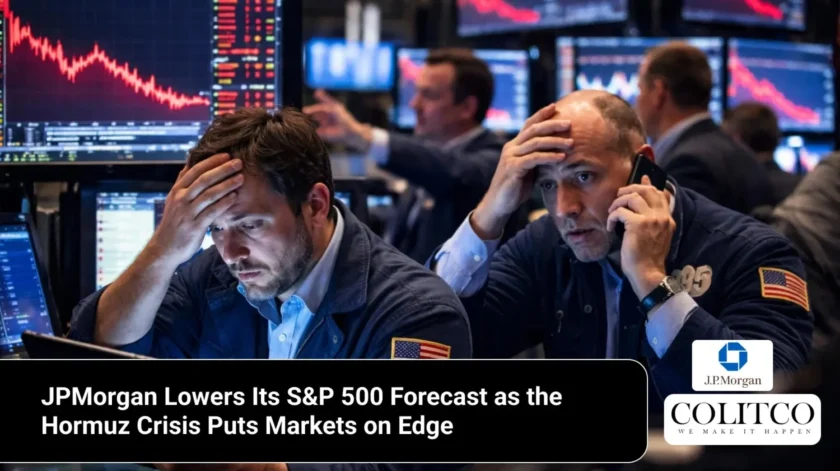
JPMorgan Chase and Co (NYSE: JPM) has revised its year-end target for the S&P 500 downward, citing the escalating Middle East oil shock as a fundamental threat to global growth. The firm’s strategy team, led by Fabio Bassi, lowered the JPMorgan S&P 500 target from 7,500 to 7,200, pointing to the de facto closure of the Strait of Hormuz as the central driver of the revision.
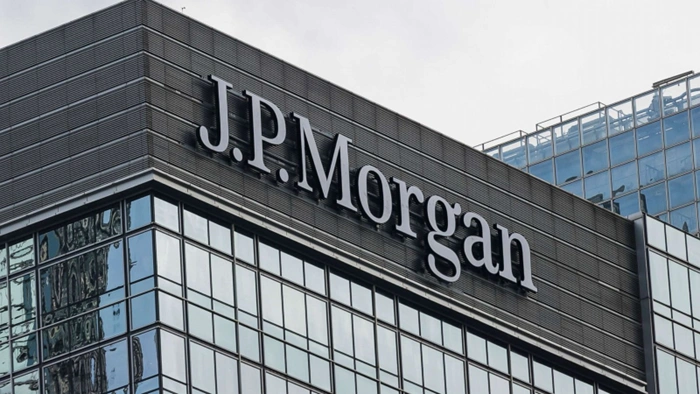
Figure 1: JPMorgan Chase & Co headquarters signage [Courtesy: Pimwp]
The move reflects a broader shift in sentiment across institutional markets, as equity investors grapple with triple-digit crude prices and a narrowing path to economic stability through the remainder of 2026.
A Revised Target Backed by a Sobering Supply Shock
The Strait of Hormuz Closure Is Reshaping Global Growth Expectations
JPMorgan’s strategy team identified the Strait of Hormuz disruption as a profound supply shock with the potential to stifle economic output and reignite inflationary pressure. Even after the downgrade to 7,200, the forecast still points to double-digit upside from current levels, although JPMorgan believes equity markets may be underestimating the full impact of ongoing risks.
Earnings Estimates Face a 2% to 5% Trim if Oil Stays Elevated
Bassi’s team outlined the direct impact of sustained high energy prices on corporate earnings. Specifically, the firm projected the following if crude remains above US$110 per barrel through year-end:
- JPMorgan expects S&P 500 earnings forecasts to be revised lower by roughly 2–5% if elevated oil prices persist.
- Tightening liquidity conditions are compounding the earnings pressure
- A “multiple compression” risk as investors reassess growth and valuation premiums
How the Middle East Oil Shock Is Feeding Into Equity Markets
Four Consecutive Weeks of Losses Signal Growing Investor Caution
The SPDR S&P 500 ETF Trust (NYSE: SPY) recorded its fourth consecutive week of declines as of 21 Mar 2026, its longest losing streak in over a year. The Middle East oil shock is being identified as the primary external variable weighing on market sentiment, with energy costs beginning to bleed into corporate profit margins across sectors.
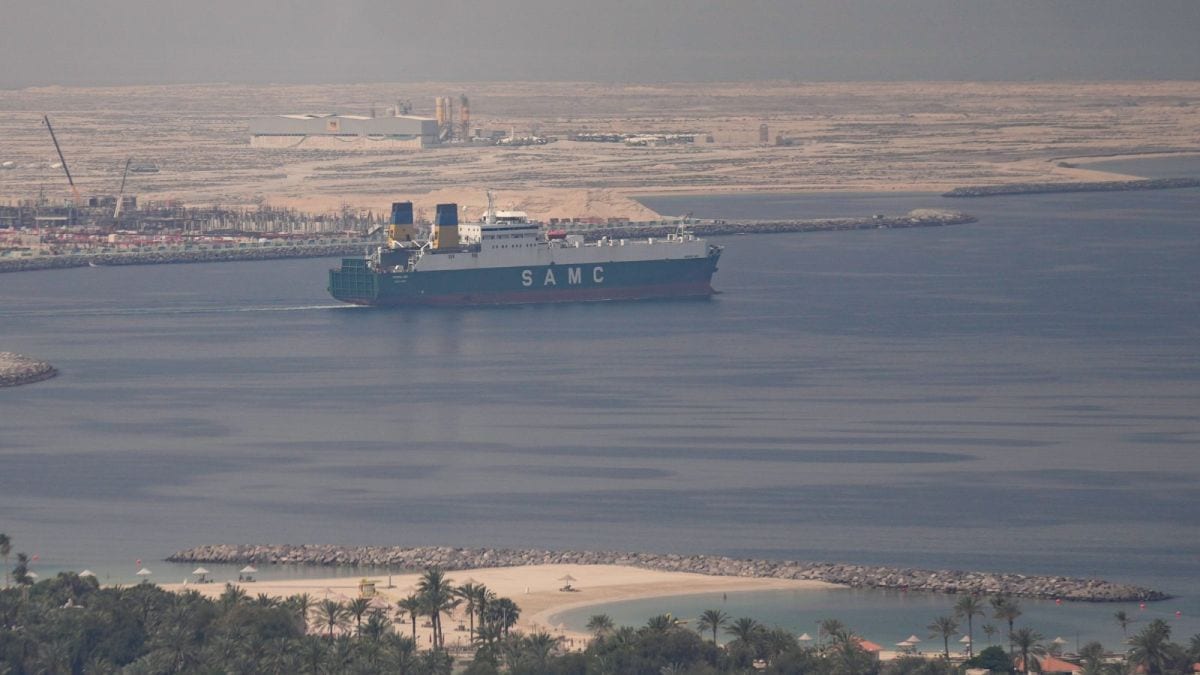
Figure 2: Oil tanker navigating a Middle Eastern port [Courtesy: Indian Express]
Markets are underweighting Historical Oil Shock Precedents
JPMorgan warned that the modest year-to-date correction in equities may not yet reflect the “higher for longer” energy price environment now taking shape. The firm pointed to a critical historical pattern that it believes markets are overlooking:
- Four out of five major oil shocks since the 1970s have ended in recession
- Private-credit writedowns and artificial intelligence disruption fears are creating simultaneous headwinds
- The current correction has not yet fully reflected the scale of the energy-driven earnings risk
JPMorgan’s Positioning Advice Amid the Volatility
Downside Hedges Recommended as Stagflationary Risks Build
JPMorgan is advising investors to remain invested while maintaining robust stock market downside hedges, given that the joint US-Israeli military campaign in Iran shows no signs of an immediate resolution. The firm’s guidance reflects a broadly risk-averse institutional posture rather than a call to exit equity markets entirely.
Central Bank Intervention Offers Limited Reassurance
The path to a soft landing has become significantly narrower, according to the strategy team, as stagnating economic activity and elevated fuel costs create a stagflationary mix. Central bank intervention remains a wildcard, but JPMorgan’s framing suggests limited confidence that monetary policy alone can offset the scale of the energy-driven drag on growth.
The Broader Implications of a Prolonged Hormuz Disruption
US Consumers and Industrial Sectors Face an Ongoing Energy Tax
JPMorgan framed elevated crude prices as an effective “energy tax” on US consumers and the industrial sector alike, one it expects to remain a primary drag on equity valuations through 2026. The Middle East oil shock is not being treated as a short-term spike but as a structural headwind with the potential to reshape earnings expectations across the full year.
Stock Market Downside Hedges Are Increasingly Relevant Across Portfolios
Stock market downside hedges are particularly relevant for portfolios with exposure to sectors sensitive to energy costs, consumer spending, and credit conditions. The downgrade suggests that even investors with a long-term positive outlook now need to factor in a broader set of downside risks.
Figure 3: Global stock market downturn concept with declining chart [Courtesy: Freepik]
Industry Outlook
Global oil markets are operating under conditions not seen since the early 2000s supply disruptions, with the Strait of Hormuz carrying approximately 20% of the world’s traded oil under normal conditions. The combination of military conflict in Iran, constrained OPEC spare capacity, and slowing demand signals from China creates a particularly complex backdrop for energy pricing through the remainder of 2026. Institutional consensus is shifting toward the view that energy volatility will remain a defining feature of macro markets this year.
Future Direction and Impact
The updated forecast introduces a more cautious outlook for equities as markets move into the second quarter of 2026. If crude prices remain above US$110 per barrel, the earnings trimming cycle the firm has outlined could gather momentum across reporting seasons, adding further pressure to equity multiples already under strain.
For investors monitoring stock market downside hedges and the evolving Middle East oil shock, JPMorgan’s revised framework offers a clear signal. The firm is not calling a market collapse, but it is signalling that the risk-reward balance for equities has shifted materially, and that positioning for resilience matters more than chasing upside from current levels.
ALSO READ: Culpeo Minerals Strengthens Its Position at Lana Corina with Improved Earn-In Terms
Frequently Asked Questions
Q1. What is JPMorgan’s current S&P 500 target for 2026?
Ans. JPMorgan now expects the S&P 500 to end 2026 around 7,200, lowering its earlier projection of 7,500 due to rising geopolitical and energy-related risks.
Q2. What is driving the Middle East oil shock?
Ans. The de facto closure of the Strait of Hormuz amid the ongoing US-Israeli military campaign in Iran has restricted global oil supply, pushing crude prices above US$110 per barrel.
Q3. What does multiple compression mean for investors?
Ans. Multiple compression occurs when investors lower the premium they are willing to pay for future earnings, typically during periods of rising costs, slowing growth, or tightening liquidity.
Q4. What stock market downside hedges is JPMorgan recommending?
Ans. The firm advises investors to stay invested while maintaining robust downside hedges as protection against a prolonged energy-driven contraction.
Q5. Could the S&P 500 fall further than JPMorgan’s revised target?
Ans. JPMorgan cautioned that markets have not fully priced in the risk of a deeper contraction, suggesting the revised target reflects a base case rather than a worst-case scenario.
Disclaimer
This article is intended for informational purposes only and does not constitute financial or investment advice. All content is based on the source article published by Investing.com on 21 Mar 2026, authored by Simon Mugo, covering JPMorgan Chase and Co strategy commentary. Share price, index levels, and market data referenced reflect information available at the time of publication. Investing in securities involves risk, including the possible loss of principal. Readers should conduct their own research and seek independent financial advice before making any investment decisions. Colitco does not hold any position in the companies or organisations mentioned.
Sources
Investing.com — Wall Street view: JPMorgan trims S&P 500 estimate on Middle East supply risks, Simon Mugo, 21 Mar 2026
https://au.finance.yahoo.com/news/wall-street-view-jpmorgan-trims-233210048.html