Iran’s national currency, the rial, has plunged to historic lows amid a surge in inflation, economic strain, and nationwide protests. The collapse has raised concerns over purchasing power, shaken public confidence, and sparked growing interest in alternative currencies, including Bitcoin.
Rial Hits Near “Zero” Against Major Currencies
On open-market exchanges, the rial is now trading at approximately 1.47 million per US dollar, a level economists describe as a severe depreciation rather than a literal collapse. Some market reports indicate the rial as “0.00” against the euro, reflecting its loss of practical international acceptability, not actual zero value.
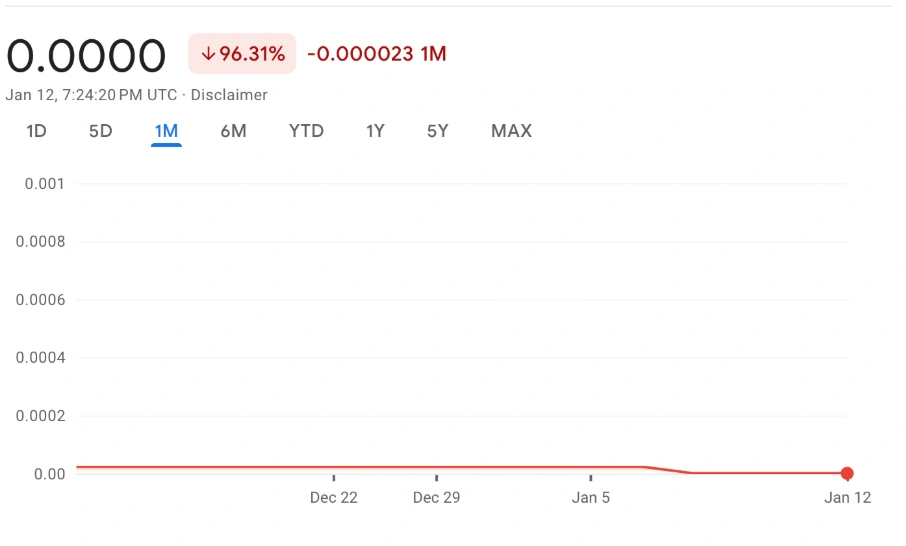 Iranian rial exchange rates chart showing government, preferential, and open-market values. (Source: ebc.com)
Analysts note multiple official exchange rates in Iran: the government rate is around 42,000 rials per USD, while preferential rates for essential imports stand near 285,000 rials per USD. Meanwhile, the open-market or street rate reflects the real purchasing power at over 1.4 million rials per USD. The disparity underscores the strain on Iran’s financial system and the disconnect between official policies and market realities.
Economists warn that unless structural reforms occur, the rial’s value may continue to deteriorate, potentially forcing a redenomination by removing zeros from the currency. However, experts caution that redenomination alone will not solve the underlying economic problems.
🇮🇷 IRAN’S MONEY JUST HIT 0 AGAINST THE EURO
The Iranian Rial is now literally worth 0.00 when you try to exchange it for euros.
Not 1 cent, not half a penny. Just 0. Nothing.
It is a clear indication that shows the end of a regime where the fall of its currency reflects its… https://t.co/L4AuUO5PDD pic.twitter.com/EfLHdSg6eu
— Mario Nawfal (@MarioNawfal) January 12, 2026
Inflation and Economic Pressure Drive Crisis
Iran faces hyperinflation, officially reported at 42.5% in December 2025, while the economy contracted by 1.7% last year. Rising inflation has eroded real wages, leaving many households struggling to cover basic needs.
The rial’s collapse is driven by a combination of factors:
- International sanctions limit access to foreign currency and restrict imports.
- Policy changes requiring importers to buy foreign currency at market rates are adding to demand pressures.
- Political unrest raises uncertainty, which increases the risk premium on the currency.
- Long-term mismanagement and economic isolation, leading to declining public trust in the rial.
“The rial is not just depreciating; it is becoming unusable for ordinary transactions in international markets,” said a Tehran-based economist. “People are losing faith in their savings and seeking alternatives that can protect them from inflation.”
Protests Escalate Across Iran
The currency crisis has sparked widespread protests across all 31 provinces. Demonstrations began on December 28, 2025, initially led by traders and business owners reacting to soaring prices and currency depreciation. Over the past two weeks, protests have intensified, spreading to urban centres and smaller towns alike.
Authorities report more than 600 protests, resulting in at least 646 deaths and over 10,700 detentions nationwide. Protesters demand government action to stabilise the currency, curb inflation, and improve economic governance.
Analysts note that the protests are not purely about money; they also reflect broader frustrations with governance and economic inequality, which have intensified under sanctions and mismanagement.
Impact on Daily Life
The rapid depreciation of the rial has dramatically increased the cost of everyday goods. Many Iranians report paying several times more than official prices for imported products, fuel, and essential items. Citizens are increasingly converting their salaries and savings into dollars, gold, or durable goods to preserve wealth, further weakening the rial’s domestic value.
Small businesses, especially importers, face a double challenge: sourcing foreign currency at inflated rates while maintaining prices competitive enough to retain customers. The economic pressure has forced many to scale down operations, lay off staff, or temporarily close.
Cryptocurrency as a Safe Haven
The collapse of the rial has led to growing interest in cryptocurrencies, particularly Bitcoin. While Iranian authorities do not officially endorse digital currencies, many citizens view them as an alternative store of value outside the traditional banking system.
 Bitcoin gains attention as Iranians seek alternatives to the devalued rial. (Source: coingeek)
Experts note that Bitcoin and other decentralised assets often gain popularity during fiat currency crises because they are not tied to domestic economic policies and can serve as a hedge against inflation.
However, analysts caution that cryptocurrency carries risks. Volatility, regulatory uncertainty, and potential legal restrictions mean that Bitcoin is not a perfect solution. Still, anecdotal reports suggest that some Iranians are actively converting part of their savings into crypto to mitigate the losses from rial depreciation.
International Implications
Iran’s currency crisis has implications beyond its borders. Traders in neighbouring countries monitor the rial closely, as its rapid depreciation affects regional trade and cross-border remittances. Meanwhile, international investors are reassessing risks associated with sanctions and currency exposure in Iran.
Financial experts warn that if the crisis continues unchecked, it could destabilize broader financial and trade networks, affecting commodity pricing and supply chains, particularly for oil, metals, and essential imports.
Economic Outlook and Redenomination Plans
While the Iranian government has considered redenominating the rial by removing zeros, economists warn that this measure alone will not restore confidence. True recovery requires structural reforms, improved access to foreign currency, and long-term political and economic stability.
Until then, Iranians are likely to continue seeking alternative stores of value, including foreign currency and cryptocurrencies, to hedge against the ongoing financial crisis.
Also Read: Iranian Rial Collapse and Fatality Numbers Undermine Governance and Stability in Iran
Final Thoughts
Iran’s currency crisis highlights the vulnerabilities of economies facing prolonged sanctions, high inflation, and limited access to international financial systems. The rial’s near-collapse is affecting everyday life, eroding public trust in fiat money, and driving interest in alternative currencies such as Bitcoin.
Without decisive policy reforms and improved governance, the financial hardship and social unrest are expected to continue, leaving the rial at the centre of Iran’s most pressing economic and social challenges.