The Iranian government closed its national airspace to all commercial flights early on Thursday morning. The move follows weeks of internal civil unrest and mounting pressure from Western nations. Authorities issued a Notice to Air Missions (NOTAM) to all aviation operators. This notice restricted flight movements across the Tehran Flight Information Region.
Only international civil arrivals and departures with prior official permission may currently use the corridors. Flight tracking data from FlightRadar24 showed aircraft rapidly vacating Iranian skies following the announcement. The closure initially lasted for a period of two hours. However, the Civil Aviation Authority reserved the right to extend these restrictions indefinitely.
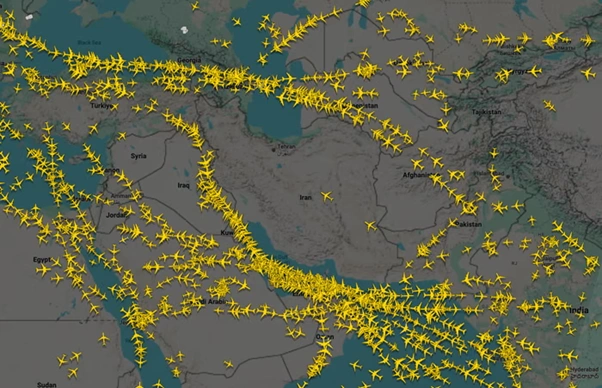
Flights avoiding Iran as the airspace above the country was closed
Impact on Global Aviation Networks
International carriers immediately altered their flight paths to avoid the region. Air India announced that its flights would use alternative routes to ensure passenger safety. These changes will lead to significant delays for long-haul services. The airline also cancelled certain flights where rerouting proved impossible.
IndiGo also confirmed that the airspace closure impacted several of its international operations. The company encouraged passengers to visit its website for rebooking options. A flight from Russia’s Aeroflot bound for Tehran returned to Moscow mid-journey. Lufthansa and its subsidiary ITA Airways suspended night flights to nearby regional hubs as well.
- Air India rerouted all overflying services to southern corridors.
- IndiGo reported disruptions to scheduled international departures.
- Lufthansa bypassed both Iranian and Iraqi airspace for safety.
- Turkish Airlines cancelled dozens of flights to major Iranian cities.
Foreign Minister Rejects Execution Claims
Iranian Foreign Minister Abbas Araghchi addressed the international community via an American broadcaster. He explicitly denied reports regarding the planned execution of detained protesters. Araghchi stated that such hangings are “out of the question” at this time. He told Fox News, “Hanging is out of the question.”
The Foreign Minister also claimed the government maintains full control over the domestic situation. He described recent events as a “terrorist operation” rather than a civilian uprising. Araghchi stated, “I can tell you, I’m confident that there is no plan for hanging.” These comments seek to de-escalate tensions with Western powers.
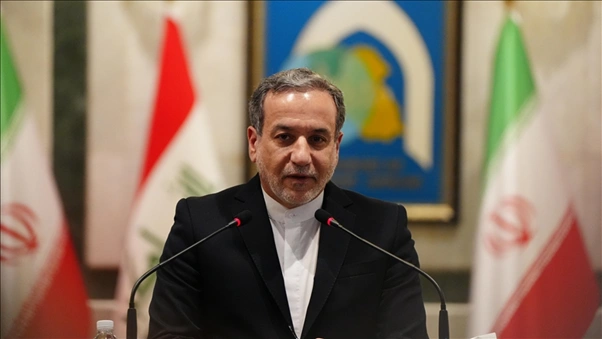
Iranian Foreign Minister Abbas Araghchi
Rising Internal Unrest and Casualty Reports
Rights groups report a high death toll during the recent nationwide demonstrations. The Norway-based Iran Human Rights (IHR) NGO estimates that state forces killed at least 3,428 people. Activists also claim that authorities have arrested more than 10,000 individuals since December. The protests began over economic grievances but transitioned into political demands.
The Iranian judiciary chief recently signalled his intention for fast trials and potential executions. Gholamhossein Mohseni-Ejei emphasised the need for swift action against those in detention. These remarks directly contradict the assurances provided by the Foreign Minister. Human rights organisations remain concerned about the fate of several high-profile detainees.
- Activists estimate 3,428 protesters have died since late 2025.
- Security forces have detained over 10,000 citizens.
- Internet blackouts continue to restrict the flow of information.
- The government attributes the violence to foreign-linked elements.
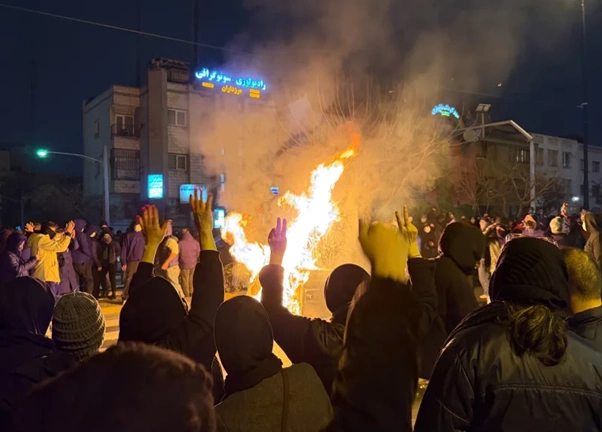
Iranians attend an anti-government protest in Tehran, Iran
International Diplomatic and Military Responses
US President Donald Trump issued a statement regarding the situation from the White House. He claimed that the killing of protesters in Iran has stopped. Trump said, “We’ve been told that the killing in Iran is stopping, and it’s stopped and stopping, and there’s no plan for executions or an execution.” He cited information from high-level sources for this assessment.
However, the United States maintained a posture of military readiness in the Middle East. Reports indicated the relocation of certain personnel from regional airbases. Trump warned that Washington would watch and see what the process becomes. He also cancelled all scheduled meetings with Iranian officials until the violence ceases completely.
Despite estimated up to 20,000 revolutionaries murdered by Khamenei’s regime during the recent uprising, and the ever threat of execution.
Talk of a million Iranians on the streets of Tehran tonight 🇮🇷
pic.twitter.com/SlkAr89T75— Tommy Robinson 🇬🇧 (@TRobinsonNewEra) January 13, 2026
G7 Nations Warn of Further Sanctions
Foreign ministers from the G7 nations condemned the use of violence against civilians. They urged the Iranian authorities to show restraint and respect human rights. The group threatened to impose additional restrictive measures if the crackdown continues. These sanctions would target individuals and entities involved in the suppression of protests.
The United Kingdom temporarily closed its embassy in Tehran due to safety concerns. Other European nations, including Spain and Italy, advised their citizens to leave the country. These diplomatic withdrawals reflect the increasing volatility of the regional environment. Global leaders continue to demand transparency regarding the treatment of political prisoners.
Also Read: FBI Raids Washington Post Reporter’s Home in Unprecedented Show of Force
Economic Factors Driving the Crisis
The current wave of unrest originated from a sharp decline in the national currency. High inflation rates have reduced the purchasing power of many Iranian households. The government faces challenges in providing basic services and economic stability. These financial pressures have fuelled widespread public dissatisfaction across several provinces.
Iran remains under a series of international sanctions that limit its oil exports. The loss of revenue has hampered the state’s ability to address domestic grievances. Protesters in cities like Mashhad and Tabriz have focused their slogans on economic mismanagement. The regime continues to blame external actors for these systemic financial difficulties.
Flight Safety and Regional Security Risks
Aviation experts warned of the risks associated with heightened air defence activity. The possibility of misidentification of civilian aircraft remains a primary concern for safety regulators. Safe Airspace noted that the situation may signal further military or security actions. Carriers are prioritising caution to avoid any repeat of previous aviation tragedies.
The United States Federal Aviation Administration maintains a total ban on US flights over Iran. Other countries have issued similar directives to their national air operators. Regional tensions between Iran and its neighbours have further complicated the security landscape. Many airlines now opt for routes through Saudi Arabia and Egypt instead.
- The FAA prohibits all US commercial flights from entering Iranian airspace.
- Germany issued a directive cautioning its airlines against the Tehran region.
- Aviation monitors cite the risk of missile launches as a factor.
- Regional hubs in Qatar and the UAE face secondary logistics impacts.
Conclusion of Current Developments
The closure of the Iranian airspace marks a significant escalation in the ongoing crisis. Conflicting reports between the judiciary and the foreign ministry create uncertainty for the international community. Protesters continue to defy security measures despite the threat of detention. The world remains focused on Tehran as the situation evolves daily.