The international energy market is experiencing a historic shock, with the International Energy Agency threatening to disclose a historic oil supply chain shock that is attributed to the increasing conflict in the Middle East.
The crisis escalated when military attacks by the United States, Israel and Iran damaged oil infrastructure and shipping lines in the region in late February 2026. The recent IEA oil report, as expounded, could decrease the world supply by 8 million barrels per day in March, which accounts for almost 8 per cent of global oil demand.
The unrest has thrown oil markets into a state of turmoil and created fears of long-term volatility. Analysts believe that the event will transform the world energy flows and market stability in the months.
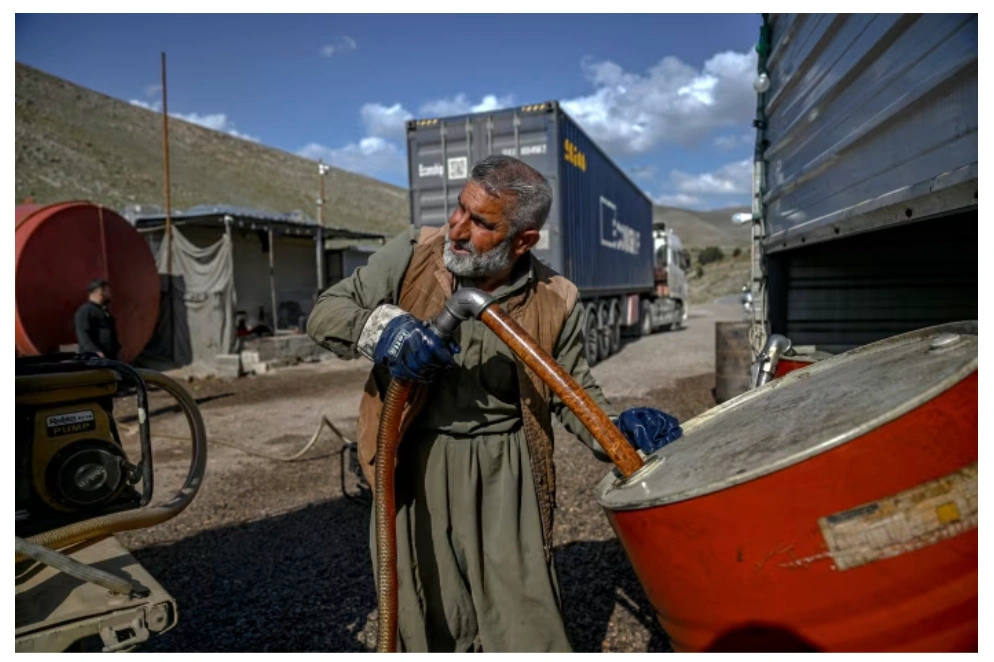 Global oil markets face historic disruption after the Middle East conflict escalates. [Courtesy: WSJ]
Why Oil Supply Chain Disruption Is Shaking Global Markets?
The disruption of the oil supply chain is mostly linked to the approach of closing down to an almost zero Strait of Hormuz, which is among the most significant energy transit channels in the world.
The waterway usually transports approximately 20 million barrels a day, which is approximately 25 per cent of the seaborne oil trade worldwide. Tanker movement has reduced drastically since the conflict intensified on 28 February 2026, and numerous shipments have already been halted.
The level of exports has dropped to a small fraction of the levels before the conflict, resulting in Gulf producers having to reduce output.
According to the IEA, this abrupt decline in shipments is the main cause of the current unstable situation on the oil market and the increase in the geopolitical risk premiums.
IEA Oil Report Explained: Emergency Oil Release Plan
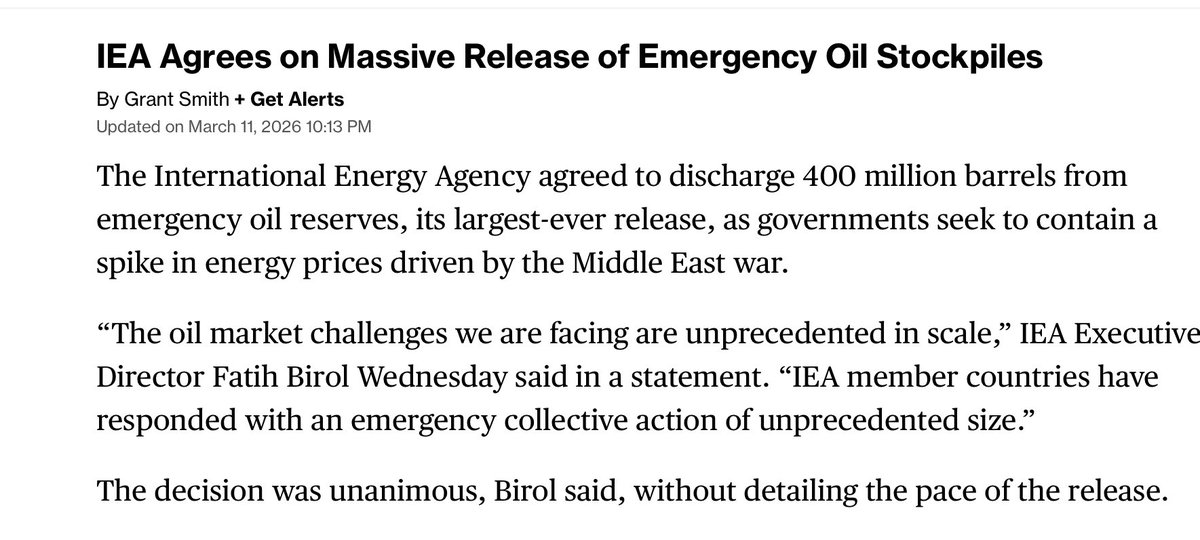
According to the IEA oil report, member countries have sanctioned the greatest volume of emergency stock release in history to stabilise the markets.
Four hundred million barrels of oil will be discharged from the strategic reserves into 32 member states. The action should correct the shortage of supplies and avoid further world energy crises.
The agency indicated that the member states have a total of over 1.2 billion barrels of public reserves and 600 million barrels of industry stocks. This was a coordinated move after an emergency meeting where the governments tried to stabilise the markets, which were shaken by the war.
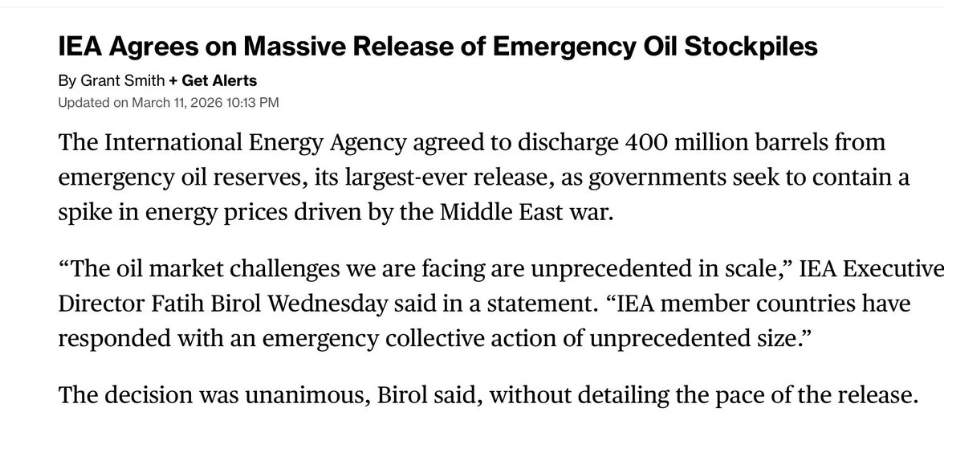 IEA member countries agree to release 400 million barrels from strategic reserves. [Courtesy: X.Com]
Why Oil Prices Are Rising Rapidly Worldwide?
The supply shock was instantly felt in the energy markets and caused a sharp increase in the prices of crude. In the middle of the week, the price of Brent crude briefly shot up to $119.50 per barrel.
Dropped to around $97 per barrel as the governments were ready to take emergency measures. According to the analysts, the high price growth is due to the fear of extended interruptions in supply within the Gulf region.
To the world, any form of instability in the region is of global concern, as the Middle East usually produces one-third of the oil globally. The investors are also concerned that the export may still be hampered by shipping risks and infrastructure attacks.
How The Middle East Conflict Is Reshaping Global Energy Supply
War has made the big oil producers like Saudi Arabia, Iraq, and Kuwait cut or divert exports. Certain deliveries are being avoided using other routes, avoiding the Strait of Hormuz, yet the capacity is still small.
Analysts believe that the Gulf output has been reduced by over 10 million barrels daily, and the Gulf infrastructure assaults have compounded uncertainty in the energy markets.
In the meantime, nations are finding diplomatic resolutions and security strategies to resume sea routes and to stabilise the supply chains.
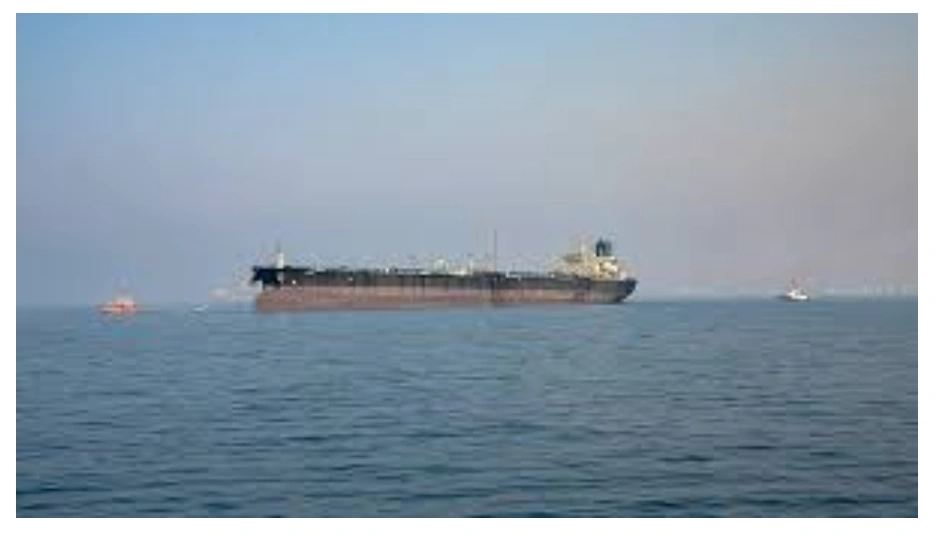 Strait of Hormuz disruptions threaten a quarter of global seaborne oil trade. [Courtesy: Outlook Business]
What Happens Next For Oil Markets And Global Consumers?
The IEA projects that demand for oil will increase by 640,000 barrels per day in 2026 globally, but the crisis could slow down the consumption as a result of high prices and economic unpredictability.
Although this is shocking, the agency still projects a 1.1 million barrels per day increase in supply this year, with the eruption of geopolitical tensions.
The restoration of oil flows will, however, largely require the length of time that the conflict continues and whether the shipping routes open safely.
To consumers and industries, the current disruption in the supply chain of oil may be translated into a rise in fuel prices, inflationary pressures, and volatility in the international markets.
Also Read: Market Update: How Middle East Conflict Is Affecting ASX & US Stocks
FAQs
Q1. What caused the current oil supply chain disruption?
A1: The disruption began after the Middle East conflict escalated on 28 February 2026, affecting shipping routes and energy infrastructure.
Q2. Why is the Strait of Hormuz important for oil markets?
A2: It carries roughly 20 million barrels of oil daily, about 25% of global seaborne oil trade.
Q3. What action has the IEA taken to stabilise the market?
A3: IEA member nations agreed to release 400 million barrels of oil from strategic reserves.
Q4. Will oil prices remain high?
A4: Prices may stay volatile until shipping routes reopen and regional tensions ease.
Disclaimer:
This article is for informational and news reporting purposes only. It does not constitute financial, investment, or trading advice. Readers should conduct their own research or consult a qualified financial adviser before making any investment decisions. Market conditions and geopolitical developments may change rapidly, and the publication accepts no liability for any losses arising from the use of this information.
Sources:
- International Energy Agency – Oil Market Report
- Reuters – Middle East war oil disruption report
- ICIS Energy Market Analysis