Gold has remained steady at record levels as investors are still weighing the global political and financial market risks, which are on the rise. After gaining 2% in the previous session, the gold was at the price of US$4,590 an ounce, reflecting the strong demand for a haven.
The market atmosphere changed when the US Federal Reserve took back the pressure on them, which made the investors go back to the risk assets market and, thus, increased the demand for the so-called “defensive” assets.
Central banks, along with the retail investors, helped to support the prices in such a way and reinforced the belief in the long-term demand for gold. All these events have pointed to the change in gold investment trends as investors try to get around the policy shocks.
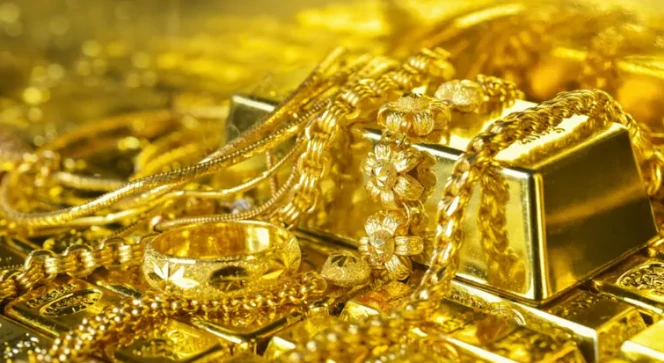
Gold holds near record amid rising global risks. [Moneycontrol]
Could Political Risk Change Gold Price Today
Political tensions have indeed become the most important factor determining not only the short-term market movements but also the overall investor expectations. The legal and political scrutiny of the Federal Reserve leadership has denied the companies’ financial markets and, consequently, the monetary system has become less and less reliable.
The softer US dollar was one of the reasons bullion’s popularity was increasing, hence the gold price went up today as the speculators backed the currency weakness with gold. The market was so concerned about the direction of the interest rates that it further boosted the demand for the precious metals.
The traders are now adding political risk to the daily price changes of gold, thereby raising the volatility across classes. Gold still is the most favoured hedge during times of uncertainty among institutions.
Can Global Tensions Push Prices Higher
Geopolitical risks and uncertainty have had a major influence on the strategy of investors and, hence, the flow of capital towards safe assets. Apart from the existing market cautions, the rise of conflicts has also been a contributing factor.
The tendency of investors to choose crisis-resilient assets has been on the rise. Speculative activity and the need for hedges that are not directly linked to stocks have been the driving force behind silver’s strong price gain.
Precious metals usually gain from fading global confidence and the strengthening of defensive strategies. Thus, the scenario is the same as the one that led to the gold investment trend being continually supported by strong momentum.
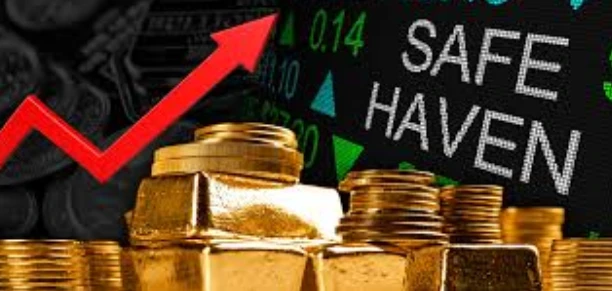
Global instability keeps demand strong for traditional safe-haven assets. [Scottsdale Bullion & Coin]
Safe-Haven Demand Is Supporting Current Levels
The power of gold is an indication of its age-old function of being a repository of value through the thick and thin of economic uncertainty. The central banks are still there as the consistency of buying, becoming regular in their diversification of reserves and currency exposures by selling their currencies.
This constant institutional demand has the effect of limiting the risks on the downside during the market pullbacks. Furthermore, a dollar that is weaker also means that gold is more affordable for those who do not live in the US and thus adds to the support.
The combination of these forces is what has allowed bullion to stay at such high levels even when there is occasional profit-taking by short-term traders. Gold is still a very important component in the long-term portfolio of assets that is regarded as being of a strategic nature.
What Could Shape The Gold Market Forecast 2026
Currently, the market is looking at inflation statistics, job market and policy signals for the direction of prices. If the central banks were to ease the monetary policy to some extent, gold’s attractiveness would be enhanced by the falling returns on fixed-income assets.
On the other hand, solid economic data could be a factor to consider in losing ground if the risk appetite is improved. Still, the persistent political uncertainty is a major factor in the uncertainty of the policy outlooks. All of these elements will influence the gold market forecast 2026 as the investors weigh up the long-term positioning. If macro risks persist, strategic allocations to commodities may increase.
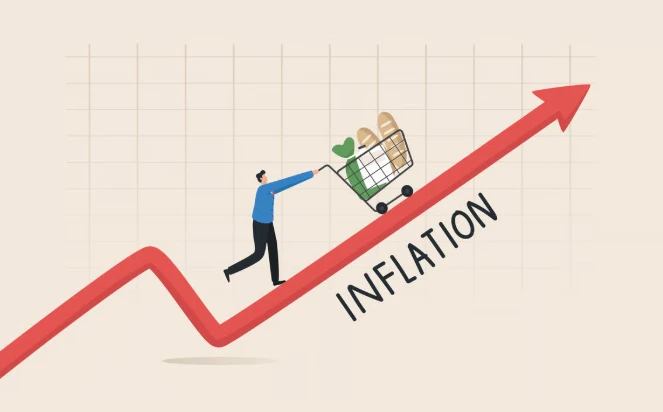
Policy expectations and inflation data will guide precious metals through 2026. [Politico]
Analysts Expect Volatility With Upside Potential
Price fluctuations are expected by the financial institutions that are forecasting the future events of the gold market, as they consider that speculative trading will still be among the active market participants.
One of the most positive predictions regarding the gold market prices is that they could even reach US$5,000 per ounce if the same factors continue to drive the market. The analysts identify geopolitical risks, policy uncertainty and central banks’ purchases as supportive of the gold price.
However, the situation may change quickly if market sentiment suddenly shifts, and in that case, rapid price increases may be followed by price corrections. Investors are inclined to be cautious, but at the same time, they see the structural support for gold. The delicate balance between risk and opportunity is driving current expectations in the precious metals markets.
Also Read: Far East Gold Extends Bonanza Gold Grades at Sua Prospect with Fifth Consecutive High-Grade Hit
FAQs
Q1: Why are gold prices staying near record highs?
A1: Prices remain high due to political uncertainty, central bank buying and strong safe-haven demand.
Q2: How does politics affect the gold price today?
A2: Political pressure on monetary institutions weakens confidence, pushing investors toward defensive assets like gold.
Q3: What is the gold market forecast for 2026 based on?
A3: Forecasts depend on inflation trends, interest rates, geopolitical risks and institutional demand.
Q4: Are central banks still buying gold?
A4: Yes, central banks continue to increase reserves to reduce reliance on fiat currencies.