
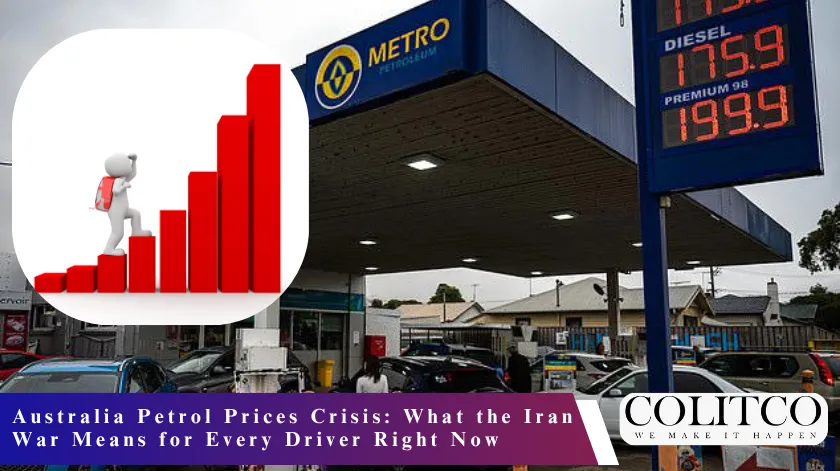
What Happened: Petrol Prices Surged 50 Cents in Eight Weeks
Australia is facing its most serious fuel price crisis since Russia invaded Ukraine in 2022. Iran’s naval blockade of the Strait of Hormuz has sent petrol prices skyrocketing. Governments are scrambling to prevent panic buying, price gouging and fuel shortages. The crisis began when the United States and Israel launched strikes on Iran on 28 February 2026.
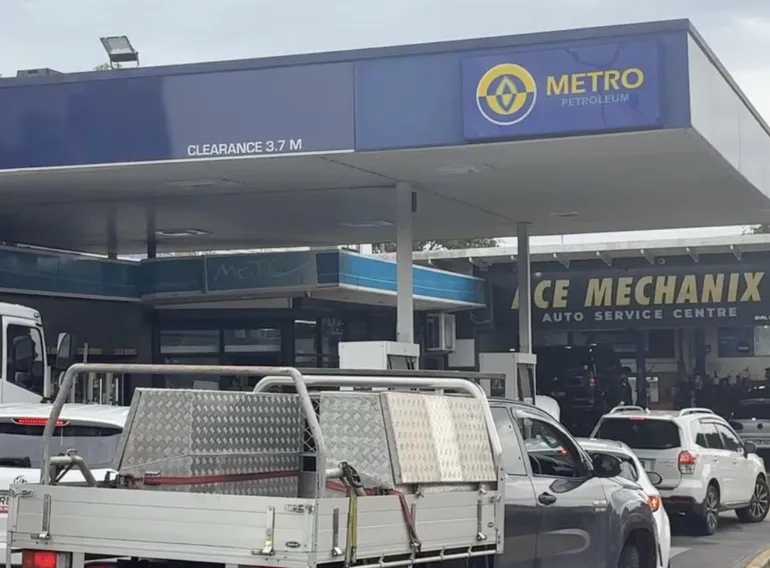
Petrol and diesel prices have jumped sharply within weeks, placing pressure on households. [News.com]
The ACCC confirmed petrol and diesel prices rose by nearly 50 cents per litre on average between 20 February and 11 March. In Sydney, unleaded petrol climbed from 157.6 cents to 226.1 cents per litre. Diesel surged from 166.4 cents to 268.3 cents.
In Sydney’s eastern suburbs, some Shell stations hit $2.49 per litre for premium unleaded. Regional Australia faces a different problem entirely. It cannot get fuel at any price.
Why This Matters to Every Australian Right Now
This is not a story about oil markets and barrel prices. It is a story about household budgets, farming operations and regional supply chains under sudden and severe pressure. Every cent added at the pump flows directly into grocery bills, freight costs and airfares.
Rising fuel costs are flowing into food prices, transport, and the overall cost of living. [LinkedIn]
Westpac warned that a one-month disruption to Strait of Hormuz supply would lift Australia’s CPI by around one percentage point. GDP growth would be 0.2 percentage points lower. The RBA noted in its February 2026 Statement on Monetary Policy that headline inflation was already being pushed higher by fuel and travel costs.
The hit to farmers is particularly severe. The crisis has struck right as growers are securing fuel and fertilizer for the autumn planting season. NSW Farmers Association grains committee chairman Justin Everitt said farming seasons do not wait for bureaucrats or supply chains to catch up.
Who Is Involved: Government, the Watchdog and the Fuel Giants
Prime Minister Anthony Albanese convened National Cabinet on 19 March 2026 to address the crisis. Treasurer Jim Chalmers wrote formally to the ACCC demanding urgent action on pricing conduct. Energy Minister Chris Bowen began negotiating fuel release agreements directly with industry. ACCC Chair Gina Cass-Gottlieb launched a formal price gouging investigation targeting Ampol, BP Australia, Mobil Oil and Viva Energy.
The ACCC has launched an investigation into potential fuel price gouging nationwide. [ABC]
The ACCC also wrote to 7-Eleven, Chevron, United Petroleum and EG Australia seeking urgent pricing information. ACCC Commissioner Anna Brakey said the data underscores serious concern about bowser prices moving well ahead of international wholesale costs. The regulator has now received more than 500 reports of possible price gouging from Australians since the start of the war.
NRMA CEO Peter Khoury told AAP that while some stations were massively overcharging, average prices had also risen due to genuine wholesale cost pressures. He said Australians are seeing the highest petrol prices ever recorded.
Where It Is Hitting Hardest: Cities Up, Regions Running Dry
Capital cities experienced the fastest price increases. Regional and rural Australia is facing something worse. United Petroleum suspended all customer allocations while assessing its supply position. Tamworth-based Transwest Fuels declared zero petrol supply at Newcastle and Brisbane terminals. One Queensland distributor reported receiving just 10% of its usual daily allocation from Brisbane.
On a global scale, Australia sits in the middle of the pack. According to GlobalPetrolPrices.com, Australia ranks 61st out of 100 countries for petrol price per litre. The average price sits at $2.07 in March 2026. It remains cheaper than most OECD nations, though the United States pays dramatically less at US$1.06 per litre.
Associate Professor Mark Humphrey-Jenner from UNSW said Australia imports almost 90% of its daily fuel consumption. He said the geography of fuel supply means disruptions take longer to absorb here than almost anywhere else in the developed world.
When It Happened: Key Moments in a Fast-Moving Crisis
The war began on 28 February 2026. Petrol prices jumped at the bowser within days. Crude oil spiked to near US$120 per barrel by 10 March. Regional stations began running dry by mid-March. On 17 March, Treasurer Chalmers wrote to the ACCC. On 19 March, the ACCC launched its formal investigation, and PM Albanese called the National Cabinet. The government announced a national fuel supply task force the same day.
Dr. Lurion De Mello from Macquarie Business School said the Strait of Hormuz is not just any flashpoint. He noted it handles roughly one-fifth of global seaborne oil and LNG supply. Even short interruptions send shockwaves through global energy markets.
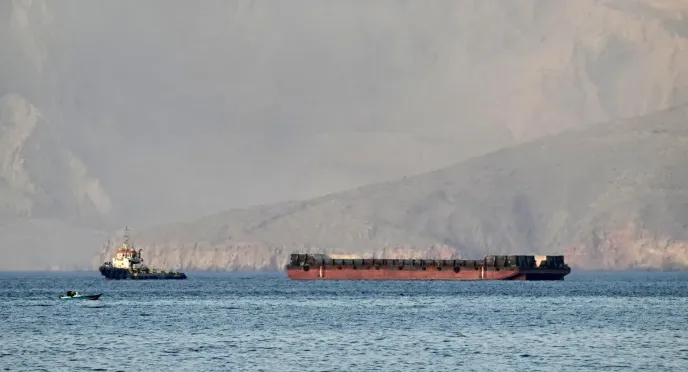
The Strait of Hormuz disruption has triggered global energy market instability. [Forbes]
How It Will Play Out: Three Scenarios for Australian Drivers
The direction of petrol prices from here depends on one thing. That is how long the Strait of Hormuz stays closed. Economists have modelled three scenarios.
A short disruption of up to one month could push Brent crude to US$113 per barrel. Petrol could rise a further 25 to 50 cents per litre. CPI rises by roughly one percentage point.
A medium disruption of one to three months could push oil to US$185 per barrel. Petrol could increase by up to $1 per litre from pre-war levels. GDP could fall 0.5 percentage points lower by the end of 2026.
A prolonged conflict beyond three months raises the spectre of rationing. Former ACCC chairman Professor Allan Fels warned that six weeks of conflict would mean real pain. Beyond that, price controls and informal rationing become likely government responses.
Australia’s fuel reserve position makes this more urgent. The country holds just 36 days of petrol, 34 days of diesel and 32 days of jet fuel. The IEA standard requires 90 days. Australia has been non-compliant since 2012. PM Albanese flagged appointing a national fuel tsar to manage supply distribution across the country.
Also Read: Alcoa 2025 Results: Profit Surge, Debt Cut, Strategy Reset
What Drivers Can Do Right Now
Use the NRMA app or FuelCheck to find the cheapest servo before you drive. Avoid panic buying as it worsens regional shortages. Fill up on Tuesday or Wednesday mornings when prices are typically at their lowest. Reduce non-essential driving where possible. Report suspected price gouging directly to the ACCC at accc.gov.au.
FAQS
Q1. Why have petrol prices risen so sharply in Australia?
A1. Prices have surged due to the Iran conflict disrupting the Strait of Hormuz, a key global oil supply route. This has pushed up crude oil prices worldwide, which directly impacts fuel costs in Australia.
Q2. How much have petrol and diesel prices increased?
A2. Petrol prices have increased by around 50 cents per litre, while diesel has risen by approximately 67 cents per litre over an eight-week period.
Q3. Is price gouging happening at fuel stations?
A3. The Australian Competition and Consumer Commission (ACCC) is investigating potential price gouging, with over 500 complaints reported. Some increases may reflect genuine wholesale cost rises, but others are under scrutiny.
Q4. Which areas are most affected by the fuel crisis?
A4. Major cities are experiencing rapid price increases, while regional and rural areas are facing fuel shortages, with some locations struggling to access supply at any price.
Q5. What can drivers do to manage rising fuel costs?
A5. Drivers can use apps like FuelCheck or NRMA to compare prices, avoid panic buying, refuel during cheaper periods (typically midweek mornings), and reduce unnecessary travel to limit expenses.
Dislaimer
This article is for informational and educational purposes only. It does not constitute financial, investment or legal advice. All figures and data are sourced from publicly available information as of the date of publication. Colitco does not hold any position in the companies or organisations mentioned. Readers should conduct their own research and seek independent financial advice before making any investment decisions. Past performance is not indicative of future results.
Sources
https://www.sbs.com.au/news/article/how-do-australias-fuel-prices-stack-up-globally/nph9r350t
Last modified: March 21, 2026