
Why an ASX Share Market Correction in 2026 Looks Increasingly Likely
Markets are jittery. The ASX has hit a rough patch in March 2026. Global uncertainty from the Middle East conflict, Trump tariffs and slowing economic data is making investors question whether a correction is coming. Some have already started moving to cash. Others are paralysed.
The S&P 500 has delivered double-digit returns in three straight years. That has historically preceded weaker returns in the fourth year. A down year is particularly plausible in 2026 due to President Trump’s tariffs.
His trade policies have already coincided with a weakening jobs market, and Federal Reserve research indicates tariffs have historically been a headwind to economic growth.
The S&P 500 cyclically adjusted price to earnings ratio is higher than 39. That is the highest it has been in 25 years. Markets are expensive by almost every historical measure. The question is not whether a correction is possible. The question is what a rational investor should do right now.
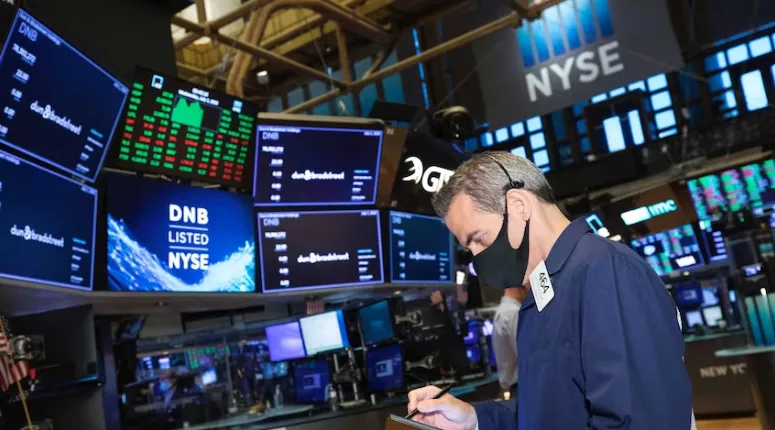
The S&P 500 cyclically adjusted price to earnings ratio sits above 39, its highest level in 25 years. ASX investors are watching closely. (Source: ABC)
Why Market Fear Creates the Biggest Investing Opportunities
Most investors get markets completely backwards. They feel confident when prices are high and terrified when prices fall. That emotional cycle is precisely what destroys long-term wealth.
Buffett once explained his thinking through a simple hamburger analogy. When hamburgers go down in price, we sing the Hallelujah Chorus in the Buffett household. When hamburgers go up in price, we weep. For most people, it is the same with everything in life; they will be buying except for stocks. When stocks go down, and you can get more for your money, people do not like them anymore.

Warren Buffett, who compounded Berkshire Hathaway at nearly 20% per annum for six decades, stepped down as CEO at the end of 2025. His advice on corrections remains timeless. (Source: Reuters)
The investors who build generational wealth are not the ones who avoid every correction. They are the ones who stayed rational when everyone else panicked. Even if we face a nasty downturn in 2026, continuing to invest consistently can help maximise returns over time. Over the long term, the stock market news will be good. That is not optimism. It is history.
What Warren Buffett Teaches About Surviving Market Corrections
Warren Buffett is 94 years old. He retired as CEO of Berkshire Hathaway at the end of 2025. In six decades running Berkshire, he grew the company at a compound annual growth rate of nearly 20%. That is almost twice the annual total return rate of the S&P 500, which, when compounded over 60 years, produces eye-popping differences in wealth outcomes.

Berkshire Hathaway raised its cash position from $100 billion to nearly $400 billion before Buffett’s retirement. The message to investors was clear. (Source: CNBC)
Before retirement, Buffett delivered one final signal to the market that investors would be wise to understand. Berkshire Hathaway has been raising cash since the bull market began in 2023, bringing its pile from $100 billion to close to $400 billion. That is not a minor portfolio adjustment. It is a loud statement about what he sees in current valuations.
Buffett has been a net stock seller for the last 12 consecutive quarters. But he has not sold anywhere close to everything. Berkshire still holds $267.2 billion of stock. He is not running from the market. He is being selective about where he deploys capital. That distinction matters enormously for ASX investors trying to make sense of his actions.
Key stakeholders watching this story include:
- ASX retail investors worried about superannuation balances
- Self-managed super fund trustees managing their own retirement capital
- Berkshire Hathaway under new CEO Greg Abel
- The Federal Reserve is navigating tariff-driven inflation pressures
- The RBA manages Australian rate settings against global volatility
Best ASX Shares to Buy During a Market Correction in 2026
Corrections create opportunity. That is not a slogan. It is arithmetic. When a quality business falls 20% in price, its future returns for new buyers increase by 25%. The business has not changed. Only the price has.
There are numerous ASX shares now trading at much lower prices worth considering. Some businesses may see their earnings impacted in the next 12 months, while others may have resilient demand. In both situations, there are major opportunities for investors to take advantage of because share prices have declined too far.
The sectors offering the most compelling value on the ASX right now include quality dividend payers in telecommunications, healthcare and consumer staples. These businesses have predictable revenue, pricing power and franked dividends that continue paying regardless of short-term market sentiment. Telstra, Wesfarmers and CSL are names that Buffett-style value hunters tend to circle during periods of volatility.
Should You Sell or Hold During an ASX Market Dip?
Buffett has been asked about market timing more than almost any other question in his career. His answer has never changed.
A simple rule dictates his buying. Be fearful when others are greedy and be greedy when others are fearful. He has openly admitted he cannot predict the short-term movements of the stock market. He has not the faintest idea as to whether stocks will be higher or lower a month or a year from now.
Buffett once compared short-term market forecasts to poison. That should settle the debate about whether investors should wait for the perfect entry point. There is no perfect entry point. There is only a disciplined process applied consistently over time.
One Buffett tenet is to stay in the market under pretty much all circumstances. The moment you pull your money out, you cement your losses instead of giving your stocks the chance to rebound. Staying in the market allows your investments to compound over time. Time in the market has beaten timing the market in every decade since records began.
Buffett’s 3-Step Strategy for Investing During Market Volatility
Here is the practical framework. Three steps. No complexity.
Step 1: Do Not Panic Sell
Even if you are convinced the market is about to drop, panic-selling your entire stock portfolio is probably a bad idea. Timing the market is extremely tricky. If you sell today you may miss out on tomorrow’s gains. And even if you sell at the right time you risk waiting too long to buy back in and missing the early stages of a market rebound.
Step 2: Keep Cash Ready to Deploy
If you do not have any cash available, you will miss the chance to buy stocks on the dip if they fall. Even in the case that the market continues to climb this year, it becomes all the more important to have cash ready to scoop up the few opportunities that do land. Berkshire took a position in Alphabet when its average price-to-earnings ratio was 22. Today it is 31. Patience plus cash equals opportunity.
Step 3: Focus on Quality Businesses Not Stock Prices
It is far better to buy a wonderful company at a fair price than a fair company at a wonderful price. Just because the overall market looks overvalued right now does not mean there are not still great businesses that are fairly priced. On the ASX, a correction that drags down high-quality businesses alongside speculative ones creates exactly the kind of mismatch that patient investors profit from.
Omniscience is not necessary. You only need to understand the actions you undertake. Buffett wrote those words in 2013. They have never been more relevant than they are for ASX investors navigating March 2026.
Also Read: SMCI Stock Crash 2026: Super Micro Scandal Sparks Selloff
ASX Share Market Outlook 2026: Correction Risk vs Long-Term Growth
Every ASX correction in history has eventually ended. Every investor who panicked at the bottom regretted it. Every investor who stayed disciplined and deployed capital into quality businesses at lower prices was ultimately rewarded.
In the 20th century, the United States endured two world wars, the Great Depression, a dozen recessions, oil shocks, a flu epidemic and the resignation of a disgraced president. Yet the Dow rose from 66 to 11,497. The lesson is not that markets always go up in a straight line. The lesson is that they always go up over time for investors disciplined enough to stay invested through the volatility.
Warren Buffett spent 60 years proving that. The ASX is giving investors the chance to apply that lesson right now.
FAQS
Q1: What is an ASX share market correction?
A1: An ASX share market correction is typically defined as a decline of 10% or more in major indices like the ASX 200, often driven by economic uncertainty, global events, or investor sentiment shifts.
Q2: Is an ASX share market correction expected in 2026?
A2: While no one can predict markets with certainty, elevated valuations, global tensions, and economic slowdown concerns have increased the likelihood of a potential ASX share market correction in 2026.
Q3: What would Warren Buffett do during a market correction?
A3: Warren Buffett typically advises investors to stay calm, avoid panic selling, and take advantage of lower prices by investing in high-quality businesses for the long term.
Q4: Should I sell my ASX shares during a market downturn?
A4: Selling during a downturn can lock in losses. Long-term investors often benefit more by staying invested and focusing on strong companies rather than reacting to short-term market movements.
Q5: Which ASX shares are good to buy during a correction?
A5: Investors often look at high-quality, resilient companies such as Telstra, Wesfarmers, and CSL Limited, which tend to perform more steadily during volatility.
Disclaimer:
This article is for informational and educational purposes only. It does not constitute financial or investment advice. Always consult a licensed financial adviser before making investment decisions. Past performance is not indicative of future results.
Sources
https://www.fool.com/investing/2026/03/01/warren-buffett-warning-stock-market-do-this-next/
https://www.fool.com/investing/2026/03/01/warren-buffett-warning-stock-market-do-this-next/
https://finance.yahoo.com/news/warren-buffetts-warning-wall-street-233000143.html
https://capital.com/en-int/analysis/this-is-why-buffett-is-sitting-on-a-record-381-billion
https://companiesmarketcap.com/berkshire-hathaway/cash-on-hand/
https://www.fool.com/investing/2025/12/16/warren-buffett-send-clear-warning-2026-invest/
https://www.fool.com/investing/2026/03/01/is-a-stock-market-crash-coming-in-2026-heres-what/
https://www.fool.com/investing/2025/05/12/warren-buffett-348-billion-terrible-news-wall-st/
https://www.fool.com/investing/2026/02/19/investors-history-has-fantastic-news-about-the-fut/
Last modified: March 22, 2026