
Australian shares closed Friday, 27 February, with a familiar tension: most sectors moved higher, but the ones that fell did so loudly. The S&P/ASX 200 added 23 points to finish at 9,198.60, up 0.25% for the day. More tellingly, the index wrapped up its strongest February since 2019, gaining 3.5% for the month and briefly touching an all-time high of 9,202.90.
Seven of eleven ASX sectors finished in the green. Four finished in the red. That split matters. It tells investors that the gains driving Australian shares higher in 2026 do not belong to the whole market, they belong to a specific set of sectors with specific tailwinds. Knowing which side of that line you sit on makes all the difference.
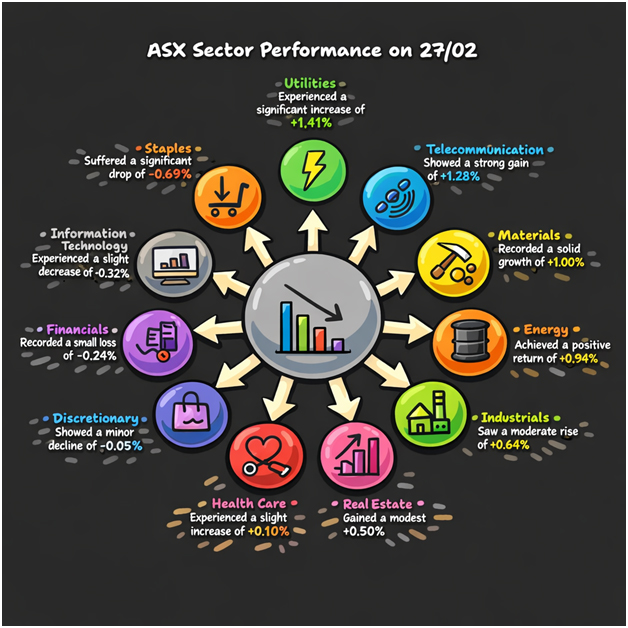
Figure 1: ASX Sector Performance on 27th February, 2026
The Winners: Utilities, Telcos, and Materials Lead the Charge
Utilities claimed the top spot on the day, rising 1.41%. The sector’s outperformance reflects something structural, not just a daily blip. With the RBA having hiked rates earlier in February and inflation data running firmer than expected, defensive income sectors attract fresh capital.
Utilities offer predictable cash flows that do not rely on economic growth, and in an environment where investors still debate whether rate cuts arrive in 2026, that predictability commands a premium.
Telecommunications followed closely, gaining 1.28%. Much like utilities, telcos carry stable subscriber revenue streams insulated from consumer sentiment swings. The sector also benefits from ongoing capital expenditure in 5G infrastructure and broadband network upgrades, spending cycles that support earnings regardless of where the broader economy heads.
Materials climbed 1.00%, capping a remarkable run. The sector gained 8.7% across February alone and finished eight consecutive months of gains at record highs. BHP drove much of the enthusiasm, resetting its all-time high every session during the final week of February and closing at $58.41, nearly 29% higher this year.
Gold stocks contributed meaningfully too, rising about 2% on Friday. Gold hovered near A$7,286 an ounce, and miners including Northern Star, Evolution Mining, and Newmont all pushed higher.
Energy added 0.94% on the day, extending a run supported by stable commodity demand. Industrials and Real Estate rounded out the winners, gaining 0.64% and 0.50% respectively. Healthcare eked out a modest 0.10% gain, a sign the sector continues to recover after a rough 2025 when it shed more than 20%.
The Losers: Staples Takes a Battering, Financials Feel the Weight of Fraud Scrutiny
Consumer staples suffered the session’s sharpest fall by a considerable margin, dropping 2.69%. The cause was immediate and specific: Coles Group released its half-year results and the market rejected them, hard. The stock tumbled 7.4% to close at $20.56, dragging the entire staples sector with it.
The result itself was not catastrophic on paper. Coles reported group sales revenue of $23.6 billion, up 2.5%, and adjusted net profit of $676 million, up 12.5%. Supermarkets EBIT margin hit 5.8%, which actually beat Woolworths’ 5.5%.
But markets do not trade on absolute numbers, they trade on relative expectations. After Woolworths delivered a blockbuster result earlier in the week, with Australian food sales climbing 5.8% in the first seven weeks of the second half and its shares jumping 11%, investors held Coles to an impossibly high standard.
As IG market analyst Tony Sycamore described it, this is the classic dynamic of Australia’s supermarket duopoly, one surges, the other counters, and the finish line keeps moving.
The Coles result also carried real vulnerabilities beyond the Woolworths comparison. The liquor division softened, with revenue slipping 3.2%. Statutory net profit fell 11.3% to $511 million after the company absorbed $235 million in costs related to underpaid employees, following the Fair Work Ombudsman’s Federal Court judgement from September 2025.
The staples sector’s 2.69% drop also carries a broader investment signal. Consumer discretionary shares fell 6.6% across February as a whole, reinforcing that cost-of-living pressure and the February rate hike continue to squeeze households. When discretionary spending shrinks and even staples giants disappoint, the consumer side of Australian shares faces real near-term headwinds.
Financials eased 0.24% on Friday despite sitting 8.5% higher for February and trading at their highest level on record. The modest daily retreat likely reflects more than profit-taking.
The Australian financial sector stepped into the weekend under a cloud of scrutiny, with Commonwealth Bank, NAB, Westpac, and ANZ all drawn into a growing loan fraud investigation involving suspected billions in fraudulent home loan approvals. The probe did not trigger a market collapse, but it introduced enough uncertainty to keep buyers cautious about adding to positions in the sector heading into the weekend.
Also Read: When the Vaults Crack from Within: What the Loan Fraud Probe Means for Australia’s Big Four Banks
Information technology fell 0.32%. The sector tracks Wall Street closely, and US tech stocks endured a rough Friday, with the Nasdaq losing 0.92% as sticky inflation data from the US producer price index rattled investor confidence in rate-cut timelines.
Block’s 28% Surge: A Window into Where the Market Actually Wants to Go
Amid the day’s noise, one share screamed louder than any sector index. Block Inc, the ASX-listed payments company, surged 27.83% to $94.15, the single biggest move of the session. Block announced plans to cut almost half its global workforce as part of an AI-driven restructuring, eliminating nearly 6,000 roles. Markets rewarded the move aggressively, betting that a leaner, AI-powered Block generates better margins.
The Block surge offers a sharp insight into investor psychology right now across Australian shares. The market does not reward scale, it rewards efficiency. Companies that demonstrate AI-driven cost discipline, even at the cost of large-scale job cuts, attract premium valuations. Technology stocks that align themselves with that narrative, whether through workforce reduction or AI tool deployment, draw disproportionate capital. This theme will shape Australian shares through the rest of 2026.
February’s Bigger Picture: What the Month Actually Revealed
Stepping back from Friday’s session, February delivered a strong but uneven result for Australian shares. The ASX 200 gained 3.5% for the month, its best February performance since 2019. But that headline masks a deeply divided market beneath the surface.
Materials gained 8.7% for the month, driven by copper’s post-Lunar New Year demand pickup from China, gold at record highs, and BHP’s relentless run. Financials gained 8.5% for February despite Friday’s softness. These two sectors, combined, the largest in the ASX by weight, powered the index’s record run.
Consumer discretionary, by contrast, shed 6.6% across February. The sector opened the month absorbing the February rate hike and closed it with Harvey Norman tumbling 9% despite reporting higher sales and revenue. That disconnect, strong operating numbers punished by the market, signals that valuations in rate-sensitive consumer sectors remain stretched against a backdrop of ongoing RBA tightening pressure.
The Australian dollar added to the picture, gaining roughly 2% across February to trade near US$0.7106 by Friday’s close. Commonwealth Bank currency strategist Carol Kong suggested the Aussie could push one or two US cents higher, a move that would reflect growing conviction that the RBA holds rates higher for longer than its global peers.
What to Watch Next Week
Australian GDP data and the RBA’s next policy signals land next week — and the market’s interpretation of both will shape the ASX’s early March direction more than any individual earnings result.
If GDP data prints soft, rate-sensitive sectors including real estate and utilities could extend their recent gains as expectations shift toward eventual cuts. If GDP surprises to the upside, materials and financials may reassert leadership. Either way, the rotation from growth stocks toward defensive and resource sectors that defined February looks unlikely to reverse quickly.
The consumer staples and discretionary sectors face the harder task. Both need to rebuild investor confidence at a time when Australians still feel the pinch at checkout and on mortgage statements. Coles has work to do before the ACCC price-gouging judgment lands in mid-2026. Until that uncertainty clears, patient income investors may find value, but the speculative crowd will stay away.
Australian shares head into March at all-time highs. That is an objectively strong position. But the ASX winners and losers chart from Friday’s session makes one thing clear: the market’s strength in 2026 belongs to specific sectors with specific stories. Riding that story blindly as a catch-all proposition carries real risk.
Sources
- Morningstar Australia: https://www.morningstar.com.au/market/asx-market-report
- The Motley Fool Australia: https://www.fool.com.au/2026/02/27/here-are-the-top-10-asx-200-shares-today-27-february-2026/
- Stockhead: https://stockhead.com.au/news/lunch-wrap-asx-shrugs-off-global-jitters-as-coles-gets-a-clip/
- TS2.tech / AAP: https://ts2.tech/en/asx-200-hits-record-close-as-miners-offset-coles-slide-australia-stocks-turn-to-gdp-rba/
- Trading Economics: https://tradingeconomics.com/australia/stock-market
- Stocks Down Under: https://stocksdownunder.com/coles-drops-despite-strong-supermarket-earning/
- Rask Media: https://www.raskmedia.com.au/2026/02/27/coles-asxcol-share-price-down-6-after-profit-decline-in-hy26-result/
- TS2.tech: https://ts2.tech/en/cbas-1-billion-mortgage-fraud-alarm-big-banks-face-new-ai-document-threat/