Ampol Limited (ASX: ALD) has welcomed the outcome of the Phase 1 review of the Fuel Security Services Payment (FSSP), announced on 20 Mar 2026. The revised scheme raises the collar from 6.4 Australian cents per litre (Acpl) to 10.0 Acpl, delivering a net movement of 4.22 Acpl in support of the Company’s Lytton refinery in Queensland.
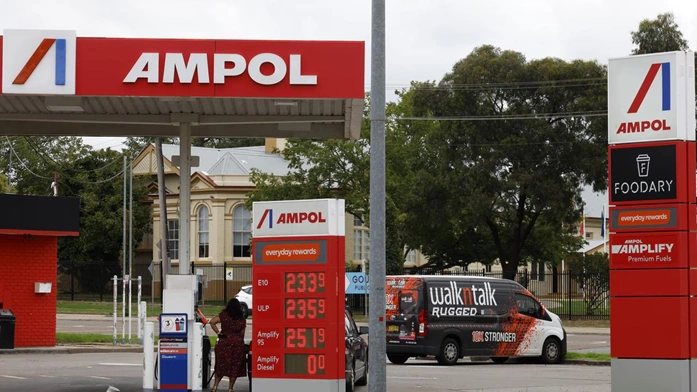
Figure 1: Ampol service station with fuel price display and company branding visible at the retail site [Courtesy: News Corp Australia]
Understanding what is Ampol FSSP matters now more than ever. With global oil markets under strain from the ongoing Middle East conflict, the Federal Government’s decision reinforces the strategic value of domestic refining capacity in Australia’s fuel supply chain.
Revised Payment Structure Strengthens Support for Lytton
Key Changes to the FSSP Collar and Government Margin Marker
Ampol’s Lytton refinery stands to benefit materially from the amended scheme. The collar increase of 3.6 Acpl and a favourable adjustment to the Government Margin Marker calculation for Lytton of 0.62 Acpl together deliver the 4.22 Acpl net movement. The cap payment of 1.8 Acpl remains unchanged.
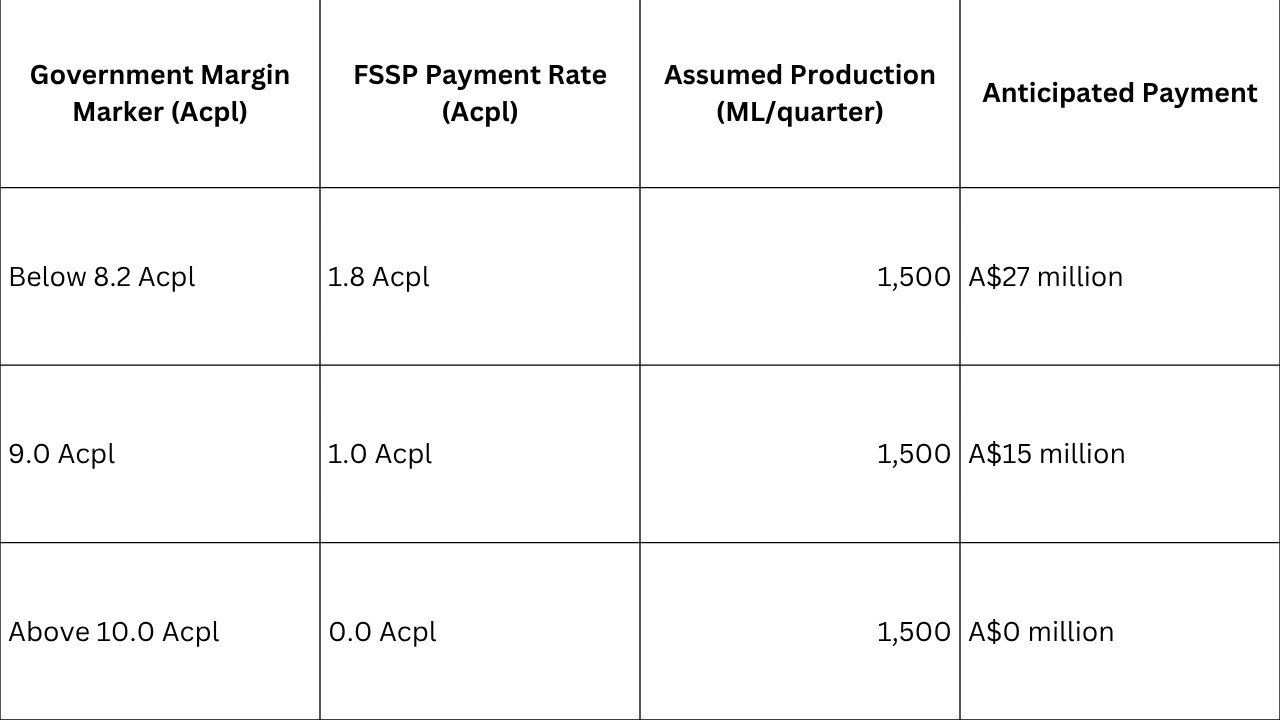
Under the revised structure, the variable support payment represents up to A$27 million per calendar quarter and A$108 million per annum for Lytton, based on 6.0 billion litres of production per annum at 1.8 Acpl. The table below illustrates how payments apply across margin scenarios:
Managing Director and CEO Matt Halliday said: “We welcome the adjustments made to the FSSP, which effectively increase the level at which payments under the scheme will commence. The important role Australian refineries play in supporting the resilience of our domestic fuel supply is being reinforced in the current global oil market environment.”

Figure 2: Ampol Managing Director and CEO Matt Halliday in a corporate headshot from the company leadership team page [Courtesy: Ampol Limited]
Mr Halliday added: “The amendment of the collar to 10 Acpl and the favourable adjustment to the Government’s refiner margin calculation, will also assist in reducing the volatility in Lytton earnings over time.”
Ampol Fuel Supply Chain Explained Amid Middle East Disruption
Australia’s transport fuels market is supplied by two domestic refineries that address approximately 20% of national demand. Ampol’s Lytton refinery covers approximately 40% of the Company’s Australian customer needs, with the remaining fuel imported via its Trading and Shipping team based in Singapore.
The Ampol fuel supply chain, explained in the context of the current Middle East conflict, reveals a Company that was well prepared. Ampol confirms it held strong crude and product inventory and confirmed orders at the commencement of hostilities. Importantly, Lytton processes light sweet crude, a grade distinct from the sour crudes sourced from the Middle East, meaning a suitable crude supply remains available in the market.
Refinery Maintenance Deferral Adds 300 Million Litres of Domestic Supply
Ampol refinery operations at Lytton received a further boost through the deferral of the scheduled Turnaround and Inspection (T&I) program. Originally planned for early June, the program has been pushed to the start of August 2026 following a detailed technical assessment.
The deferral enables approximately 300 million litres of petrol, diesel and jet fuel to be produced domestically during the two-month extension period. A Federal Government temporary amendment to the gasoline fuel standard will also allow an additional 80 to 100 million litres per month of petrol produced at Lytton to be sold domestically.
Phase 2 Review to Shape Long-Term Domestic Refining Direction
Federal Government Dialogue to Continue Through 2026
Ampol anticipates engaging with the Federal Government on a Phase 2 review focused on Australia’s long-term fuel supply resilience, including domestic refining. The review is expected to be completed in 2026.
Mr Halliday stated: “We look forward to continuing the dialogue with the Federal Government in the months ahead on the long-term prospects for transport fuels refining in Australia.” The outcome of Phase 2 is expected to clarify what is Ampol FSSP’s role beyond the current commitment period.
Industry Outlook
Australia’s domestic refining sector operates within a market where 80% of transport fuels are imported, predominantly from Asia. The current disruption to Asian refined fuel exports, compounded by the cancellation of Chinese refined fuel exports representing approximately 15% of Asia ex-China demand, has sharply focused attention on the Ampol fuel supply chain explained through the lens of energy security. The International Energy Agency’s announcement to release oil and refined fuels from strategic reserves is a positive step that should help stabilise global supply in the near term.
Ampol Share Price
Ampol Limited (ASX: ALD) is currently trading at A$33.030 per share. The Company carries a market capitalisation of A$7.85 billion. The 52-week range stands at A$19.530 to A$34.290 per share.
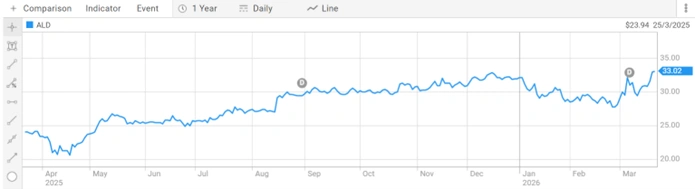
Figure 3: Ampol Limited (ASX: ALD) share price performance chart showing recent upward trend over the past year [Courtesy: ASX]
Future Direction and Impact
Ampol refinery operations at Lytton are positioned to play an expanding role in Australia’s fuel security through 2026, supported by the revised FSSP structure and the deferred T&I program. The Phase 2 review, due for completion this calendar year, will determine the longer-term framework for domestic refining support.
For those tracking the Ampol fuel supply chain explained against the backdrop of global disruption, the Company’s preparedness and the Government’s responsive amendments present a measured and credible pathway for near-term supply stability.
ALSO READ: Micron (MU) Falls After Strong Earnings as Analysts Split on Outlook
Frequently Asked Questions
Q1. What is Ampol FSSP?
Ans. The Fuel Security Services Payment (FSSP) is a Federal Government scheme that provides financial support to Australian refineries when refiner margins fall below a defined threshold. It is designed to ensure the economic viability of domestic oil refining capacity.
Q2. What changed in the Phase 1 FSSP review?
Ans. The collar was raised from 6.4 Acpl to 10.0 Acpl, and a favourable adjustment of 0.62 Acpl was made to the Government Margin Marker calculation for the Lytton refinery. The cap payment of 1.8 Acpl remained unchanged.
Q3. How does the Ampol fuel supply chain explained update affect domestic production?
Ans. Ampol deferred its Turnaround and Inspection program from June to August 2026, enabling approximately 300 million additional litres of petrol, diesel and jet fuel to be produced domestically during that period.
Q4. How is Ampol positioned amid the Middle East conflict?
Ans. Ampol confirmed it was well placed at the commencement of the conflict, holding strong crude and product inventory and confirmed orders. Lytton processes light sweet crude, which is not sourced from the Middle East, so supply remains available.
Q5. When will the Phase 2 FSSP review be completed?
Ans. The Phase 2 review, which will address Australia’s long-term fuel supply resilience and domestic refining direction, is expected to be completed during calendar 2026.
Sources
Ampol Limited (ASX: ALD) — ASX Release:
https://data-api.marketindex.com.au/api/v1/announcements/XASX:ALD:2A1661460/pdf/inline/updates-on-fssp-phase-1-review-and-current-fuel-supply-chain?_gl=1*io2wgz*_ga*MTcwODQzODA4Ni4xNzYyMjUxMTk2*_ga_R504V9JPBH*czE3NzM5Njc4MDgkbzk3JGcxJHQxNzczOTY3ODIwJGo0OCRsMCRoMA..
ASX Market Data — Ampol Limited (ASX: ALD) https://www.asx.com.au/markets/company/ALD