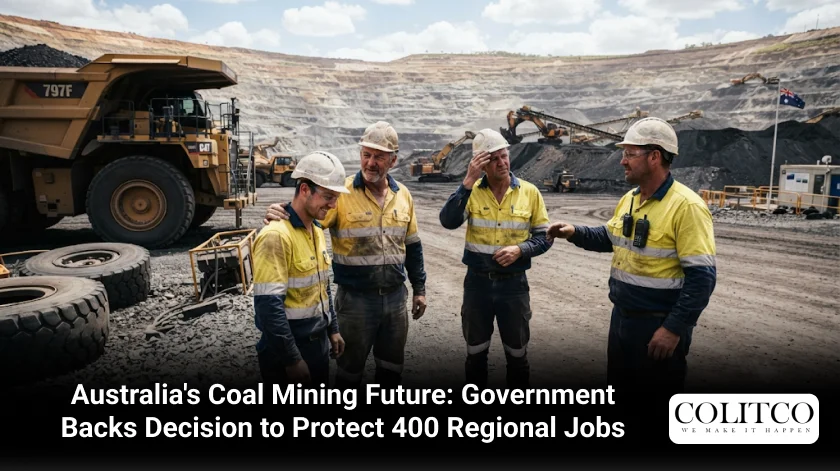
Hundreds of mining workers will keep their jobs after the New South Wales Parliament passed a controversial law. The vote came on Saturday 21 November 2026, the final sitting day of the year. It protects 400 jobs at MACH Energy’s Mount Pleasant coal mine in the Hunter Valley.
The bill is the last law passed before the March 2027 state election. The government stepped in after a High Court decision effectively stalled the mine’s expansion plans. Supporters call it a rescue for workers. Opponents call it a dangerous shortcut around the courts.
Why Regional Coal Mining Jobs Drove the Decision
For many Upper Hunter families, the mine is far more than a workplace. Its wages flow through local cafes, contractors and transport firms. Losing the mine would send a shockwave through the whole district. The new law lets operations continue while MACH Energy returns to court to apply for its expansion.
Hunter Minister Yasmin Catley said the workers did nothing wrong. She argued they should not pay for a legal problem they had no hand in creating. In her view, the issue goes well beyond 400 jobs. It touches families, local businesses and communities across the Upper Hunter.
Industry leaders agree. NSW Minerals Council chief executive Stephen Galilee said the mine and its workforce have endured four years of legal challenges. He said the law brings job security and certainty before Christmas. Coal also remains the state’s largest export. It earned about $33 billion in 2025 and delivered some $3 billion in royalties.
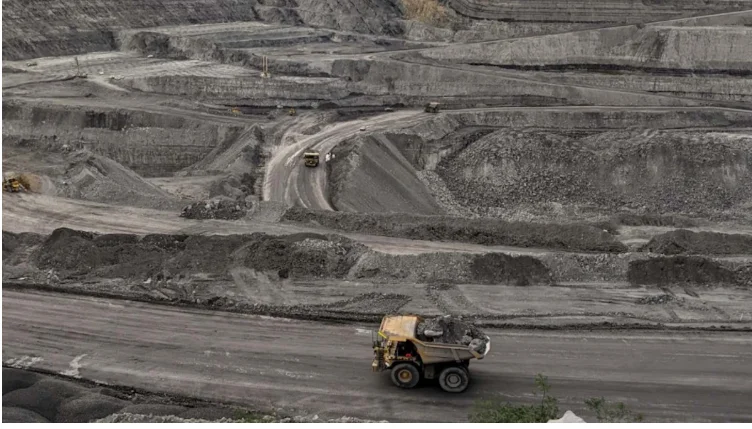
Coal’s export earnings underpin much of the Hunter Valley’s regional economy. [Nine]
Why Critics Say the Law Undercuts the Courts
Opponents were far from happy. Greens MPs accused the government of stifling debate before the bill passed. NSW Greens MP Sue Higginson said multiple gag motions blocked proper amendments and silenced members. She also said the government broke a pairing arrangement with the opposition to force the vote. Crossbenchers and environmental groups have joined the criticism.
Ms Higginson said this is the ninth coal mine Labour has expanded. She noted the independent Net Zero Commission had advised that expanding any coal mine was incompatible with climate goals. In his High Court judgment, Justice James Edelman cited estimates that the mine would rank among the world’s 650 largest greenhouse gas-emitting projects.
Wendy Wales took the case to court with her husband, Tony Lonergan. She said she was in disbelief that the government would legislate around the ruling. She believes the community’s health and wellbeing are being sacrificed for coal expansion. She also described the relationship between the company and the government as shockingly cosy.
What Industry, Community and Voters Are Saying
Reaction has split along familiar lines. Here is where each group stands:
- Industry: The NSW Minerals Council says workers, families and local suppliers finally get certainty.
- Community: Ms Wales says the long-term cost falls on locals, not the company.
- Greens: They say democratic debate was shut down to rush the bill through.
- Voters: YouGov polling for The Sunrise Project surveyed 1289 NSW voters. Just over half said lawmakers should follow court decisions on major development projects.
What Happens Next for the Australian Coal Mining Industry
The story is far from over. Here are the developments worth watching:
- Back to court: MACH Energy will apply again for approval to expand the mine.
- Work continues: The mine keeps running, and its 400 workers stay employed for now.
- Election test: The March 2027 election will show how voters weigh jobs against climate concerns.
- Wider ripple: Other projects will watch closely to see how far a government will go.
The decision exposes a tough balancing act for the Australian coal mining industry. Governments must weigh regional coal mining jobs against legal certainty and emissions targets. Supporters see a lifeline for workers and towns. Critics see a precedent that sidesteps the courts. Both sides agree the debate will shape energy policy well beyond the Hunter Valley.
Also Read: Bellevue Gold Targets Production Growth Through Accelerated Underground Exploration
FAQs
Q1: How many jobs does the new law protect?
A1: It protects 400 jobs at the Mount Pleasant mine in the Hunter Valley. The mine can keep operating while MACH Energy seeks expansion approval.
Q2: When did NSW Parliament pass the law?
A2: It passed on Saturday 21 November 2026, the final sitting day of the year. It is the last law passed before the March 2027 election.
Q3: How much does coal earn NSW?
A3: Coal earned about $33 billion in exports in 2025. It also delivered about $3 billion in state royalties.
Q4: What did the YouGov polling find?
A4: YouGov surveyed 1289 NSW voters for The Sunrise Project. Just over half said lawmakers should follow court decisions on major projects.
Disclaimer:
This article is based on a published news report and is for general information only. It does not offer legal, financial or investment advice about coal mining, MACH Energy or NSW legislation. Quotes and opinions belong to the people named. Figures reflect the source report as of 21 November 2026. Readers should confirm details with official government and court sources before relying on them.

Luke Carlino is a seasoned Copywriter, Content Strategist, and Social Media Manager specialising in Mining, Finance, and Business journalism. With more than a decade of industry experience, he brings rigorous editorial standards and commercial acuity to every project.