

A growing set of United States policies has reshaped the landscape for companies involved in critical minerals. These minerals are essential for technologies such as electric vehicles, semiconductors, renewable energy systems and national defence equipment.
The US government has directed funding, price supports and strategic partnerships to reduce dependence on foreign supply chains. This article identifies key publicly listed stocks that are gaining from these policy developments.
The shift in supply chain policy reflects concern over global vulnerabilities, particularly China’s dominant role in producing and processing critical materials. Government measures aim to expand domestic capacity and secure alternative supply sources through public-private initiatives.
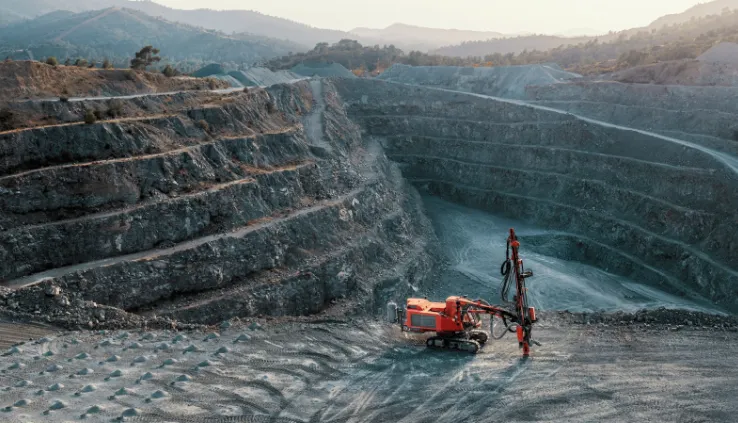
A US critical minerals mining site highlights growing domestic production under new supply chain policy measures. [Newsweek]
Government Support Drives Rare Earths Sector Performance
The rare earths sector is central to US supply chain goals. Rare earth metals are crucial for permanent magnets, which power electric motors, defence systems and renewable energy technologies. Historically, China has dominated refining and processing of these elements.
One of the main beneficiaries of government support is MP Materials Corp. The company operates the only large-scale rare earth mine in North America and processes critical minerals domestically. It earned a fourth-quarter profit in 2025 on the back of a government-backed price floor agreement and strong sales of magnetic materials.
The US government guaranteed a price floor of US$110 per kilogram for MP Materials’ rare earth output. This price guarantee, combined with marketing and production activity, helped lift revenue and earnings in the financial period ending December 2025.
In addition, the Department of Defence partnered with MP Materials on a facility to produce permanent magnets, highlighting the government’s interest in securing the full supply chain from mining through processing. Similar direct support arrangements are influencing company valuations and investor interest in rare-earth-focused stocks.

Rare earth processing facilities expand in response to US government funding and supply chain resilience initiatives. [CNBC]
Domestic Extraction and Processing Receive Strategic Funding
Beyond rare earths, other critical minerals are also drawing government backing through loans and project financing. These actions aim to build capacity for minerals such as lithium, copper, gallium and others that are considered pivotal for future technologies.
USA Rare Earth, Inc. has emerged as a domestic supply chain player in this space. It received a non-binding Letter of Intent for up to US$1.577 billion in combined support from the US Department of Commerce under the CHIPS and Science Act framework. The outlined support includes proposed direct funding and a proposed senior secured loan for expanding mining, processing, and permanent magnet production in the United States.
Such financial commitments reflect a broader move to establish a “mine-to-magnet” supply chain within the US, thereby reducing reliance on imported materials. Stocks tied to these developments have drawn attention from institutional and retail investors as policy incentives shape future supply potential.
Lithium and Battery Materials Firms Attract Federal Backing
Lithium and battery minerals are another key area of focus for the US supply chain policy. Lithium, in particular, is vital for batteries used in electric vehicles and energy storage.
Ioneer Ltd, an Australian-based lithium company, secured a significant US Department of Energy loan guarantee for its Rhyolite Ridge lithium-boron project in Nevada. The nearly US$1 billion loan guarantee supports the development of a domestic source of lithium carbonate.
Firms involved in the recycling and reprocessing of battery-related materials are also gaining traction. American Resources Corporation’s subsidiary began 2026 shipments of end-of-life lithium-ion batteries for domestic preprocessing.
This activity supports downstream refining, which is a key element of the government’s strategy to build a circular and resilient supply chain for battery minerals in the United States.
Together, these developments highlight how supply chain policy is influencing a broader range of mineral sectors, from extraction to end-of-life recycling.

Lithium development projects receive federal backing as the United States strengthens domestic battery mineral supply. [Canary Media]
Smaller and Emerging Critical Mineral Stocks Benefit from Policy Initiatives
In addition to major players, smaller and emerging companies are attracting attention as the US government funds diversification efforts. The United States Trade and Development Agency confirmed support for the Monte Muambe rare earth project in Mozambique involving Altona Rare Earths Plc. Although this project is overseas, it ties into the broader strategy of diversifying global supply chains for critical minerals relevant to US industries.
Strategic alliances within the US are also forming to boost the production of specific minerals. For example, companies focused on gallium, essential for semiconductors and advanced electronics, have entered partnerships to advance domestic production.
Investors have noted that policy frameworks aimed at supply chain resilience open opportunities in stocks that may have been overlooked previously. Grants, cost-sharing loans and export-import financing initiatives are reshaping competitive advantages and enabling new entrants to secure strategic positions.
Context on US Policy and Critical Minerals Imperatives
The US government’s policy direction stems from longstanding concerns about over-dependence on imported critical minerals. According to testimony prepared for Congress, the United States remained reliant on imports for dozens of critical minerals as recently as 2024. China was identified as a leading producer of many of these mineral categories.

US policy initiatives aim to reduce reliance on imported critical minerals through domestic and allied partnerships. [Discovery Alert]
This reliance has prompted action under several legislative frameworks, including the CHIPS and Science Act, Department of Energy loan programmes, and strategic stockpiling initiatives. Separately, large financing vehicles such as Project Vault, backed by the US Export-Import Bank, are designed to establish strategic reserves of key materials.
The policy mix includes price support mechanisms, financing commitments and collaborations with allies to diversify sources. Collectively, these measures reflect an effort to bolster resilience in sectors that are pivotal to economic security and technological competitiveness.
Also Read: Odyssey Gold Advances Tuckanarra Project WA
Investor Outlook and Sector Implications
Stocks tied to rare earths, lithium, gallium and other critical minerals are increasingly sensitive to policy signals from Washington. Government backing can reduce project risk and make capital flows more predictable. This is significant for companies that require substantial investment to build mines, processing plants and downstream facilities.
As policy evolves, markets are watching for how incentives translate into tangible production growth. Long lead times for mining projects mean that immediate stock performance may reflect expectations about future supply chains rather than current output.
Policy announcements that link government support to specific companies or projects have heightened investor interest in those names. For example, guaranteed pricing and structured financing can materially influence valuation compared with peers.
In conclusion, the intersection of policy actions and capital markets is creating a dynamic environment. Stocks tied to critical minerals are positioned to benefit as the United States continues to prioritise supply chain resilience and technological sovereignty.


